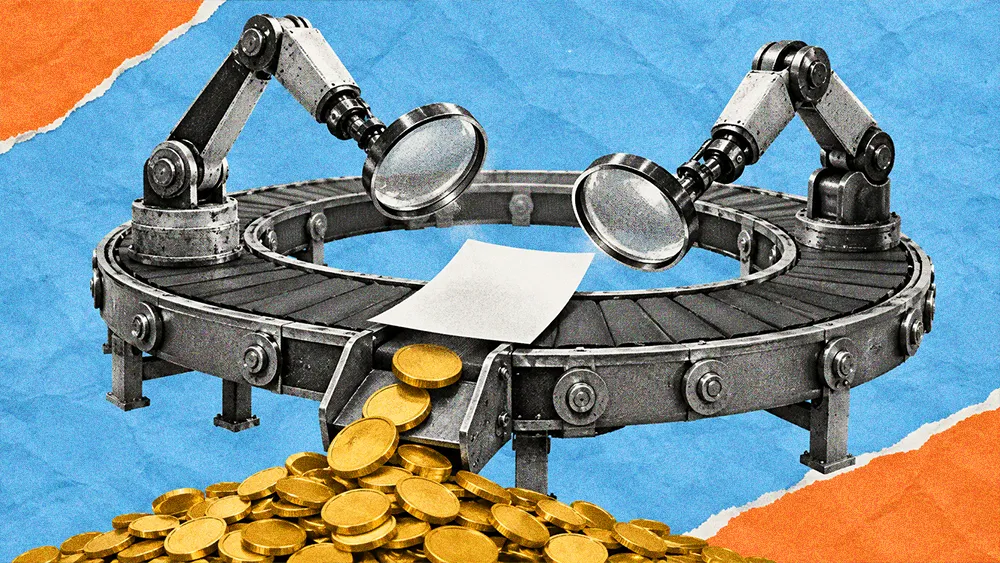
A €470 million buyout loan for German construction firm Terras Group pauses lenders' rights during "AI disruption," with no end date.
Lenders have seen the clause in at least two buyouts since September, and got it stripped from Bain Capital's €4.7 billion Everllence loan.
A private equity firm has gotten its lenders to treat AI like a war or a pandemic.
H.I.G. Capital got AI-disruption language into the €470 million ($524 million) loan financing its majority stake in Terras Group, a German infrastructure engineering and construction company, Bloomberg reported Tuesday, citing people familiar with the deal. UBS and Deutsche Bank are leading the lenders. H.I.G. declined to comment.
Terras doesn't sell software. Founded in 2014 and based in Montabaur, it does civil engineering, foundation work and rail construction for public and private customers, and runs its own quarries, soil depots and recycling sites, according to H.I.G.'s announcement of the deal in July. Its co-founders, Dirk and Ralf Sojka, are reinvesting alongside H.I.G., and the pitch for the deal leaned on Germany's decades-long backlog of infrastructure spending.
None of that work is obviously at risk from AI, which makes the clause hard to explain.
A pause with no end date
If Terras misses an interest payment, the lenders' usual rights are put on hold for as long as the company says it has been "impacted" by AI disruption. The same clause covers pandemics, war and spikes in energy prices.
Leveraged loan agreements generally don't include force majeure provisions at all, as Baker McKenzie noted when borrowers went looking for one at the start of the pandemic. A missed interest payment normally comes with a short grace period, and after that lenders can call a default. In 2020, companies hit by COVID mostly had to go back to their lenders and negotiate waivers one deal at a time.
The Terras clause gives the borrower that relief in advance. A war or a pandemic eventually winds down, but AI disruption has no obvious end point, and Terras is the one who gets to say when it applies. On paper, the pause could run indefinitely.
The exact wording hasn't been made public. Bloomberg's account comes from unnamed sources, and it isn't clear how "impacted" is defined or whether lenders can challenge the claim.
Lenders have already pushed back once
Creditors have seen similar wording in at least two buyout loans since September, according to Bloomberg, which didn't name the second deal.
The biggest attempt so far didn't survive. Lenders got the language removed from the €4.7 billion loan backing Bain Capital's purchase of a majority stake in Everllence, Volkswagen's large-engine business. Everllence, formerly MAN Energy Solutions, makes marine and power engines and turbomachinery for shipping, defense and power generation customers. Bain agreed in June to buy 51% in a deal Volkswagen says will bring it about €7.4 billion.
Banks started marketing the loan in euro and dollar tranches. Moody's rated it B1, four notches below investment grade, put leverage at 6.4 times earnings at closing, and warned that higher financing costs leave little room for the business to underperform.
Everllence was an odd place to ask for AI cover anyway. When Volkswagen announced the sale, it pointed to data centers, which need generators for power, as one of the markets where Everllence could grow. If anything, AI could bring that business more orders.
Lenders managed to get the clause out of a jumbo deal that drew plenty of investor attention, but not out of the smaller Terras loan.
Lenders already charge more for AI risk
Lenders have spent this year marking down loans to software companies whose products look replaceable by AI. Application software makes up $147 billion of leveraged loans, about a tenth of the market, and by late July those loans were bid at an average of 87.75 cents on the dollar, down 9% for the year, PitchBook reported. Software borrowers that need to refinance have had to accept wider spreads and steeper discounts to get it done.
UBS, one of the two banks leading the Terras loan, has forecast that leveraged loan defaults could rise 3% to 5% if AI disruption arrives quickly, well above what the market was pricing in.
The Terras loan turns that around. Here the borrower gets the protection from AI, and nobody has said how AI would hurt a construction business.
Credit Twitter isn't buying it
The reaction on X has come almost entirely from people who work in credit. "What are we even doing here?" wrote credit analyst @junkbondinvest, in a post that had about 27,000 views by mid-morning Pacific time.
One person replying to that post went further: "Every company on earth is 'impacted by AI.' That's not a force majeure clause, it's a permanent interest holiday with a philosophy degree."
The reply has a point. Almost any company could say AI is affecting its business, and under this clause the lenders would be taking Terras's word for when that's true.
The conversation has stayed inside finance so far, at around 15 posts an hour. Business and tech commentators haven't picked it up yet.
What comes next
CFOs and boards should pay attention for a different reason. H.I.G. presumably wouldn't have negotiated this protection unless it thought AI could hurt Terras at some point.
Loan terms that work for one side tend to get copied. When sponsor-friendly "auto-cure" provisions first appeared in 2020, Debt Explained had seen them in just two loans, and noted that once a term like that becomes entrenched, lenders have to fight to negotiate it back out. If "AI disruption" follows the same path into supplier agreements and leases, the companies on the other side of those contracts will want to know how the term is defined and who decides when it applies.
The next few buyout loans will show whether lenders keep stripping the clause out, as they did with Everllence, or let it through, as they did with Terras. In the meantime, expect to hear more companies blame "AI headwinds" on earnings calls.