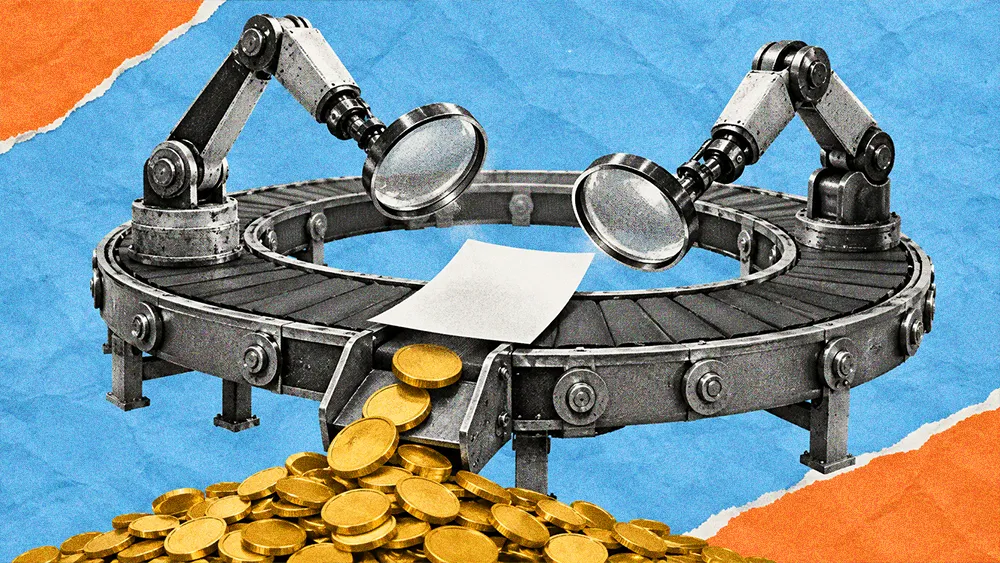
For years, SaaS companies sold polished interfaces and charged a fee for every user. Now AI agents can pull data straight from those systems, so fewer people need to log in. Spending changes too, moving from fixed licenses to usage-based bills that can climb quickly without controls in place.
Rui Manuel Barreira is the Vice President of Engineering at kununu, an employer review and branding platform for the German-speaking market and part of Burda Group. He oversees engineering, IT, cybersecurity, and company-wide AI adoption, and he helped lead the company through a corporate carve-out and a full infrastructure overhaul. Over more than 20 years in tech, Barreira has founded several companies, earned a patent in the US and Europe, and led cloud adoption across 800 engineers at Critical Software, a Portuguese technology consultancy. He also sits on the board of ENSICO, a nonprofit that brings computing education to Portuguese schools. Rolling out AI agents at kununu, starting with his own engineering team, has shown him where software’s value is moving and how to manage what agents cost to run.
"Value will be in the process. Not in the LLM, not in the GUI, but in the process," Barreira says. As AI agents handle more of the work between systems, the interfaces and models that once set software apart become easier to replace. That changes how companies build their software and how they pay for it.
Lock-in loosens
Part of what kept customers on a SaaS platform was the cost of leaving it. Once employees learned its screens and workflows, switching providers meant retraining everyone. Agents remove much of that friction because they connect to systems through MCP and don’t need to learn a new interface. "More and more, I don’t use the GUI of our internal systems. I use an MCP connection, and I don’t have the vendor lock-in anymore," Barreira says. The change also weakens the usage numbers software companies have long relied on, since daily active users and time in app say little when much of the traffic comes from agents.
Barreira sees the advantage moving from systems of record to what he calls systems of action. A system of record, like a CRM, stores a company’s data. A system of action uses that data to do work, drawing on a detailed understanding of how the business runs and serves its customers. Integrations that once took months of custom ETL engineering can now run through two MCP connections with a language model in between.
Salesforce’s Agentforce platform is one example, with AI agents built on top of the customer data its CRM already holds. "The foundation model is a commodity. You will not rebuild another Claude. The vendors that own the context and own the knowledge can easily swap reasoning models," he adds.
Value will be in the process. Not in the LLM, not in the GUI, but in the process.
 Rui Manuel BarreiraVice President of Engineering, kununu
The hidden cost of agents
Agents also change the math behind enterprise software. An agent rarely finishes a task in one try. It plans, checks its own work, calls tools, and corrects errors along the way, which is a big part of what makes its output reliable. Each of those steps also uses tokens. Barreira runs several internal systems where five agents debate an idea before giving him an answer, so he sees both the value and the cost of that extra effort firsthand.
Without careful planning, that overhead can eat into the high margins SaaS companies are used to. "When you start changing to agentic, you need to be really careful, because these margins can disappear very, very quickly," Barreira says. Some vendors are also changing how they charge, with outcome-based pricing tied to each report generated or ticket resolved. For buyers, that puts more weight on measurement.
Simple metrics, sharper thinking
Barreira first measured AI’s impact in engineering with an elaborate set of KPIs, then simplified them after finding they were too complex to be useful. He now tracks adoption, speed, and quality, plus one cost metric. Adoption shows how many people use the tools and how many systems run on their own. Speed looks different in each function, from idea to production in engineering to first call to closed deal in sales. Quality sets the floor, since faster output means little if standards slip. "Most of the pilots die, and they die because they do not know how to measure success. If I can’t measure it, I can’t pitch it in a budget meeting," he notes.
Clear metrics also show where money goes, and much of the waste traces back to habits. Uploading the same document to three separate chats triples consumption. Vague prompts can send agents into endless loops. The fix starts with teaching people structured problem-solving before they open a tool. Engineers pick it up quickly because computational thinking is already part of their background, while other teams may need more time. "The training should be how to think. People need to learn how to think, and you can teach thinking with a pen and paper. You don’t need a computer," Barreira says.
Humans before agents
Barreira sets limits before he gives agents more freedom. For less critical systems, he caps spending and keeps autonomous agents in sandboxes. He also picks the right model for each job, using top models like Fable 5.1 for hard problems and smaller or local models for everyday work. His most important systems get close monitoring and alerts. "I’d rather have a system that’s stopped than a system that’s consuming all my cash," he adds.
Companies with large software stacks can make the shift gradually, starting with tasks like search and sentiment analysis. Wherever agents start, the process underneath has to make sense first. "AI accelerates you. It’s an amazing thing. But if you cannot do it and optimize it with humans, you’ll never be able to do it with AI," Barreira says.