
There’s a reckoning underway for CEOs, and knowing AI will change your business is only the beginning. The harder question is how much of the business you built you’re willing to reimagine.
It's easier, right now, to build a $10 million company with a single person and a stack of AI agents than to take a 50-person company doing the same revenue and wind it back down to one. But shrinking those 50 people down to one isn’t the ambition. What could those same 50 people build if the work no longer ran the way it always had?
The tools to change that are already here, capable of far more than most companies are asking of them. What's missing is a picture of what the work would look like rebuilt to run a different way, and the will to go find it.
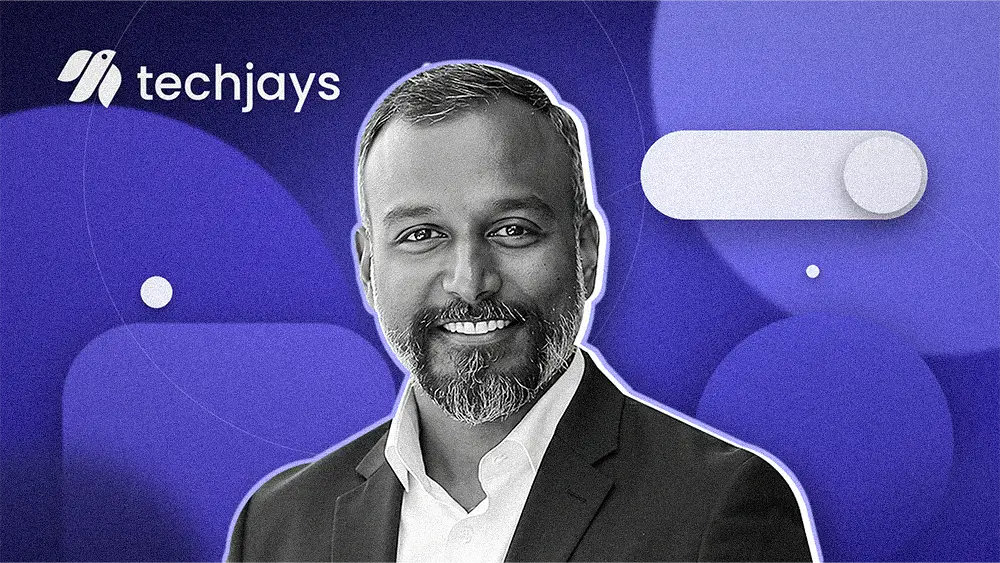
Gerry Perkel has run businesses through more than one technology upheaval, including leading Xerox’s office-printing division as its revenue grew beyond $2 billion. Now he coaches other leaders through this one. Through CEO Coaching International he works with CEOs at companies of nearly every size, from single-digit millions to billions in revenue, spanning services, products, software, nonprofits, and beyond. The principles hold whatever the domain. In all of them he sees the same gap: they know AI will reshape the business, and they haven't yet pictured the business on the other side of it.
"It's not your job as a CEO to have all the best ideas," Perkel says. "It's your job to get the best ideas on the table." That line is the argument in miniature. A leader's edge on AI comes less from generating the answers than from getting the right thinking into the room, and on a shift this size most of that thinking has to come from somewhere other than the corner office. Everything else Perkel describes follows from it: how a CEO who can't yet picture the transformed business gets there anyway, and who they lean on to do it. Perkel sees it in Techjays, an AI firm he coaches that rebuilds a company's operations end to end, what it calls 'the 100% solution' rather than the 80% most vendors ship.
Dream big, start small
Ask a CEO to describe how the whole organization will operate in two years and Perkel watches them freeze. The question is too big to answer, so nothing happens. His method runs the other way, starting from a single question and letting the larger picture assemble from there.
The questions escalate. One is pure ambition: how could you double the revenue per employee over the next two years? Because that scale of impact is now on the table. The one he reaches for most often is more concrete than that. He asks a leader to name the single best employee in the company, the person who gets the most done, and then asks whether they'd want a second one exactly like them. "I think AI could build you one," he tells them. "And the great news is not only would they be as good as that person, but they work 24 hours a day, seven days a week, 365 days a year."
The pushback is always the same: our best people have specialized knowledge no system could replicate. Perkel doesn't argue with the premise. He points out the company already knows how to handle exactly this problem. "What if they quit? What would you do?" You hire someone and you train them. "Same thing we're going to do with AI." Framed that way, the objection stops being a wall. From there he points leaders at the most natural place to begin: anywhere a group of people is doing the same or similar work, which is precisely where AI can lift what the group handles without the extra headcount that used to require.
An order of magnitude, not a step change
Perkel has sat through enough technology cycles to be hard to impress, and this one impresses him. He argues it's different in kind, for two reasons. The first is speed. "Things that weren't possible 12 months ago are now possible, and things that aren't possible today will be possible in six months." The curve is compounding faster than anything he's tracked before.
The second is reach. Earlier shifts hit one department or one function hardest and left the rest largely alone. This one touches everything at once. Put speed together with breadth and Perkel lands somewhere past incremental. "It's kind of an order of magnitude bigger, not twice the size. It's 10 times the size, because it's going broader and faster." And still, in his telling, the ceiling has nothing to do with the machines. "The limit really is our imagination." A company captures this only to the degree someone can picture a version of the business no one has run yet, and when the CEO isn't that someone, the task is bringing in a person who is.
The edge of innovation
Imagination is only the first of two human problems Perkel keeps running into. Once a leader accepts that something is possible, someone underneath them has to build it and live with it, and that's where the second problem sits. The people closer to the work are more likely to move slower, distrust the pace, and read the whole thing as a threat to their jobs. Perkel calls it "the digestion side."
The way through is to prove it small before scaling it. Instead of turning an entire operation over at once, he favors starting at the edge: take a few people and a slice of the work, build something that handles far more per person than today, and bring it to the wider group only once it's shown to work.
The other half of the fear is about control, and here Perkel points to what has quickly become standard practice. Almost none of the projects he sees hand the work fully to the machine. A person stays in the loop. "Instead of having a human do 1,000 customer transactions when a human could only do 100, we're going to have a human oversee 1,000, monitor how the machine's doing on 900, and handle the 100 that are corner cases or a little unique or require some complex judgment." The role shifts from doing the work to watching it and stepping in where judgment is actually needed. For a leader braced for machines running unsupervised, that shift is often what makes the whole thing feel survivable.
What it looks like when it works
Take a 100-person customer support team. Build a system that lets each person support double the clients they carry now, and a business that used to hire with every wave of new customers no longer has to. If that support group costs $6 million a year, doubling its capacity could let the company support twice as many customers without doubling its staffing bill. The value comes from the additional business the same team can handle, and the hiring that growth would otherwise require. As the business grows, those avoided costs grow with it.
The same shape turns up in insurance. Perkel describes a medical insurance operation whose staff fielded customer questions about what a plan did and didn't cover. Once the system was in, each person could monitor 10 times the transactions they used to handle alone, stepping in only on the unusual cases that genuinely needed a human call. Underneath both examples is a structure he sees almost everywhere: information comes in, a person does something with it, a result goes out. Any process with clear inputs, a defined middle step, and a definite output is well within what AI can take on.
His sharpest illustration is a construction bid. A contractor bidding the ductwork on a commercial building pulls the quantities off the plans, measures the runs, works out the sheet metal, prices it, adds a margin, and sends the bid, and today people do all of that by hand over a couple of days. "You feed the drawings into AI, it takes it all off, it looks up the costing, it puts it all together, and provides it to a senior person to take a look at," he says, and it runs in an hour instead of a day, more accurately than the manual version. The part he lingers on is the second-order effect. Return the bid first, before competitors have finished building theirs, and you don't just cut cost, you win more of the work.
The case against building it yourself
Plenty of leaders assume they can handle this in-house, and Perkel understands the reflex without agreeing with it. Most of the CEOs he talks to have already handed ChatGPT or Claude to everyone and watched people find small individual wins. But being expert at sales or customer service is a different thing from being expert at making AI reliably do that job, and that gap is where homegrown efforts come apart. He runs through the questions a leader ought to ask of any system the business is about to depend on. Is it enterprise-hardened? Is it secure? Is it supportable? What happens when the person who built it leaves?
This is where getting the best ideas on the table stops being a metaphor. An outside partner earns its place here, which is why Perkel points leaders toward a firm like Techjays. The value isn't only the build, it's the repetitions: expertise accumulated over years and hundreds of people who have done this many times over. A company could assemble that itself, but Perkel questions why it would want to, and how it would keep the talent once the market bids those people away. "Do what you do best," he says, "and work with other people to do what they do best." Speed carries the rest of the argument. What used to take years now takes months, and what took months takes weeks, and that compression is much of what a company is actually buying.
Whatever route a leader takes, Perkel holds the line on one discipline above all: know the return before you start. Every project should answer a single hard question: what the business gets back if it works, whether that shows up as cost taken out or revenue that couldn't be captured any other way. The bar he sets is plain and unforgiving. "Your business should be better," he says. "And if you can't find that, don't start. Keep looking until you find that."