Johnny Rodgers' account of Slack's life inside Salesforce has tech reliving a culture clash: the missing keyboards, the Trailhead quizzes, the Davos panel with will.i.am. His story ends in 2023. The more consequential chapter started after he walked out the door.
Every big acquisition has two histories. There's the one in the press release, and the one employees tell later, usually after their stock has vested.
Slack's second history arrived on Thursday. Johnny Rodgers, a founding engineer who spent 11 years at the company, published "Salesforce – Part Two," his account of life inside a $27.7 billion deal. By Sunday, investor Sheel Mohnot's thread on the post had pulled out the detail everyone kept repeating: Stewart Butterfield says he got roughly an hour of face time with Marc Benioff before the deal was announced, and the last of it was cut short because Matthew McConaughey showed up.
It's a great read, and a familiar genre. The startup gets bought, the founder gets frustrated, the culture gets flattened. But Rodgers' story stops in 2023, and the part that matters most to anyone running AI inside a company happened after he left. The product Salesforce's own salespeople couldn't explain is now where Salesforce runs its AI agents.
Tickets, Trailhead and a Panel With will.i.am
Slack had about 4,000 employees. Salesforce had about 80,000. The gap showed up in small, maddening ways. At Slack, you asked for help in a channel and a person answered. At Salesforce, you filed a ticket and an automated email came back. Slack employees, who had built a company on the idea that internal email was obsolete, suddenly had inboxes again, and those inboxes filled up with mandatory Trailhead quizzes.
Butterfield took it harder. Rodgers says he was baffled by the waste he saw, from paid celebrity appearances to thousands of hires followed by thousands of layoffs, and that his feedback went nowhere. The breaking point was Davos. He went expecting to meet customers and found himself on an innovation panel with will.i.am. He decided to leave in the fall of 2022. Then, the day before his exit was due to be announced, co-CEO Bret Taylor, the executive who had championed buying Slack, announced he was leaving first.
There were bright spots. Huddles and Clips shipped in mid-2021, customers took to them quickly, and Benioff singled out Huddles at an all-hands. But Rodgers writes that it was obvious internally that Benioff didn't actually use Slack. Slack's leaders couldn't tell whether they were Salesforce's prized new acquisition or one it had already stopped thinking about.
The Product Salesforce Couldn't Sell
The most revealing part of the post isn't about Butterfield. It's about the sales floor.
Salesforce built its empire selling purpose-built software to the person who runs one department. Slack doesn't work that way. It's a shared space for the whole company, and it only takes hold when the entire leadership team buys in. Co-founder Cal Henderson tells Rodgers that Salesforce's reps weren't really using Slack and didn't understand it, so they sold what they knew. Plenty of them thought adding Slack to a deal just made it messier and slower. And since Slack wasn't on their dashboards, there wasn't much reason to try.
Hold onto that, because it's the whole story. Slack was hard to sell because it belonged to every team and no single budget. Five years later, that's exactly what makes it so valuable.
What Happened After the Engineers Left
Slack is where companies argue, decide, change their minds and hand work off. For a decade, that made it a productivity tool. For an AI agent, it's the closest thing a company has to a memory.
Salesforce figured that out. In May 2025, it rewrote Slack's API terms so outside apps could no longer copy, index or store Slack messages over the long term, Reuters reported. Bulk exports were out, and so was training language models on Slack data, according to CO/AI. Glean, whose enterprise search product had been indexing that history, warned customers they would lose some ability to use their own data with the AI tools they had picked.
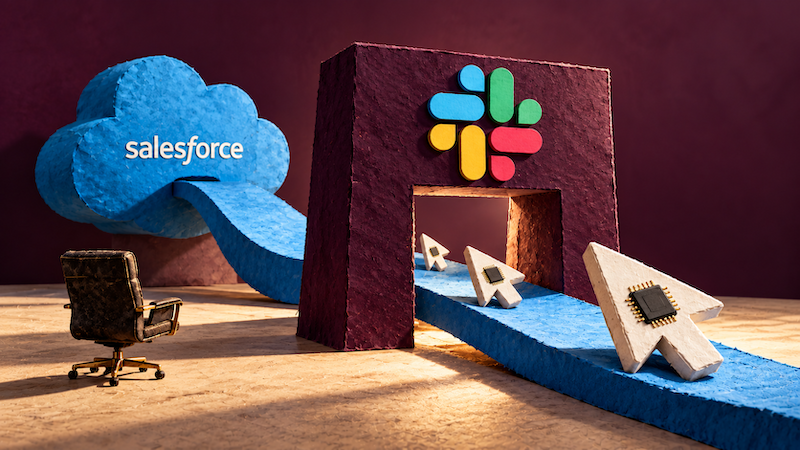
Then Salesforce moved its own agents in. At Dreamforce in September, it launched AIforce, which puts Salesforce data and workflows inside Claude, Slack and its own apps. Slackbot users grew more than 150% in a single quarter, and Salesforce president Alexa Vignone said Slack had become a hub for working with AI agents, TheStreet reported.
TheStreet's reading is blunt: if workers stop logging into Salesforce's own screens, Slack is the one interface the company still owns. The everyone-and-no-one quality that confused Salesforce's reps in 2021 is now the pitch.
Why It's Hitting a Nerve Now
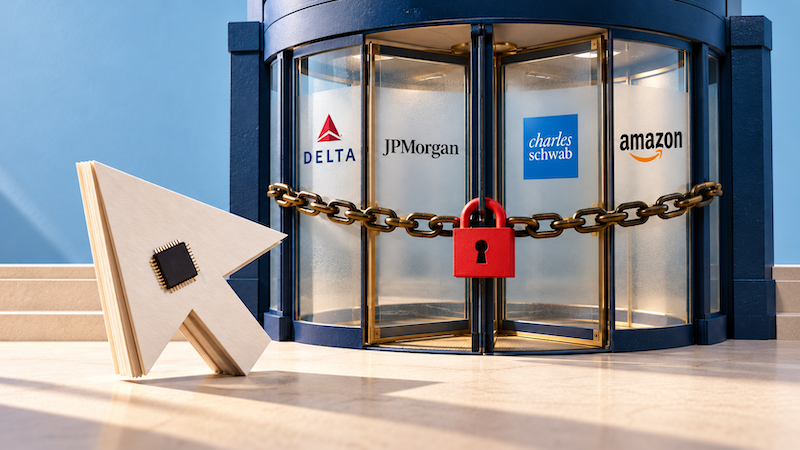
Timing helps. Rodgers' post landed in a week when the AI industry has stopped arguing about whose model is smartest and started fighting over who gets let in. State of AI reported on Oct. 21 that Anthropic's Claude Duet reads users' email, calendar and Slack. Three days earlier, we covered banks and retailers turning outside agents away.
Slack is the most valuable door in the building. Readers this week keep wondering what Slack would look like if it had stayed independent. It's a fair question, and an unanswerable one. The question enterprises can actually do something about is who holds the keys now.
What Enterprise Leaders Should Take From It
The nostalgia is understandable. But if you run AI at a large company, the lesson here isn't that acquisitions are hard on culture. Everyone knew that. It's that the most important change to a product you depend on can happen quietly, in a terms-of-service update, years after the deal closes and long after anyone is paying attention.
For Slack customers, that change has already happened. Your company wrote every message in Slack. Which AI gets to learn from those messages is decided somewhere else. If your agent strategy assumes you can point any tool you like at your Slack history, check that assumption against your contract and the current API terms before you build on it.
Don't take any vendor's word for how well its agent knows your company, either. An agent that can only ask Slack one question at a time is a different animal from one that has read everything. Put Agentforce, Claude, Glean or whatever is on your shortlist in front of the same hard questions about your own Slack history, and see which one actually answers them.
And be honest about leverage. If your most useful agents only work because of what's sitting in Slack, you may have picked your AI vendor without ever running a procurement process. Better to find that out before renewal than after.
Rodgers closes on his last morning at Salesforce's Vancouver office. He brought bagels, hoping some old Slack colleagues would turn up. He didn't recognize anyone who did. Eventually a couple of Salesforce salespeople wandered in and asked whether the bagels were free. "They're yours now," he told them.
It's hard to read that line today and think he only meant the bagels.