The firm that made AI use a condition of promotion is now capping Claude at $29 a month per employee.
Accenture is rationing the very tool it spent the past year pushing its people to use. In an internal announcement titled "Claude Enterprise Users: Important Updates to Licensing and Usage Costs," the consulting giant told employees it will now centrally fund just $29 a month per person for Claude. The memo was first reported by 404 Media's Joseph Cox on Thursday, and Accenture's response to the outlet did not dispute it.
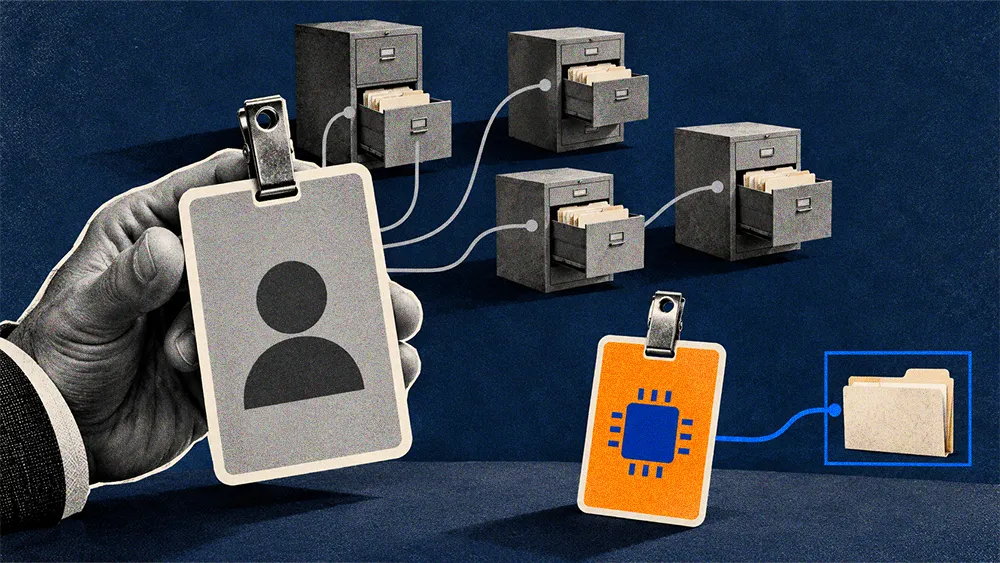
The policy took effect October 1. Under it, all Claude Enterprise costs are consumption-based, and anyone who goes past $29 must find a specific project or team, which Accenture calls a Work Breakdown Structure or WBS, to cover the rest. Premium accounts come with $250 in token usage a week, but many employees are not on that plan.
For heavy users, the drop is steep. Internal messages viewed by 404 Media show employees describing monthly usage of $500 to $1,000. One said an upgrade to Premium appeared to be blocked; another said their access had been revoked entirely. The announcement also warns that licenses are reviewed periodically and may be reallocated as business priorities change.
An Accenture spokesperson told 404 Media the company still makes AI available to all its people and is focused on matching the right tool to the right work.
The timing is hard to miss. On the day the cap took effect, Accenture reported results that beat expectations, said its AI and data workforce had reached about 110,000 people, and counted more than 400 clients starting advanced AI work during the fiscal year, according to its earnings call. Its shares closed up nearly 16%.
A whiplash reversal
Ten months ago, Accenture and Anthropic launched a joint business group with plans to train about 30,000 Accenture staff on Claude and put Claude Code in the hands of tens of thousands of developers. Anthropic CEO Dario Amodei called it the company's largest deployment ever.
By February, adoption had become a career requirement. Accenture told associate directors and senior managers that regular use of its AI tools would factor into leadership promotions, and it began tracking weekly logins, according to the Financial Times, as reported by Fortune.
Then came the bill. In June, 404 Media obtained audio of an internal meeting in which Justice Kwak, Accenture's agentic AI strategy lead, said much of the heavy token use came from non-engineers doing routine work like turning PDFs into slides. Kwak later told TechCrunch that AI was becoming "material to the cost structure." Four months later, the cap arrived.
The irony is hard to ignore. Accenture's business is persuading the world's largest companies to spend heavily on AI. It is now finding out, on its own books, what that spending looks like at scale.
The meter behind the memo
The $29 cap is less a change of heart than a change of invoice. Anthropic's Enterprise plan now separates access from usage: the seat fee covers access only, and every token used in Claude, Claude Code or Cowork is billed at standard API rates. Customers on older seat-based contracts move to that model at renewal.
Under flat seats, a power user was a rounding error. Under metering, each one becomes a line item someone has to approve.
That flips the incentives inside a company. When AI was a fixed license, the goal was adoption, and firms built leaderboards and promotion criteria to drive it. When AI is a variable bill, the goal becomes containment, and yesterday's exemplars become today's cost outliers.
Two classes of AI user
The new rules split Accenture's workforce in two. Premium's $250 a week works out to roughly $1,080 a month. General users get $29, about 37 times less. Which group an employee lands in depends, in the memo's framing, on role and business need.
That collides awkwardly with the promotion policy. If AI use counts toward advancement, and heavy use now requires a project willing to pay for it, career prospects may hinge on landing a well-funded engagement. Accenture has not said publicly whether usage still factors into promotions.
The squeeze also reaches the people building Accenture's AI offerings. One employee wrote that they rely on Claude Code to build an AI accelerator for several Accenture clients, at a cost of $500 to $1,000 a month.
Why it matters
Accenture is the latest, and the lowest, in a string of corporate pullbacks this year. Uber burned through its 2026 AI coding budget by April and capped staff at $1,500 a month per tool. Meta built a central dashboard to monitor spend and plans structured token budgets for 2027, as State of AI reported in June. Microsoft has given every division a token budget and moved its default internal model to a cheaper one.
What sets Accenture apart is the model, not just the number. Uber's per-tool ceiling is roughly 50 times Accenture's per-person allowance, and Microsoft and Meta manage spend at the division level. Accenture sets a low floor and pushes everything above it onto the work itself.
That shift, from overhead to project cost, is the real story. At a consultancy, project costs feed engagement economics, which raises a question the memo leaves open: will heavy AI use be absorbed in margins, or surface in what clients pay? Either way, every engagement now carries a visible AI cost, and project leads and clients will start asking what it bought.
For AI vendors, metered pricing lets revenue scale with usage rather than headcount. But when customers route that usage through project budgets, every dollar meets someone with a reason to cut it. The open question is whether pushing AI costs onto the work sharpens judgment about where AI pays off, or simply teaches employees to stop reaching for it.