The AI Labs Are Selling Your Applicants a Perfect Résumé. Your Screener Is Rewarding Them for It.
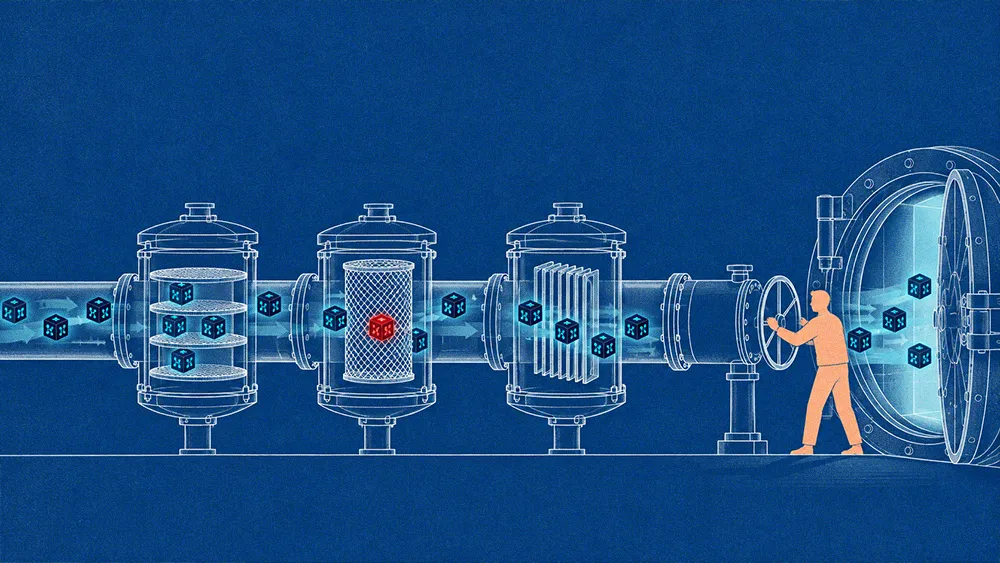
Eight of nine leading models prefer text they wrote themselves. Hiring found the bug first, and anything you score with an LLM has it too.
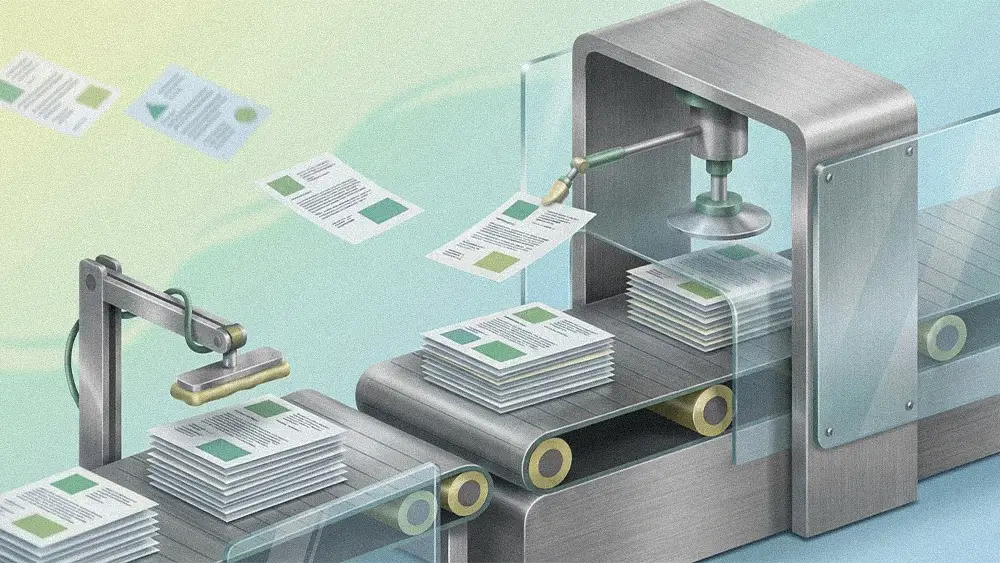


For as long as it's existed, the résumé has been a claim a candidate makes about themselves. What's changed is that the claim now costs nothing to make and takes real work to check.


If this caught your attention, that’s not accidental.

The best editorial systems don’t happen by accident. Outlever builds them.

Perplexity's product page for its Computer agent describes a job search that runs without the job seeker. Computer reads a candidate's LinkedIn profile and builds a summary of their experience, skills and certifications. It scans job boards and filters by location and seniority. It rewrites the résumé for each role, mirroring the keywords in the job description and formatting the file for applicant tracking systems. It drafts a cover letter for every application, files everything into a tracking spreadsheet, and writes the follow-up emails. It connects to Gmail, Notion, Google Docs and Google Sheets. It remembers a candidate's preferences between sessions, and it monitors for new postings that fit.
The marketing line is that the candidate pastes in a profile, steps away, and comes back to a full pipeline.
Tools that do roughly this have been on the market for two years. LazyApply, Sonara, LoopCV, JobCopilot, Simplify and Jobright have all sold some version of automated applying, mostly as browser extensions, and the category has a mixed reputation. Reviews aggregated by Resumly note that several of the highest-volume tools sit below 2.5 stars on Trustpilot, and that most of them send the same untailored résumé to every posting.
What has changed is who is selling it. Job application automation has moved from the aftermarket into the products the frontier labs ship themselves. Perplexity launched Computer in late February 2026 on its Max subscription tier, which runs $200 a month, and the agent routes tasks across roughly nineteen models. Its Comet browser, which the company made free in October, does a lighter version of the same work from a sidebar and can research companies, fill in applications, and draft résumés.
OpenAI is building further upstream. In September 2025, Fidji Simo, then the company's CEO of Applications, announced a Jobs Platform targeted for the middle of 2026, along with a certification track intended to verify AI fluency. The company said it's working with Walmart, John Deere, and Boston Consulting Group on the certifications, with a stated goal of certifying 10 million Americans by 2030, and that the platform will use AI to match employers with candidates based on skills rather than résumé keywords.
What that looks like from the employer's side
Application volume was already climbing before any of this shipped. LinkedIn told CNBC in October that submissions on the platform were up more than 45% year over year, at close to 9,500 a minute. The New York Times put the figure at 11,000 a minute last summer, as reported by eWeek. LinkedIn's own Workforce Confidence data from February 2026 puts it above 14,000.
Greenhouse, which has around 175,000 live jobs on its platform, now averages 254 applicants per posting. Applications per recruiter are up 412%. Chief executive Daniel Chait told Fortune in July that candidates can buy tools for about $20 that will apply to every Greenhouse job on their behalf, and that the resulting cycle, where candidates automate applying and employers automate filtering, leaves both sides worse off. He has called it an "AI doom loop."
Recruiters describe the same pattern from the floor. Technical and executive headhunter Nicole Kaiser told CNBC that popular roles pull 300 to 500 applications within three days, and sometimes more than 1,000 over a weekend. In LinkedIn's survey work, 70% of hirers said fewer than half the applications they receive meet the criteria for the role.
The usual conclusion is that this is a volume problem, and that the answer is better filtering. Two pieces of recent research suggest something more awkward is happening.
The résumé isn't just noisier. It's pointing the wrong way.
An academic working paper by Jesse Silbert, cited in HR Executive in June, models what happens to a hiring market when written applications stop revealing how much effort a candidate put in, because polish costs nothing. In the simulated market, workers in the top 20% of the ability distribution were hired 19% less often than they were before generative AI was available. Workers in the bottom 20% were hired 14% more often.
Then there's the question of what happens when a model reads what a model wrote. In a preprint titled AI Self-preferencing in Algorithmic Hiring, Jiannan Xu of the University of Maryland, Gujie Li of the National University of Singapore, and Jane Yi Jiang of Ohio State tested nine leading language models against a dataset of 2,245 human-written résumés. Eight of the nine showed a consistent preference for AI-generated text over human-written text of controlled quality. GPT-4o selected its own rewrite over the human original 82% of the time. In simulated pipelines, candidates whose résumé was written with the same model that was screening it were up to 60% more likely to be shortlisted.
Jiang was careful about how she characterized the finding. She told The Register that the results don't necessarily mean the systems are discriminating in a legal or intentional sense, but that they raise real questions about fairness. There's a validity question sitting alongside the fairness one. If a screening model rewards writing that resembles its own, an employer running an LLM résumé screen against an LLM-written résumé is measuring something closer to which subscription the candidate bought than what the candidate can do. Criteria has written about the same study, noting the effect was strongest in business-focused fields including sales and accounting.
Employers already know the résumé stopped working
Research released in May by Criteria Corp and Lighthouse Research & Advisory, based on a survey of 998 hiring leaders plus interviews with recruiters, quantifies the gap between what employers believe and what they still do.
Ninety-two percent of recruiting leaders say AI-generated résumés are now commonplace in their applicant pools, and half describe them as very common. Only one-third are highly confident that a résumé reflects a candidate's real skills and experience. Just 2% name the résumé as their most trusted signal. Two-thirds still run a résumé screen, human or automated, as the first step in their process.
The consequences are measurable. Sixty-four percent of employers say they've hired someone who misrepresented their skills on a résumé, and 39% say it has happened more than once. Companies that identify the résumé as their primary hiring decision driver are 35% more likely to report having made a bad hire.
And candidates aren't defending the format, either. Sixty-eight percent told the same study they would prefer a hiring process that deprioritizes the résumé and gives them a chance to demonstrate what they can actually do.
"For as long as it's existed, the résumé has been a claim a candidate makes about themselves. What's changed is that the claim now costs nothing to make and takes real work to check," said Josh Millet, CEO and co-founder of Criteria Corp. "Hiring teams can't read their way out of that. If a model can generate a hundred credible applications in an afternoon, no amount of careful reviewing on the other end will tell you who is good. The signals that still hold up are the ones you produce inside your own process. A validated assessment, an interview that asks every candidate the same questions and scores them the same way, a short piece of real work. Those are the same for the candidate with a $200 agent and the candidate without one, and that's why they still mean something."
Adding stages is the wrong response
The reflex when trust in a screening step collapses is to add another step. Chait's argument against that is worth taking seriously. More rounds and more hoops don't create more signal, and candidate patience is already thin. In Greenhouse's own survey work with 1,200 US job seekers, only 8% described AI in hiring as fair, and 46% said their confidence in hiring had fallen over the past year.
The employers moving fastest are cutting rather than stacking. The Willo Hiring Trends Report 2026, which surveyed more than 100 hiring professionals and drew on 2.5 million candidate interviews, found 41% of employers actively moving away from résumé-first hiring and 10% reporting they have largely replaced the résumé with skills assessments and scenario-based evaluation. In the Criteria and Lighthouse study, skills and work-based assessments ranked as the most trusted alternative signal, structured interviews came second at 50%, and work samples and simulations came third. Nearly all of the talent leaders surveyed rated at least one of the three as more reliable than the résumé.
What those three have in common is that the evidence is generated inside the employer's process rather than submitted to it. A candidate cannot outsource a timed cognitive assessment, a structured interview scored against a fixed rubric, or a short work sample reviewed blind. Moving them earlier in the funnel is what makes this a substitution rather than an addition, because verification then happens before the interview stage instead of in a fourth round after it.
Two conditions matter. Assessments have to be validated for the role and audited for adverse impact, or the result is one unaccountable filter swapped for another, which is the outcome New York City's Local Law 144 and the high-risk provisions of the EU AI Act, now deferred to December 2027, were written to prevent. And they have to be short enough that strong candidates finish them.
Some large employers are addressing the trust problem with travel budgets instead. Google, McKinsey and Cisco have all reinstated in-person interviews as hiring fraud has climbed. That approach confirms a candidate is a real person. It doesn't predict whether they can do the job, and it doesn't scale to 254 applicants per opening.
For most of its history, the résumé carried a small amount of information simply because writing a good one took time and attention. The labs have now removed that cost, and they're selling the removal as a product. What's left to evaluate has moved to the parts of the process employers still control.
If this caught your attention, that’s not accidental.

The best editorial systems don’t happen by accident. Outlever builds them.


Get the latest AI insights first.
Sign up for updates, interviews, and fresh analysis on how AI is reshaping business, brands, and technology.