Nicolas Bustamante had blunt advice for software companies on Saturday. In a post on X, he said most SaaS companies should stop building their own chat features. They should connect their data and tools to ChatGPT, Claude and Copilot through MCP, the open standard for linking AI assistants to outside software, and keep the data, business rules and margins for themselves. Bustamante founded Fintool, which Microsoft bought in April, and now works on Microsoft's Office team. The post is his personal view, not a Microsoft announcement. It had about 181,000 views by Sunday.
He's describing something that's already happening, and he's mostly right that it's the smart move. We think the more useful question for growth leaders is what comes after it. Once a customer's first stop is an AI assistant, the assistant decides which tool gets called. A lot of what growth teams rely on, including search rankings, in-app upsells and attribution, stops working the way it used to.
Plugging in is already the default
OpenAI turned ChatGPT into an app platform in late 2025, with Booking.com, Canva, Coursera, Figma, Expedia, Spotify and Zillow as launch partners, all built on MCP. Enterprise software followed this year. Salesforce made its hosted MCP servers generally available in April and teamed up with Anthropic so salespeople can work deals from inside Claude, Semafor reported. Atlassian now lets teams connect ChatGPT to Jira and Confluence, per FourWeekMBA. Salesloft sits in Claude's connector directory. Last Wednesday, Databricks shipped Genie plugins for ChatGPT, Claude, Copilot and Grok.
The data companies are furthest along. FactSet told Semafor that use of its connector has grown "like a hockey stick," and S&P Global had more than 500 customers on its MCP server as of last quarter. Upwork gives its server away, since it only gets paid when a hire closes. Its CEO called chatbots the acquisition channels of the future, which is the most honest description of this shift we've seen from a vendor.
HubSpot is paying for two front doors
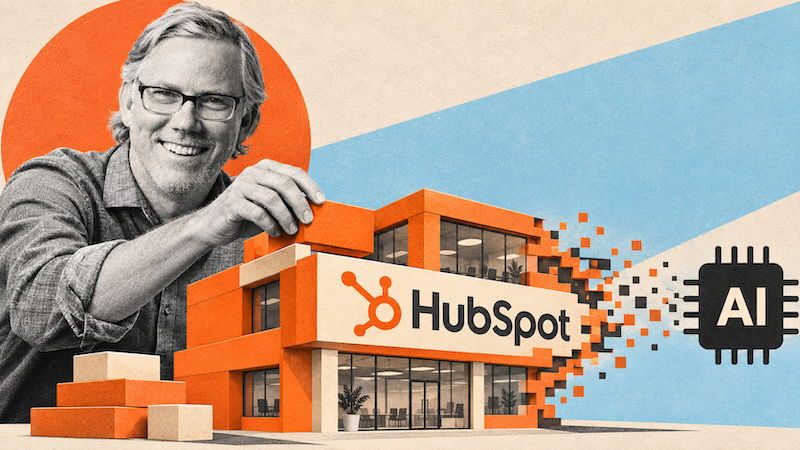
HubSpot is the clearest test case. On Nov. 12, co-founder Brian Halligan came back as CEO and posted that HubSpot is now "the Customer Harness Company." As we wrote last week, that reads as a bid to be the layer AI agents plug into when they need customer data.
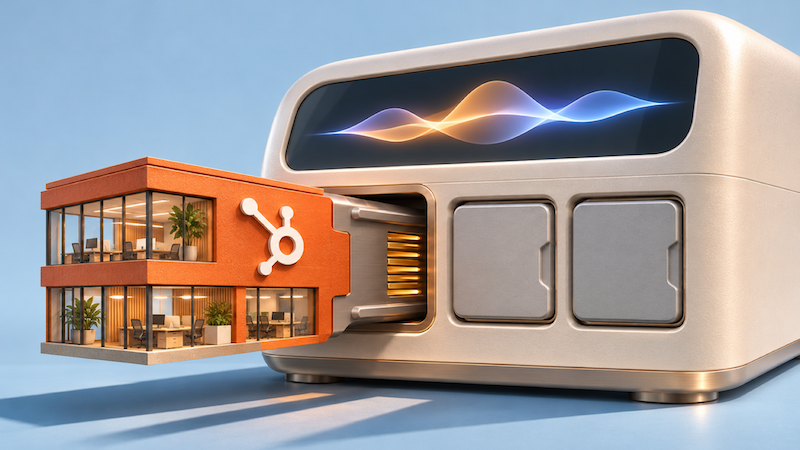
The plumbing is already there. HubSpot says it is the only CRM with live connectors in ChatGPT, Claude, Gemini and Copilot, and its MCP server has been open to every account since April. At its UNBOUND conference, the company conceded that its own assistant, Breeze, won't be the only AI its customers talk to, Info-Tech noted.
It hasn't walked away from Breeze, though. The assistant is free on every tier, and HubSpot still sells its own agents on pay-per-result pricing. Our read is that HubSpot is funding two front doors because it doesn't know yet which one customers will use. That's a reasonable hedge for a company expecting about $3.7 billion in revenue this year. A smaller vendor probably can't afford to build both well.
What plugging in costs you
Bustamante's version leaves the vendor holding the data and the margin. That holds at first. Over time, though, the assistant controls the moment a customer picks a tool, and that's worth more than either. ChatGPT already suggests apps mid-conversation when it judges them relevant, according to OpenAI, and the rules for that judgment aren't public. Growth leaders went through this with Google search and the app stores. Both started as free distribution and ended up taking a cut of the traffic they sent.
The big vendors know data access is leverage. Salesforce is glad to put its CRM inside Claude, but last year it rewrote Slack's API terms to stop outside apps from indexing or storing Slack messages long term. Glean warned customers the change would limit their ability to use their own data with the AI tools they chose, according to Hunton.
Then there's the money. Seat-based pricing gets awkward when nobody logs into your app, and nobody has settled on a replacement. Moody's prices on estimated usage and calls that approach early, Semafor reported. Attribution gets harder too. When the work happens inside Claude, the vendor sees a stream of API calls and loses most of its view into how customers got there.
Our take
Plug in. Bustamante is right that a product the major assistants can't reach will miss the moments when people decide what to use, and a homegrown chatbot won't win those moments back. It's also worth remembering where he works. Microsoft owns Copilot, and it stands to gain a lot if most software ends up as a plug-in.
Growth leaders should treat the assistants the way smart marketers treated Google in its early years. Get in early, learn what makes an assistant pick your tool over a rival's, and assume the terms will get worse once the platform has the leverage. The quality of your connector will matter more than your landing page, because an assistant will favor the tool that returns the best answer with the least friction.
The pricing work can't wait either. If an agent can do the job without a human ever logging in, charge for the work it does. HubSpot's per-result pricing for its agents points in that direction.
Brand still matters, maybe more than before. OpenAI's own example is a user typing "Spotify, make a playlist" to call up an app by name. Customers can type "HubSpot" into Claude the same way. The vendors that hold up best will be the ones customers still ask for by name. That kind of trust gets built over years of onboarding calls, renewals and fixing problems well. The connector just makes the product easy to reach once a customer asks for it.