Late Tuesday morning, Apple started signing people out. iPhones and Macs dropped users from their Apple Accounts and wouldn’t let them back in. App Store downloads stalled, new phones wouldn’t activate, and Apple Pay failed for some people at checkout, according to the San Francisco Chronicle. Developers said they couldn’t get into App Store Connect either.
Reports on Downdetector started around 11:30 a.m. ET and passed a few thousand within the hour. The list of services with spikes reads like Apple’s product page: Apple Support, the App Store, iCloud, Apple Pay, Apple Card, Apple Music, Apple Business Manager and Sign in with Apple.
Apple’s System Status page was slow to catch up. For the first stretch, it still showed those services as available. Eventually it listed iCloud Account and Sign In, the App Store, Apple Music and AppleCare on Device as down. By early afternoon, Apple Pay and Apple Card reports had dropped sharply, but people were still having trouble signing in. Apple hasn’t said what went wrong.
Customers weren’t the only ones affected. Apple employees on Reddit say the company’s corporate offices are offline too, and 9to5Mac reported the same about retail stores and corporate offices. We haven’t confirmed that ourselves, and Apple hasn’t commented. If it’s true, it would match what happened last time. In March 2022, an outage took down Apple’s consumer services and briefly hobbled its internal corporate and retail systems. Apple later told staff the cause was a DNS problem. When an outage takes out both the customer side and the corporate side, the cause is usually something they share deep in the infrastructure, not a single app.
Five in five days
We’ve been tracking these all week.
Microsoft went first. Exchange Online started failing on Thursday, Nov. 12, and by that afternoon Outlook, Teams and Copilot were down in more than 70 countries. Full service didn’t come back until Saturday. Microsoft said the problem had been introduced during an earlier network capacity upgrade and only showed up after a later network change. It said it wasn’t a cyberattack and wasn’t caused by AI agents.
On Friday afternoon, the FAA stopped every departing flight in the country. Because the agency’s new AI traffic tool had just gone live at every en route center, we looked at whether it was involved. It wasn’t. Transportation Secretary Sean Duffy said a router flooded the network during maintenance by contractor L3Harris at a remote FAA site, and officials still haven’t said whether a person or a piece of equipment was at fault.
On Monday morning, Chase, Bank of America, Wells Fargo and U.S. Bank customers were locked out of logins, balances, transfers and some ATMs. Chase later blamed a software bug.
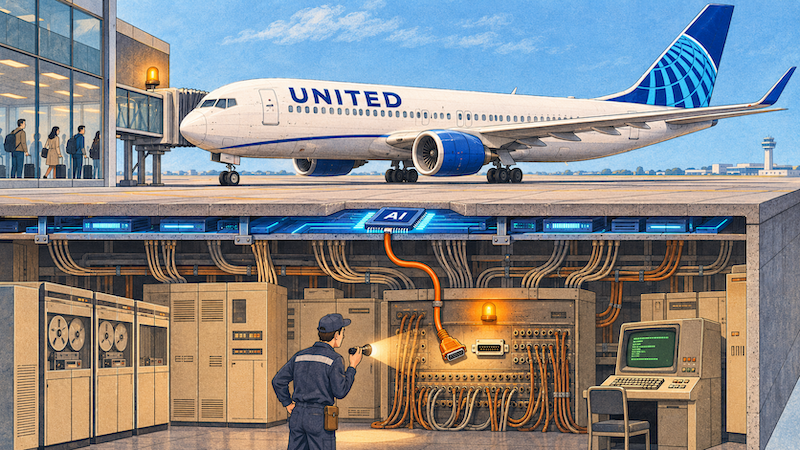
Also on Monday, United held its departing mainline flights over what it called a technology issue, probably in its weight-and-balance system. That made four in five days, and United still hasn’t explained it.
Now Apple makes five. Microsoft’s outage started Nov. 12 but lasted into Saturday, so all five were happening at some point between Friday and today.
Why a sign-in outage is worse
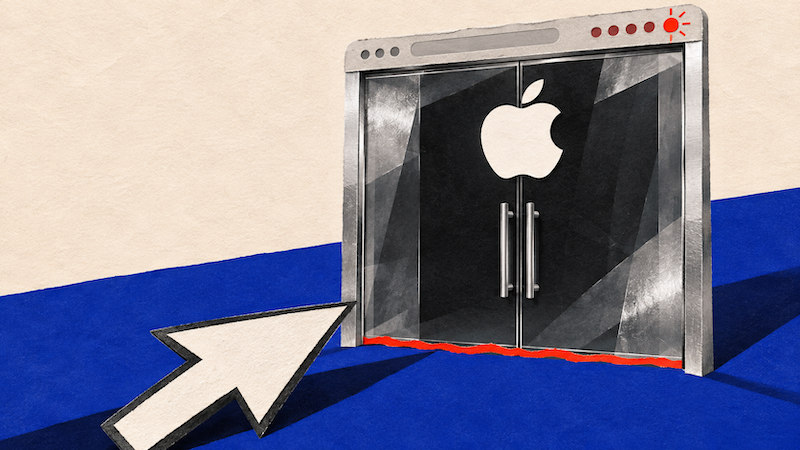
A broken App Store is a bad afternoon. A broken sign-in system means every service that depends on it fails at the same moment, including payments, purchases, device setup, developer tools, and the Sign in with Apple button on apps Apple doesn’t even own. That explains why Tuesday’s Downdetector list was so long. The services didn’t each break on their own. They all depend on the same front door.
That door is about to carry more. The AI assistants everyone is building are supposed to act for you, which means they’ll need your account to do anything. If the identity layer goes down, the agents go down with it.
Our take
Three of this week’s five outages have a public cause, and none of those causes is AI. They were a network change, a router and a software bug. Apple might end up on the same list, but it hasn’t told anyone yet.
That silence is the part we keep coming back to. We said on Monday that the real test for the banks was how fast they could explain what happened. A week like this one makes people expect the worst, and every hour without an answer leaves room for guesses about attacks, AI and connections between outages. Apple’s customers saw the outage before Apple’s status page showed it. The least Apple can do now is say what broke, what didn’t, and whether it has anything to do with the four outages before it.