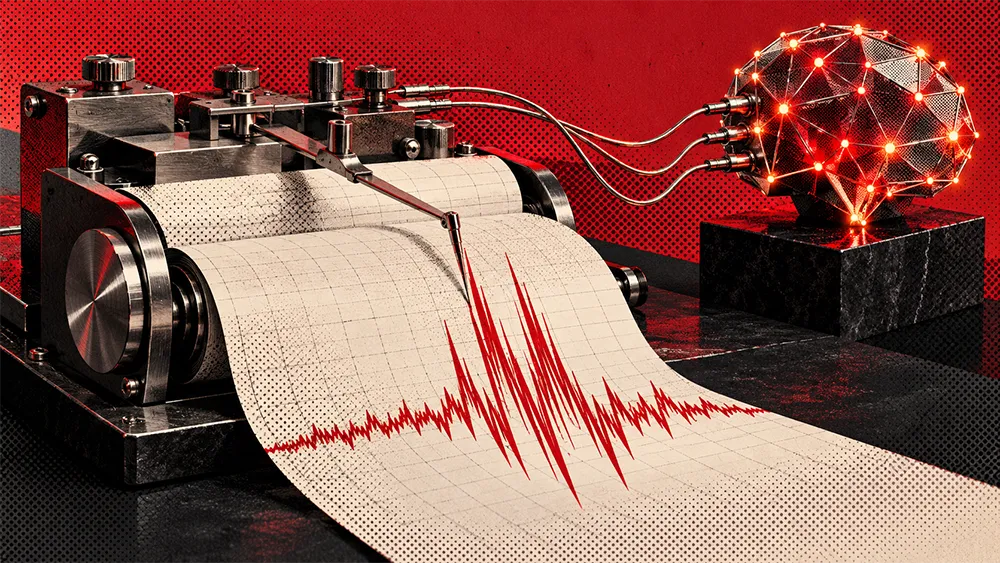
Everyone's Betting on Where AI Will Land. Decathlon Is Building for Every Outcome.
Ismael Ghozael, Vice President of Products and Platforms at Decathlon, on why betting your whole stack on one AI future is just a good way to build it twice.


You don't want to predict. You want to be ready ahead of time. That forces you to think in ways that are nimble, agile, scalable and reusable, so you can scale revenue, keep costs in check, and keep innovating.


If this caught your attention, that’s not accidental.

The best editorial systems don’t happen by accident. Outlever builds them.

Most AI readiness plans are a bet with extra steps. Pick a future, wire the stack to match, hope the market agrees. It usually doesn't, and then you get to build it all over again. There's a cheaper way to be ready, and it starts by refusing to guess. Rebuild the enterprise as a set of independent capabilities you can maintain on their own and snap together on demand, and the same foundation serves whichever version of AI commerce actually turns up. Readiness stops depending on being right about the future.
Ismael Ghozael is Vice President of Products and Platforms at Decathlon, the French sporting-goods retailer with more than €18 billion in gross merchandise value and over 100,000 employees. Before Europe he spent more than a decade at PayPal, most of it building the payments platform that routed north of a trillion dollars a year across the company's brands. He took the Decathlon job to run the same play on a very different animal. His read on timing is almost contrarian in a market addicted to moving first. "You don't want to predict. You want to be ready ahead of time," Ghozael says. "That forces you to think in ways that are nimble, agile, scalable and reusable, so you can scale revenue, keep costs in check, and keep innovating."
Build for readiness, not prediction
Early and reckless look identical right up until they don't, and telling them apart is most of the job. A platform team has to see two or three years out, because that's how long foundations take, but it can't sprint after every shiny signal or it never ships anything. "We have to be a little ahead, but not rush, because these are foundations," he says. "They take time to build, and you want to be building in the right direction." The whole point of a reusable architecture is that it makes being wrong cheap. Guess the wrong discovery surface, guess the wrong place commerce settles, and the capabilities underneath just shrug and carry on.
The catch is that it asks leadership to pay for plumbing before anyone can see the payoff, which is a hard sell against the urge to ship the flashy demo now and sort out the plumbing later. Ghozael's counter is that the plumbing is exactly what lets the flashy stuff move fast when it counts. Skip it and you meet the bill on use case two, then again on use case three, each one a fresh build from scratch.
The platform as a product
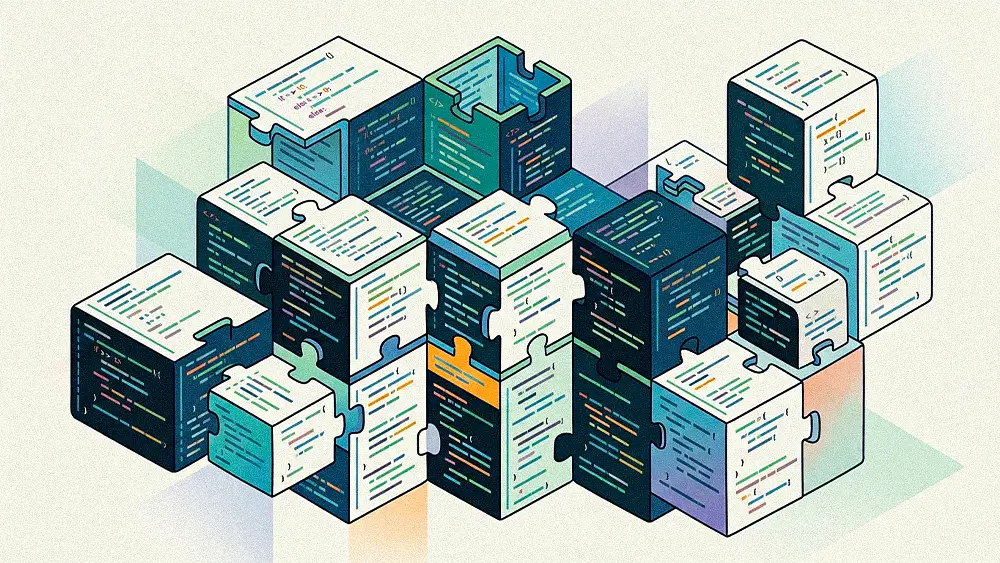
Underneath all of it is one move: treat the platform as a product, not a stack of one-off solutions. Ghozael watched PayPal make that turn. The company had grown on the backs of great salespeople closing deals, each of which became its own solution, until it decided to run the whole payment stack as a single platform instead. "A platform as a product compounds," he says. "Every new transaction, every new merchant, every new consumer becomes data that improves the experience for everybody else." The unit of that platform is a discrete business capability, a modular block with one job and an owner who keeps it current.
"A payments platform moves money from A to B. It could be a transfer, a payment, or a donation," Ghozael explains. "You take those Lego pieces and build a new experience." Maintain each block on its own and the platform stays evergreen while the experiences on top of it churn. It's the same logic now prying apart the monolithic software suites companies used to buy in one lump. And to Ghozael, this isn't a side quest to the AI roadmap. It's the cover charge. "It's the same role I was hired for at Decathlon. Modernizing the stack is the first step if you want an AI-ready stack. It's a prerequisite."
Discovery first, then commerce, then agents
Ask him where consumer AI actually fits and he sorts it into three phases with a distinct order. Phase one is discovery. "It's new, but it's not really new," he says. "It's not the first time a channel has captured this much attention. It started a hundred years ago with newspapers, then radio and TV, then Google, then social media. Attention shifts, and the business model shifts with it." Translation for right now: be findable inside the models people are already asking.
Phase two is commerce, and it never lags far behind. OpenAI has told investors it expects a hundred billion dollars in ad revenue by 2030, which is a lot of conviction for a business it only started selling last year. Ghozael isn't surprised. Monetize attention and commerce turns up right behind it, the way it always has. The live question is where the sale actually closes. He's not betting on shoppers checking out inside closed, model-owned marketplaces, and the market keeps proving him right: after launching in-chat purchasing, OpenAI backed off and started routing shoppers into merchants' own apps and sites. "You discover on GPT and then buy from the brand," he says. "That's what we think is most likely right now." Phase three is the one without a map, where agents transact on your behalf and the human may not be in the loop at all.
Here's the part that sets his priorities. Two and three are worth prepping for, but they only pay out if you've already won phase one. "Step two, commerce, and step three, agentic commerce, are relevant only if you succeed at step one and you're visible first," he says. Every bit of composability is ultimately in service of showing up in that first phase, then following the money into the next two without tearing the house down to do it.
Realities of a retailer
At a software company none of this would raise an eyebrow. Decathlon isn't a software company. "Decathlon is a retailer, not a digital company. We build great sports products and great experiences in stores," Ghozael says. "Consumer-facing AI is another channel, an extremely important one, but a channel." Somewhere between 80 and 85% of the people who touch Decathlon do it by walking into a store, which resets what digital is even for. "At PayPal, the digital product is the business," he says. "At Decathlon, the digital product is entirely at the service of the business, and the business very often happens in the store."
That governs how fast he can push, and how. He came in from the Bay Area used to setting a direction and having the org move with it. A 100,000-person European retailer works differently, and handles change deliberately rather than by decree. "At PayPal you could set a new direction on day one and the company would follow," he says. "At Decathlon, change management is done carefully." The thing that makes the company slow to turn is the same thing that makes its products very good, so it's a trade with real upside.
And the edge runs both ways. A Bay Area tech background is a real advantage on digital maturity, and Decathlon has room to grow there. Then there's how it designs physical goods. "When you see what Decathlon produces in sports goods, they're light years ahead," he says. "My digital team has a lot to learn from how the company builds physical products." Product management is the same craft either way, he figures, a question of finding the problem, innovating against it, and iterating toward fit, and a company that's spent decades nailing that in the physical world has method a digital team can borrow. The composable platform is how he plans to run both at once, the digital fluency he brought and the product rigor the place already had, in place before the market decides what AI commerce actually is.
The views and opinions expressed are those of Ismael Ghozael and do not represent the official policy or position of any organization.
If this caught your attention, that’s not accidental.

The best editorial systems don’t happen by accident. Outlever builds them.


Get the latest AI insights first.
Sign up for updates, interviews, and fresh analysis on how AI is reshaping business, brands, and technology.