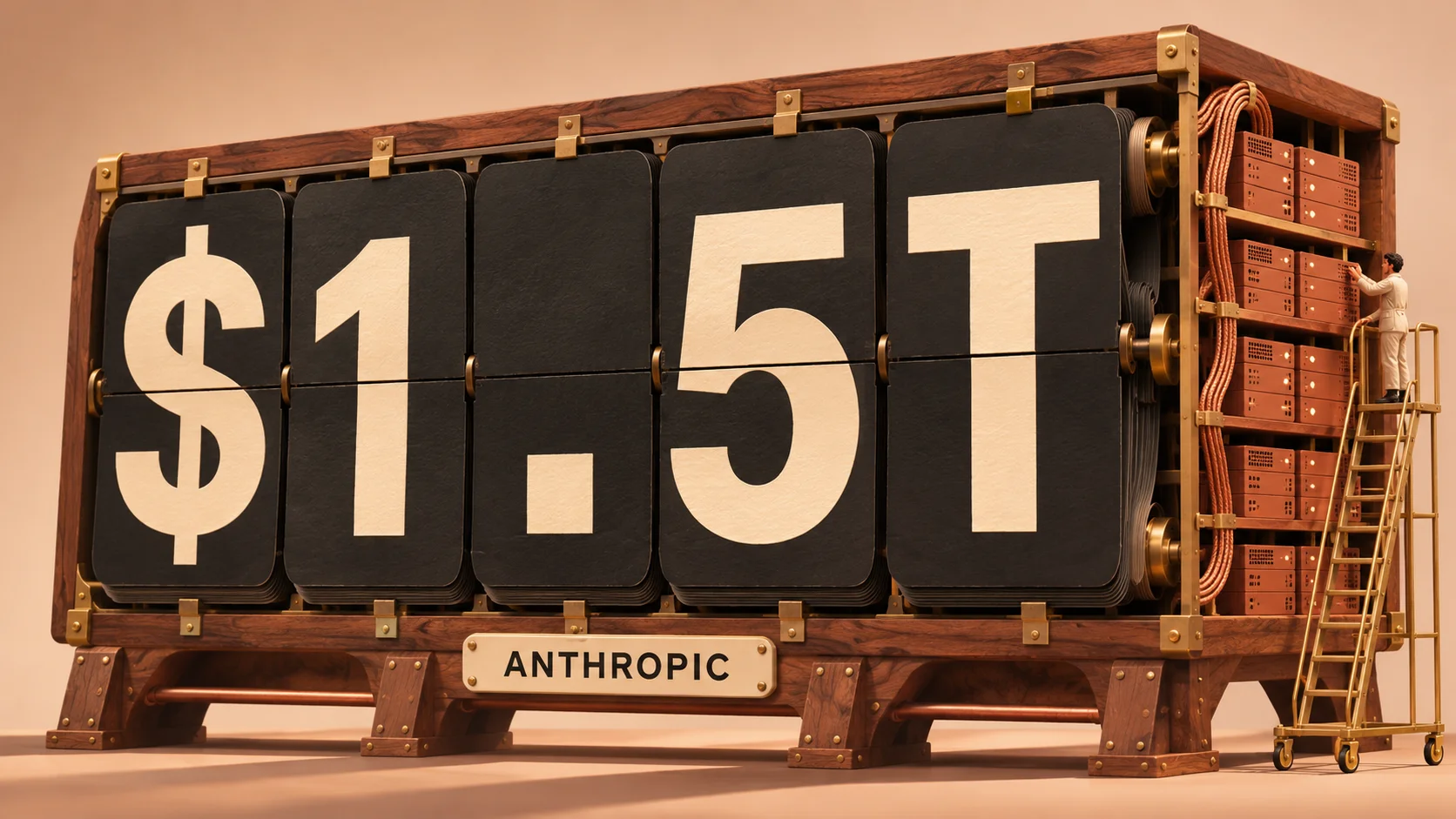
Anthropic took the IPO record from SpaceX on Wednesday evening. Investors paid $83 a share for a stake in the maker of Claude, $5 above the high end of the range Anthropic had marketed. The deal valued the company at $1.5 trillion heading into its Nasdaq debut on November 19.
The offering totaled $81.34 billion. Almost all of that money is headed to Anthropic. Of the 980 million shares in the deal, Anthropic sold roughly 956.4 million and existing shareholders sold the rest. That puts the company’s share at about $79.4 billion before fees.
The cost of running two generations of Claude
Customers will still be sending requests to today’s Claude while Anthropic pays to train its successor. The two bills overlap, and the lab has to commit to computing capacity well before it knows how much business a new model will bring in. An extra month spent testing a release means another month of development before Anthropic can charge anyone to use it. The IPO makes that month considerably easier to afford.
Dario Amodei used some of his time at the opening bell to explain why safety could take precedence over business pressures. He acknowledged the risk of losing control of advanced AI and pledged to resist pressure from business or government to compromise on safety. Buyers had seen the financial implications in writing. Anthropic’s prospectus warned that pursuing its public-benefit mission could cost shareholders money. Its founders also retained enough voting power to stand behind a costly decision if other shareholders object.
Who gets to hold a release?
Founders rarely have to make that call at a shareholder meeting. More likely, a researcher finds something worrying late in testing, after customers have penciled in a launch date. At that point the customer running an older version of Claude needs an answer to a fairly urgent question: does the finding affect the model already in use? Finance has a different job that afternoon. Somebody has to work out what a delay does to the quarter.
Anthropic has told investors it’s prepared to disappoint them under those circumstances. They paid $83 a share with that warning in front of them. What we’d like to hear from Amodei on an earnings call is how the decision works inside the lab. When the researcher and the release team disagree, whose signature does it take to keep Claude from shipping?