On August 14, Blackbird Ventures and Airtree cut their mark on Canva by 17 percent, from $42 billion to $34.9 billion, after commissioning independent external assessments. The Australian Financial Review broke the story. The write-down runs to $7.1 billion in US dollars, or roughly $10 billion Australian, which is the figure most headlines carried.
The cause is the unusual part. Canva's AI features cost far more to run than the company had budgeted for. It cut its 2026 revenue growth forecast from 30 percent to 20 percent in response, and its backers repriced it on the new number. Share loss and a soft software market had nothing to do with any of it.
Write-downs of that kind are new, and Canva is the biggest company to take one so far. The mechanism behind it has very little to do with design software, which is the reason to pay attention.
The arithmetic
A subscription gets priced once, a year in advance. A generative feature costs money on every use, because a model has to run on a chip in a data center and somebody pays for that compute. The subscription price stays where it was.
So popularity works against you. Every extra image a customer generates adds cost to a contract signed months earlier at a fixed number, and Canva has 265 million monthly users and 31 million paying ones, which is how it hit the ceiling before anyone else did. The arithmetic is indifferent to scale. It behaves the same way at two million users.
We wrote about the brand side of this two weeks ago, when Canva's promise and its cost structure came apart and got priced on the gap. The financial side reaches well past one design company.
Consequences went beyond the mark. Canva's own independent valuation, the one setting the price for its annual employee share issuance and which more than five thousand staff can actually sell at, fell from $38.9 billion to $31 billion over the past year. Private-share broker Hiive was reportedly offering stock on the secondary market near $30 billion. The Nasdaq listing Blackbird had told its own investors was ready for the second half of this year now looks shelved, with reports pointing to 2027.
Google's version of the same bill
Eighteen days later, Google shipped something that shows how differently the same feature can behave.
Pics is an image generation and editing app built on Nano Banana, Google's image model. It was announced at I/O in May and reached general availability on Tuesday, going to Google AI Pro and Ultra subscribers along with Workspace Business Standard, Business Plus, Enterprise Standard and Enterprise Plus customers. It runs standalone at pics.new and inside Docs and Slides from day one, with Drive to follow.
This is the same feature category that repriced Canva, sitting on a completely different cost base. Google owns Nano Banana, along with the chips it runs on and the Docs, Slides and Drive files the output ends up in. Pics also arrives folded into subscriptions these customers had already bought, so no new revenue is attached to it either.
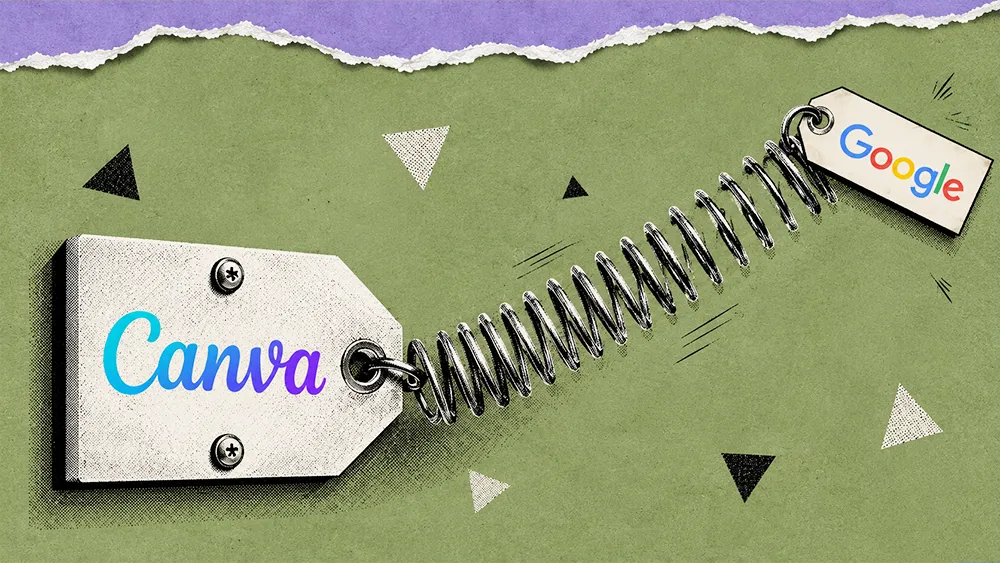
Follow one image through both sets of books and the difference shows up fast. A Canva subscriber generates an image, Canva pays for the compute, and nothing arrives on the revenue side because the subscription was sold months ago. A Workspace user generates an image in Pics and Google pays for compute too, except that Google is buying it from itself, on chips it designed, and what comes back is another year of a Workspace contract.
Both companies book a cost with no revenue against it. The difference sits in what the spending buys. Canva's money goes on delivering a product its customers already paid for, while Google's buys renewal.
What August priced was the gap between renting a model and owning one. Image generation remains a perfectly good business for whoever sits on the right side of that gap.
Who else is carrying it
The exposure is easy enough to test. Look for a flat recurring price, a generative feature running on every use against a model the company licenses rather than owns, and a vertically integrated competitor positioned to fold that same capability into something the customer already pays for. Canva had all three.
Model ownership is the variable, which makes company size and category poor guides here.
Adobe is the obvious public comparison, selling Express into the same market against the same buyers, though it only partly fits, because Adobe owns Firefly and that puts its image generation costs closer to Google's than to Canva's. Carry the distinction into any other company you test. Good margins do not follow automatically from owning a model. The narrower position that got repriced in August was licensing one while a vertically integrated rival bundles the same capability into a subscription it has already sold.
Timing cuts against public companies here. Canva is private, so its backers marked it once, on their own schedule, after commissioning external assessments. Public companies get marked continuously by a market that will not wait for an independent valuer. TheNextWeb's coverage of the write-down ended by asking who else gets cut for the same reason, and three weeks on, that question is still sitting there.
The counter-argument
There are two serious arguments against everything above.
Costs are falling fast. Blackbird's Rick Baker, defending the markdown, said Canva has cut the cost of serving AI by roughly 90 percent, and that this unlocks AI at a scale where the unit economics work. Readers who followed our reporting on enterprise token costs will recognize the figure. Palo Alto's Nikesh Arora used the same 90 percent to describe what has to happen over two years before enterprise AI deployment makes economic sense. Baker is claiming Canva got there already, and if he is right, August was an overreaction to a problem that solved itself and the argument here dissolves with it.
The second is that bundling has been tried on Canva and lost. Microsoft launched Designer as its answer to Canva in October 2022. It is largely free with a Microsoft account and lives inside Microsoft 365, and over the following four years Canva's ARR went from roughly $1 billion to $4 billion. Ninety-five percent of the Fortune 500 use Canva. More than 30 billion designs have been made on it.
That history is real, and it cuts in favor of the argument rather than against it. Four years of free distribution left Canva growing fourfold, which is exactly why cost structure rather than bundling is the variable worth watching in 2026. Designer put a template editor into a suite that already had one, whereas Pics puts the generation itself into the document, and generation is the line Canva pays for.
Canva's defenses deserve weight too. The template and brand-kit ecosystem is supply-side infrastructure Google has not attempted to build, and the creator marketplace pays people, which a prompt box cannot replicate. Affinity, made free last year and downloaded around two million times in two weeks, gave the company a professional tier Pics is going nowhere near. Canva also saw the prompt box coming and rebuilt as an AI-first platform this year, wiring itself into the major assistants, Gemini included.
What to watch
The 90 percent claim is the first thing to test. A cost per task falling that far while usage climbs should become visible within a couple of quarters, and it is the most consequential number in the story.
Canva's guide comes second. The company has guided to roughly 20 percent and says its core business is intact, pointing to a ninth straight year of free-cash-flow profitability and 25 percent revenue growth last quarter. Holding that guide would suggest the cost problem is fixed rather than deferred.
Then there is the matter of whether anyone else gets marked for the same reason, which decides whether Canva was an outlier or the first print. Private companies will show it at the next round of fund valuations. Public ones will show it in gross margin, sooner, and that is where to look first.
The narrower question
Canva will be fine as a company. It is profitable and enormous, and its users are fonder of it than they are of almost anything else in enterprise software.
The point from August travels further than the company does. For three years, shipping AI features has been how software companies justified their multiples. Canva is the first big one to watch those features compress its multiple instead, and it happened through nothing more exotic than a flat subscription meeting a metered cost.
A great deal of software got priced on the assumption that whatever customers wanted most would be free to deliver. Tuesday was Google demonstrating the value of owning the meter instead. Everyone else is still waiting to find out what their own version of that bill looks like.