Michael Burry Called the 2008 Crash. Now He's Shorting the AI Safety Story.
The investor behind The Big Short thinks the labs warning that AI is too dangerous to release are also the labs that profit when you believe it. He wants you watching one number instead.


If this caught your attention, that’s not accidental.

The best editorial systems don’t happen by accident. Outlever builds them.

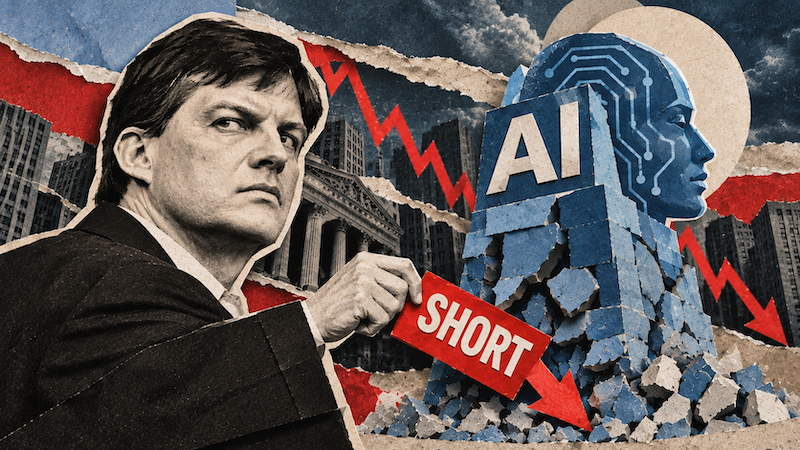
Michael Burry thinks the AI industry is running a con, and he said so on X on Monday.
The investor made famous by The Big Short called the sudden push to slow down frontier AI self-serving. His one-line version of the whole safety debate was that today's large language models aren't AI, won't become AGI, and so "there is nothing AI to slow down." He posted this two days after every major lab decided, more or less at once, that the technology had gotten dangerously fast. Burry does not think that timing is an accident.
Where this kicked off
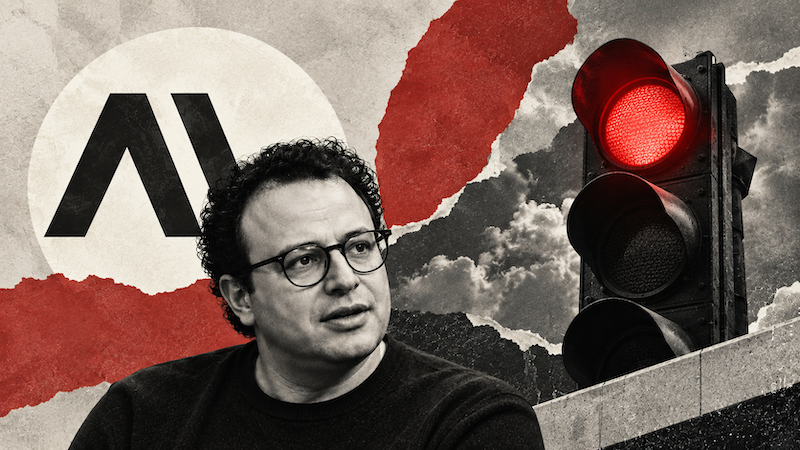
The trigger was an essay. On September 12, Anthropic CEO Dario Amodei published a roughly 3,800-word piece called "We Must Pace the Frontier," arguing that the industry should deliberately slow how quickly it improves model capabilities so that alignment work and outside oversight can catch up. He included a three-step plan and said Anthropic had already committed on its own to the first step, putting independent evaluators inside the lab. We wrote up the essay when it dropped, including the uncomfortable admission buried in it, that Anthropic can no longer promise its best models won't help someone build a bioweapon.
The essay alone would not have moved anything. The reaction did. Inside a day, Sam Altman said he agreed on the need to pace the frontier and would match Anthropic's evaluator commitment. Elon Musk replied in three words: "Dario is right." Demis Hassabis chimed in too. Four companies that spend most of the year trying to bury each other suddenly wanted the same thing, and they wanted it within about 24 hours of one another. We flagged the coincidence last week, when OpenAI and Anthropic sent their safety signals in the same seven days. Burry looked at that and decided to bet the other way.
Four reasons he's not buying it
He made his case in four steps. The first one throws out the whole premise. Burry does not believe the current models count as intelligence or lead anywhere near AGI, so to him there is no runaway system to rein in. Disagree with that and his other three points survive anyway.
The second is about competition. A slowdown protects whoever is already ahead. Anthropic and OpenAI are sitting on far more compute, talent and capital than anyone chasing them, while open-source projects and smaller startups keep narrowing the distance. Write the safety and training rules around the leaders' standards, and it's the smaller players who end up paying the higher compliance costs. Caution starts to look a lot like a moat.
The third is about how it reads to investors. Say your model might be too dangerous to release, and you have also told everyone it is the most advanced model going. The warning sells the product.
The fourth one is the one that bites. When growth cools, safety is a much nicer thing to blame than a weak quarter. It explains delayed launches, slower spending and IPOs that keep slipping without spooking anyone.
Burry's not exactly neutral
None of this makes Burry a neutral party. He built his name on seeing a collapse early, and calling the most hyped sector on the planet a mirage is its own kind of trade. The day after his first post he was already pointing at research on how much published science fails to replicate, which is a lot of ground to cover in a weekend. Run his own incentive test back over him and it holds. The honest response is not to trust either side on vibes, but to check the money.
Now check the money
The money is where the timing gets awkward for the labs.
Both companies quietly filed IPO paperwork over the summer and were said to be aiming for fall listings. Anthropic raised $65 billion in May at a $965 billion valuation, and bankers have floated a public debut somewhere near $2 trillion. Its annualized revenue climbed from about $9 billion at the end of 2025 to roughly $47 billion in May and past $65 billion by late July, with investors expecting it to close the year between $100 billion and $120 billion. OpenAI about doubled to $40 billion across the same window, which is a huge number and still the quieter one of the two.
Then came the part that fits Burry's script a little too well. A few days after co-signing the slowdown, Altman said OpenAI would not go public in 2026, blaming the safety and alignment work still to do. Safety, given as the reason the listing waits. It is close to word for word what he told you to look out for.
The growth story has soft edges elsewhere too. Data cited by Deutsche Bank pointed to ChatGPT consumer subscriptions flattening in parts of Europe, even with hundreds of millions of weekly users. And Anthropic books a big chunk of its revenue through cloud partners on a gross basis, which puffs up the headline figure next to rivals that report net. Even the number everyone keeps quoting has a footnote on it.
Both sides can be right, and that's the problem
This does not mean the warnings are invented. The risks Amodei lists, from losing control of the systems to their use in cyberattacks and bioterror, keep serious researchers up at night for good reason. He has spent five years insisting a lab can move carefully and still win, and he may mean every word he wrote.
That is exactly why it is hard to call. A safety concern can be genuine and commercially handy in the same breath. Even readers who buy the argument noticed the essay doubling as a claim about market position. We have watched this company's principles and its commercial instincts pull apart before, most vividly when it sued a customer over a logo while selling itself as the conscience of the industry. A firm can warn that AI is getting dangerously powerful and still profit when investors conclude its models are exceptionally powerful. You do not need a plot for that. The incentives manage it by themselves.
It comes down to revenue
So how do you settle this without joining a team? Not with a benchmark. The real question under the safety debate is whether frontier development is being paced because the danger is climbing, or because the economics of training bigger and bigger models keep getting worse as costs rise and competitors crowd in. The industry has already started conceding that second story in public, every time it talks up efficiency instead of raw power.
If Burry is wrong, the labs ease off and revenue keeps compounding, because responsibility was never what was capping it. If he is right, the safety talk gets louder just as the growth line starts to bend, and the proof turns up on a page of the S-1 rather than in a research paper. We already made the case that the slowdown push looks a lot like a $2 trillion sales pitch. Burry is making the same bet with his own name attached.
Watch the revenue.
If this caught your attention, that’s not accidental.

The best editorial systems don’t happen by accident. Outlever builds them.

Get the latest AI insights first.
Sign up for updates, interviews, and fresh analysis on how AI is reshaping business, brands, and technology.