Anthropic Sues Abnormal AI Over a Logo, and Its Insecurity Is Showing
Anthropic, one of the most valuable AI companies in the world, file a trademark infringement and unfair competition suit against Abnormal AI on July 1st claiming that Abnormal AI copied Anthropic's slash-style logo.


If this caught your attention, that’s not accidental.

The best editorial systems don’t happen by accident. Outlever builds them.
There is an old rule in brand strategy that has held up for decades: the stronger the brand, the less it fights over small stuff. Coca-Cola does not sue regional soda makers over the color red. Category leaders let the brand do the defending.
So it was strange to watch Anthropic, one of the most valuable AI companies in the world, file a trademark infringement and unfair competition suit against Abnormal AI on July 1st in the Northern District of California (case 3:26-cv-06754). The complaint, first reported by Law360, claims that Abnormal's 2025 rebrand copied Anthropic's slash-style logo and animated logo transitions and confused customers.
On paper it is a logo dispute. In practice it is one of the most insecure moves a market leader has made in years, and it comes from a company whose entire pitch is that it is not like the other guys.
Suing your own customer, without a phone call
Some context. Abnormal is a cybersecurity company. A big one, protecting more than a quarter of the Fortune 500 according to its own response to the suit, but it operates in a different category entirely. It builds behavioral AI that stops phishing and fraud. It does not sell frontier models. Nobody has ever opened a procurement cycle for email security and accidentally bought a large language model.
Abnormal CEO Evan Reiser's public response, published July 7th, lands three punches that should make any brand strategist wince on Anthropic's behalf. The company's slash-based identity dates back to 2021, with design files to prove it. The company itself was founded years before Anthropic existed. And, most damaging of all, Abnormal is a large paying Anthropic customer, and Reiser says he learned about the lawsuit from a reporter rather than from his supposed partner.
Sit with that for a second. Anthropic sued one of its own major customers, publicly, without so much as a heads-up call. Whatever the legal merits turn out to be, and trademark law is genuinely unsettled here since Anthropic holds no registered monopoly over every A-slash design in tech, the brand story is already lost. You cannot market yourself on trust and partnership and then treat a top customer like a hostile stranger. The complaint even demands disgorgement of all of Abnormal's revenues, earnings and profits, per Abnormal's account of the filing. Over a slash.
The market noticed. The morning after Reiser's post, commentary on X surfaced by explainx fixated not on logo similarity but on that single sentence about learning of the suit from the press. Enterprise buyers pay attention to how a vendor behaves when a relationship turns adversarial. They now have a data point.
The Microsoft playbook, minus the self-awareness
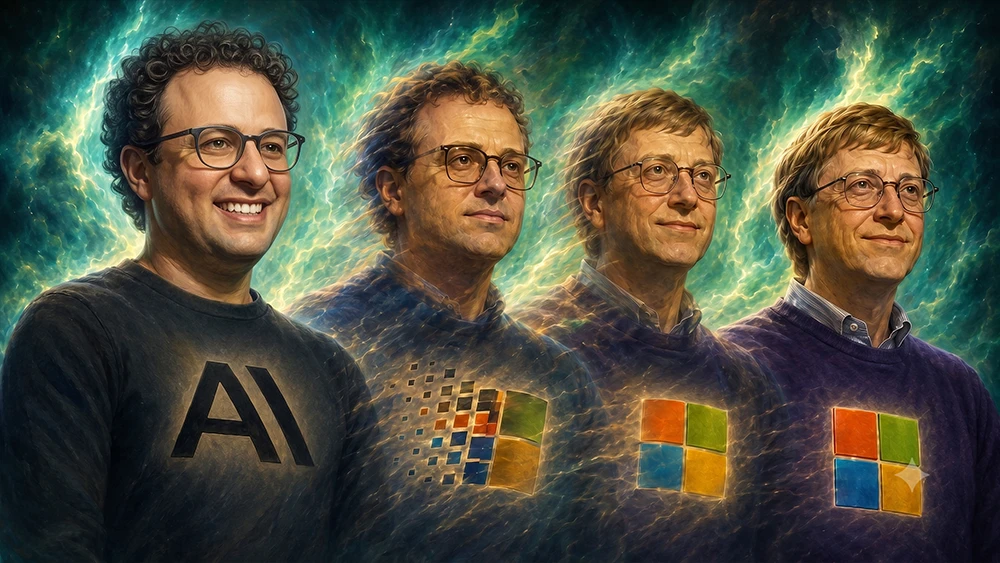
The historical rhyme here is uncomfortable. In the 1990s, Microsoft under Bill Gates perfected a certain posture: dominant, litigious, willing to use legal and commercial leverage against anything that moved in its peripheral vision. It worked commercially. It also permanently branded Gates-era Microsoft as the evil empire, a reputation the company spent two decades and billions in philanthropy trying to scrub off.
Dario Amodei has built his public persona as the anti-Gates of the AI era. The thoughtful founder. The safety-conscious one. The man who left OpenAI on principle and writes long essays about AI serving humanity, positioning Anthropic as the conscience of an industry racing toward a cliff. That is the brand. That is the whole brand.
And then the legal department files a scorched-earth trademark suit against a smaller company in a different market, a customer no less, over a diagonal line. This is precisely the behavior the good-guy positioning was supposed to rule out. Microsoft at least never pretended to be a public benefit corporation. Anthropic literally has it in its legal name.
The pattern matters more than the incident. As the explainx analysis notes, 2026 has seen Anthropic on the plaintiff side against Abnormal and against Alibaba over model distillation, in parallel trademark fights in India, and on the defense over Claude Max usage limits. One lawsuit is a dispute. A portfolio of them is a personality.
What insecurity looks like in brand form
Secure brands enforce their marks quietly and proportionately, usually starting with a letter and a conversation. Insecure brands file public federal complaints demanding a customer's profits and let its CEO find out from the press.
The deeper question is why a company at Anthropic's altitude would bother at all. When you are winning the category, a cybersecurity firm's slash logo is background noise. You only start seeing threats in other people's letterforms when you are anxious about how distinctive your own identity really is. Half the industry now trades in slashes, gradients and .ai suffixes. Suing one of them does not establish distinctiveness. It advertises the lack of it.
A court will eventually weigh Abnormal's first use against Anthropic's fame, and that could take years. The brand verdict arrived in about 24 hours. Anthropic asked to be judged as the moral center of the AI industry. Fine. By that standard, this filing is not brand protection. It is brand self-harm, from a company so worried about a slash that it slashed itself.
If this caught your attention, that’s not accidental.

The best editorial systems don’t happen by accident. Outlever builds them.
Get the latest AI insights first.
Sign up for updates, interviews, and fresh analysis on how AI is reshaping business, brands, and technology.