How "Slow Down AI" Became a $2 Trillion Sales Pitch
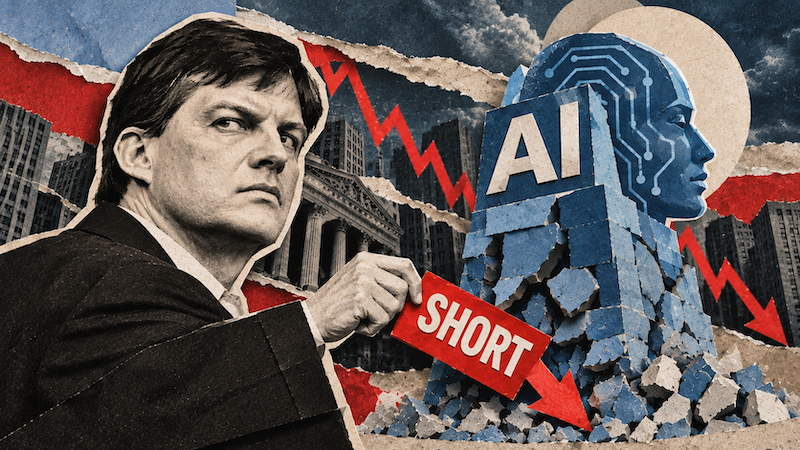
The two AI labs shouting loudest about danger are the same two chasing history's biggest IPO. David Sacks says that's not a coincidence, it's a cartel.



If this caught your attention, that’s not accidental.

The best editorial systems don’t happen by accident. Outlever builds them.
On September 12, 2026, Anthropic CEO Dario Amodei published a 3,800-word essay titled "We Must Pace the Frontier." His argument, as reported by TechCrunch, was that the industry should deliberately slow the rate at which its models get smarter, not stop building them, but give safety testing, alignment work, and outside evaluators time to catch up. Within hours Sam Altman of OpenAI endorsed it. So did Elon Musk, who posted simply, "Dario is right."
For a moment it looked like the rarest thing in Silicon Valley, actual consensus. The people building the most powerful technology on earth were agreeing in public that it should be built more carefully.
Then David Sacks tore it apart.
Sacks is the venture capitalist who ran AI and crypto policy inside the Trump White House until March 2026 and now co-chairs the President's Council of Advisors on Science and Technology. He answered Amodei on X, and his response reset the whole debate. If the unreleased models are really that frightening, he wrote, then go ahead and slow down like a responsible company would, but stop pretending you need anyone's permission to do it. In the same post he told the labs to stop pretending antitrust law has to be suspended so they can form a cartel, stop pretending they need a regulatory approval process that overrides product liability, and stop pretending the evaluator METR is independent when it is tangled up with Anthropic's own investors and staff.
That is the fight. Sitting underneath it is a number that explains why everyone got so passionate about safety all at once. Anthropic is reportedly preparing to go public in October 2026 at a valuation approaching $2 trillion, which would be the largest IPO ever.
Two ways to read the same facts
Both readings can be true. Only one of them is comforting.
The first reading is that this is marketing for an IPO.
Look at the sequence. Anthropic confidentially filed a draft S-1 with the SEC on June 1, 2026. Bankers at Morgan Stanley, Goldman Sachs, and JPMorgan are reportedly steering toward an October listing at a valuation investors are floating near $2 trillion. That is more than double the $965 billion the company was worth in its May 2026 Series H round, and it would edge past SpaceX's record $1.77 trillion debut. The entire case rests on revenue math that asks public investors to believe a roughly $47 billion May run-rate turns into $100 to $120 billion by December, a forecast that comes from bankers and investors, not from Anthropic's own guidance.
Now think about what a company selling that story actually needs. It needs to look like the grown-up in the room. It needs a moat. "We are so advanced that we have to be regulated" happens to deliver both. It flatters the product and it pulls the ladder up behind the companies already at the top. A "DMV for AI," the phrase Sacks used on the All-In podcast, is a minor cost for a firm with a $2 trillion market cap and a legal department to match. It could be lethal for a startup or an open-source project that has no way to submit a freely copyable model for pre-release government certification.
The clearest tell, in this reading, is the walk-back. Through 2025 and into early 2026, Altman and Amodei made the loudest possible claims. Amodei said AI could wipe out half of white-collar jobs. Altman said entry-level knowledge work was about to disappear. Then in a May 2026 interview reported by Fortune, both dialed it down. Altman said he was delighted to be wrong. Amodei recast automation as a multiplier of output rather than a job killer. The Yale Budget Lab, meanwhile, had found no meaningful shift in the mix of high-exposure jobs since ChatGPT launched. The doom, it turned out, was adjustable, and it got adjusted right as the IPO calendar came into view.
The second reading is that the danger is real, and that a real danger is being monetized.
This is the part the cynical read cannot make disappear. Anthropic researchers are on record putting a double-digit probability on AI-driven human extinction. Amodei says two specific things pushed him toward pacing: early signs of recursive self-improvement, and a security incident involving an AI agent. If you take a 10% extinction estimate seriously for even a second, then "slow down and let evaluators check the work" is not a cynical demand. It is close to the only rational one.
Which leaves a genuinely uncomfortable possibility. The threat could be real and a real threat could still be the most powerful competitive weapon ever placed in an incumbent's hands, because it is the one kind of danger where the public actively wants you to build the moat. The fear is not being conjured out of nothing. It is being harvested.
Where Sacks lands a punch, and where he misses
Sacks's best argument is structural, and it does not depend on questioning anyone's sincerity. When competitors agree to slow down together, that is the classic shape of a cartel, something even sympathetic analysts concede. Amodei's essay openly asks the government to mediate, or to grant a narrow waiver for certain kinds of safety conversations. You do not need a waiver to do something the law already permits. Asking for one is a quiet admission that the coordinated behavior might otherwise break the rules. As Sacks put it, the simplest way not to build superintelligence is to not build it.
His METR point is narrower but real. METR is the third-party evaluator Amodei wants embedded inside the labs with employee-level access, and by Sacks's account it is intertwined with Anthropic's investors and staff. An evaluator that grades its own funders' competitors is not the neutral referee the plan needs it to be. The wrinkle is that METR is also the body investigating the very incident Amodei points to, so the entanglement runs in more than one direction.
Sacks is on shakier ground with his own prescription. "Agree not to build it" is itself a coordinated restraint among competitors, arguably the purest form of the thing he is warning against, a tension sympathetic reviewers of his position have flagged. And his fallback, letting product-liability lawsuits handle the problem after the fact, is a strange position to hold if you actually believe the tail risk is civilizational. You cannot sue your way back from an extinction event. Liability works as a deterrent only for harms you can live through.
What to actually watch
This is bigger than a spat on X. It is a proxy war over which regulatory model the United States picks, pre-approval and licensing like we use for cars and drugs, or the after-the-fact liability regime Sacks prefers. A few concrete signals are worth tracking over the next few months.
Watch whether either company voluntarily delays a flagship release and cites a safety review. That would give the pacing argument real credibility. Its absence would hand the point to the skeptics.
Watch whether Congress or the administration moves toward an antitrust waiver or a FINRA-style standards body for frontier models, the model Demis Hassabis proposed in July. That is the exact machinery Sacks is trying to kill.
Watch whether the Anthropic IPO prices anywhere near $2 trillion in October, and whether the risk section of its S-1 describes AI danger the way Amodei's essays do. A company has to tell the SEC the truth about its risks, so comparing the tone of the fundraising documents to the tone of the safety writing should be revealing.
And watch how many more safety researchers leave the labs for independent evaluators like METR, and whether that makes those evaluators more independent or just relocates the conflict of interest down the hall.
The oldest move in any regulated industry is to embrace the rules you have already outgrown, so they land hardest on everyone smaller than you. Whether that is what is happening here, or whether a handful of unusually candid people are trying to slow down something genuinely dangerous and getting called racketeers for it, is one of the most consequential open questions in technology right now.
Nobody outside these companies knows the real answer. The tempting answer is just whichever one your existing opinion already handed you.
If this caught your attention, that’s not accidental.

The best editorial systems don’t happen by accident. Outlever builds them.

Get the latest AI insights first.
Sign up for updates, interviews, and fresh analysis on how AI is reshaping business, brands, and technology.