Ramp says companies keep losing what their employees figure out with AI. Its fix would also put Ramp between its customers and the AI they buy.
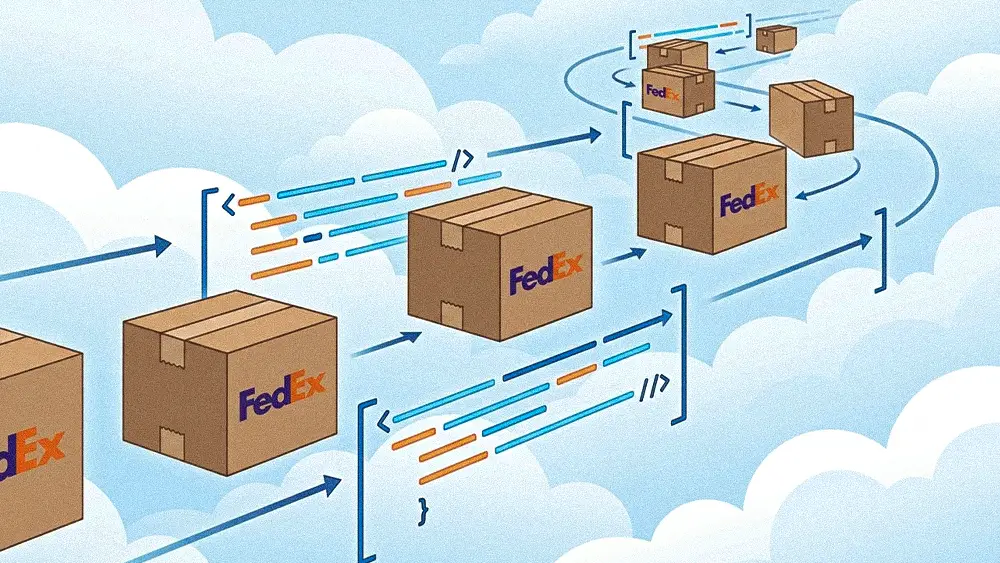
Ramp's announcement of Glass, which went to early access on October 13, opens with an employee who has figured out the best way to prep a board deck while nobody else at the company knows it. Ramp argues that handing every employee an AI subscription doesn't make a company AI-native. In Ramp's telling, good work stays in one person's chat history and is lost when they switch tabs, go on vacation or leave.
Co-founder Eric Glyman framed the launch around a question from podcaster David Senra about how Ramp moves so fast. His answer, in a launch post on X, was that Ramp learns things once. Glass is the internal tool he credits for it, and Ramp is now selling it to other companies.
On its own, Glass is a shared AI workspace for teams. But Ramp, which started out selling corporate cards, already tracks what businesses spend on AI and, since August, routes their model requests. With Glass it would also host the work. That puts a finance company in competition for the software employees use every day, and it shows how far Ramp wants its brand to stretch.
Glass turns one employee's prompt into company property
Glass connects to the tools where company knowledge already sits, including Linear, Notion, Google, Slack and Gong. Employees can save skills, which are reusable workflows that anyone else at the company can run. Ramp says it has built more than 350 of them internally.
The example Ramp leads with comes from its sales team. Feature requests from customers used to be copied into Salesforce by hand, about 300 a month. In May, an account manager saved a Glass prompt that pulls them straight from call recordings, and Ramp now captures 20,000 a month, co-founder Karim Atiyeh said in his own post. Glass also ranks the requests and emails customers when something they asked for ships, and it has sent more than 5,000 of those emails.
Glyman wrote that 323 employees, from product managers to marketers, have made more than 6,500 edits to what Glass knows. Ramp reports 99.5% AI adoption across its workforce. Every request runs through Ramp Router, which picks a model for each job, and Ramp says moving work into Glass cut its AI bill by about 30% on some accounts.
Ramp built Glass after it burned through $1.5 million in AI tokens in a single week in May, PYMNTS reported, citing Glyman's post. Glyman joked that Ramp's CFO wishes Glass had arrived sooner.
Glass is in early access for now, and Ramp says it will help the first group of companies set it up. It hasn't announced pricing.
Ramp has been selling its own operating model all year
For more than a year, Ramp has been selling tools it first built for its own use, and each launch has taken the company further from corporate cards.
In July 2025, Ramp shipped its first autonomous finance agents alongside a $22.5 billion valuation. In June 2026 it raised $750 million at $44 billion and announced AI token spend management, procurement and accounting agents, Ramp Stack for accounting firms and a deeper deal with Visa to let agents make corporate payments. In August it launched Router, an API that sends each request to a model from OpenAI, Anthropic, DeepSeek and others, free through the end of 2026. Ramp said it had been running the router on its own traffic for three years.
Ramp's valuation has risen quickly. It was valued at $13 billion as recently as March 2025. Last week, Bloomberg reported that it raised about $1.85 billion at a $60 billion pre-money valuation, led by Dragoneer and Thrive Capital. Ramp hasn't confirmed the round. It has told investors it wants to be IPO-ready by the end of 2026.
Ramp's coding agent, Inspect, writes more than two-thirds of its code, and Glass ran internally for about six months before launch.
The real product is a line item Finance can read
With Glass, Ramp has a product at three points in how a company uses AI. Its spend tools show who paid, Router picks the model for each request, and Glass is where employees do the work. Glass is the first of the three that records what the spending produced.
Ramp's launch copy says AI has become one of the fastest-growing expenses, spread across dozens of tools and teams, and that most companies can't say who's spending it, on what, or whether it worked. Ramp's own AI Index shows business AI spend up 20.7 times since June 2025. Ramp says Glass will let Finance see that spend by team, workflow and result.
Ramp also stands to gain data. It serves more than 70,000 customers. It already sees what those companies pay for AI. If Glass is widely adopted, Ramp would also see which workflows the money goes to, across thousands of businesses. A model company sees how its own models are used, but not what customers spend with its competitors.
Glass also lines up with a roadmap Glyman laid out in 2025, in which agents handle finance busywork in 2026, run work in parallel in 2027 and operate on their own under human oversight by 2028. Skills saved in Glass are the kind of written-down workflows those agents would need.
When Router launched, one analysis argued the real prize in AI infrastructure is owning the routing decision between models, not the smartest model. Glass would put Ramp closer to the work itself.
Ramp is pitching Glass with its own results
Ramp now describes itself differently. Its X profile calls it the AI finance platform. The Glass launch tagline says AI made every employee faster and Glass makes the company smarter, and the product page calls Glass an AI workspace where knowledge compounds.
Ramp's other products have plain functional names like Budgets, Stack and Router. Glass has a name of its own, which could help Ramp sell to buyers who aren't shopping for spend management. A head of sales or a CMO could buy it for their team without ever using a Ramp card.
Glyman's post starts with Senra's question about Ramp's speed and answers it with examples from inside Ramp, including the account manager's feature-request prompt. Ramp executives Geoff Charles and Karim Atiyeh posted their own versions the same day.
Every number in the launch comes from Ramp, a company of roughly 800 people that, by one account of its playbook, gave staff unlimited AI budgets and ran adoption leaderboards. A 20,000-person enterprise with procurement reviews and cautious lawyers is a different place to deploy software. Even friendly coverage noted that broad real-world results are still ahead.
The model labs are selling the same promise
A shared AI workspace with company context and reusable skills is exactly what Anthropic, OpenAI, Microsoft and Google are pitching to enterprises. Early write-ups already describe Glass as Ramp's own version of Claude Cowork.
Ramp is pitching neutrality instead. Glass runs open or closed models, and the company's position is that customers should switch the day a better one ships. The labs have less reason to make that offer about their competitors' models. It isn't clear yet how much buyers will value it over features the labs build themselves.
There's a possible conflict, though. Ramp sells controls that rein in AI spend, a router that may eventually charge on volume and a workspace built to increase usage. Router is free only through 2026, and Ramp hasn't said what it will cost after that. Once Router has a price, customers may ask whether its routing favors their budget or Ramp's revenue.
Glass also asks companies to pipe Slack threads, customer calls and internal documents into a system run by the vendor that handles their expenses. That data is more sensitive than card transactions, and larger customers will put it through security review.
Marketing's AI spend is about to get its own line item
In many marketing teams, AI use is scattered across personal subscriptions, agency tools and one-off experiments. If tools like Glass catch on, Finance will see that spend by workflow and start asking which workflows paid off.
Our sister publication State of Brand wrote last week that AI can optimize a campaign without telling marketers whether it created any demand. Tracking AI spend by workflow runs into the same problem. CMOs who can't connect an AI workflow to a business result will have a harder time defending the budget once the costs are itemized.
Ramp's announcement also mentions the onboarding email customers actually read, which is marketing work. When a company saves prompts like that as shared skills, they end up shaping how the brand writes, often more than a guidelines document does. Brand teams will want a say in who writes them. Two weeks ago, State of Brand wrote about Vanta, whose AI writing policy came from legal rather than marketing. Shared skills raise the same question about who owns the company's voice.
Marketing leaders can start on this without Glass. Find the AI workflows on your team that work and document them so they don't leave with the person who built them. Put a named owner on the prompts that carry your brand voice. Start tracking what each workflow costs and what it produces before Finance does it for you.
For Ramp, the open questions are pricing, whether Glass will be sold to companies that don't use Ramp's cards, and what outside customers report once early access widens. If Glass catches on, the company that pays a business's AI bills will also be the one telling it what those bills bought.