Nvidia Wants Wall Street to Underwrite GPUs Like Toll Roads
Nvidia signed up Apollo, BlackRock, Blackstone, Brookfield, Goldman Sachs and KKR to raise $500B for AI factories, and disclosed how much risk it keeps.



If this caught your attention, that’s not accidental.

The best editorial systems don’t happen by accident. Outlever builds them.

Nvidia said Monday it has signed memorandums of understanding with Apollo, BlackRock, Blackstone, Brookfield, Goldman Sachs and KKR to create independent financing platforms intended to mobilize more than $500 billion of third-party capital for AI data center construction over time.
The number arrived without a schedule, without individual commitments and without terms, so the more useful part of the announcement is the argument that came with it. In a post published the same day, founder and CEO Jensen Huang made the case that Nvidia systems should be treated as productive infrastructure rather than as depreciating hardware. His shorthand for it: in AI, compute is revenue. Speaking to CNBC the same morning, he described the company's chips as an investable asset, the kind of thing lenders underwrite against.
That is a claim about asset life and accounting as much as about technology, and it lands in the middle of a fight Nvidia has been having with its skeptics since July.
The argument
Four properties, in Huang's telling, make an AI factory financeable.
The first is fungibility. A DSX-class installation runs language, vision, speech, biology and robotics workloads, so if one tenant leaves, another can take the capacity. The architecture underneath is the same one deployed by every major cloud, systems builder and large enterprise, which gives any given site a deep bench of potential offtakers. Huang says that breadth is what protects residual value.
The second is the least conventional part of the pitch. Huang argues that CUDA improvements raise the output of hardware that is already installed, so a factory produces more intelligence per dollar in year four than it did in year one. Most physical infrastructure gets worse where it sits. This is an asset that Nvidia says gets better.
The third is track record. Nvidia points to the A100, which shipped in 2020 and is still under multi-year commercial commitment six years later for training, fine-tuning, inference and high-performance computing. Huang frames its economic life as approaching a decade, which is a direct response to critics who have argued that AI data center operators are using depreciation schedules that are far too generous.
The fourth is pricing. The post cites one-year H100 rental rates rising from roughly $1.70 per GPU-hour in October 2025 to about $2.35 by March 2026, cross-provider on-demand median pricing moving from around $2.00 to $2.70 over a similar window, and reported B200 rates running between $5.30 and $7.05. Rents climbing on a five-year-old product line is not the pattern the dark fiber comparison predicts. These are Nvidia's own figures, and the post does not name the pricing sources behind them.
The disclosure that matters
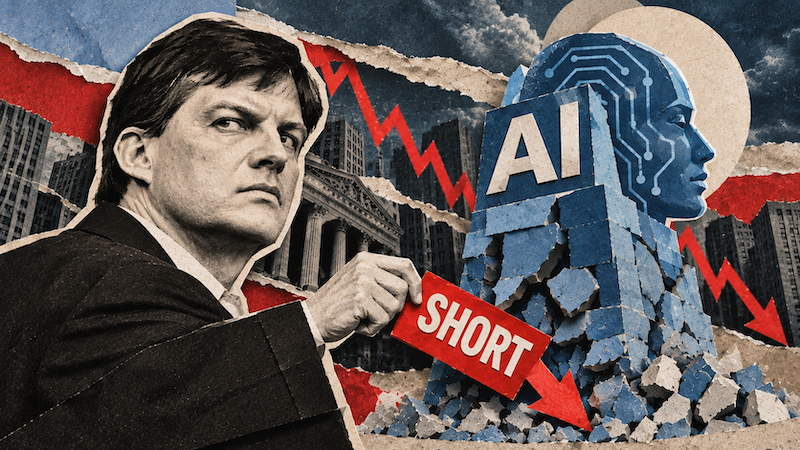
Nvidia has spent the past several weeks absorbing criticism over what detractors call circular financing: a supplier funding, guaranteeing or taking equity in the customers who then buy its products. The pressure spiked in late July on reports that Nvidia was weighing a $250 billion backstop tied to an OpenAI-anchored data center project, part of a wider round of deals Axios valued at more than $750 billion. The stock fell about 4.5 percent and the company's credit default swap spreads posted their largest single-day widening on record. Michael Burry has been among the louder skeptics, arguing that companies Nvidia finances or invests in turn around and spend the money on Nvidia hardware.
Huang takes the charge on directly, and in doing so puts a number on Nvidia's exposure. The company may provide residual-value support for up to 25 percent of a given opportunity, assessed project by project. He describes that as well below other compute-financing arrangements in the market, and as something layered on top of the capital providers' own underwriting rather than a replacement for it. Those firms, he writes, will independently evaluate the customer, the demand, the utilization, the cash flow and the residual.
The distinction is real. A capped support mechanism tied to residual value exposes Nvidia to what the hardware is worth second-hand, not to whether the tenant can pay its bills. It also means most of the money at risk is other people's, which is the entire point of the exercise.
It does not close the question, though, and there are three reasons to keep watching.
Independence is a spectrum. When the vendor supports a quarter of the residual on a deal, the underwriting is not arms-length in the way a toll road financing is. It looks more like a captive finance arm with a first-loss carve-out, a structure with a long and uneven history in aircraft, autos and telecom equipment.
Residual value is an estimate, not a fact. The whole thesis depends on GPUs holding value in a redeployment market that has been tight for three years and has never been tested through a demand air pocket. The A100 example is encouraging, but it describes a period of continuous scarcity.
And these are memorandums of understanding. Final agreements have not been executed. The $500 billion describes aggregate capital the platforms are designed to attract over time, not money raised, and Nvidia states plainly that it is not company revenue.
Why it still matters
The strategic logic holds up even if the headline number is soft. Nvidia's binding constraint is no longer fab capacity or customer appetite. It is the cost of capital at the customer layer. Frontier labs, neoclouds and national AI programs all want capacity they cannot finance at investment-grade rates, while private credit and infrastructure funds are sitting on enormous pools of long-duration, insurance-backed money hunting for contracted, usage-linked cash flow. A well-tenanted AI factory is roughly the shape of asset those funds were built to buy.
If the platforms work, Nvidia turns a financing bottleneck into a standardized product with repeatable structures, comparable diligence and eventually a secondary market, and it does so without carrying most of the risk itself. That is what separates Monday's announcement from the OpenAI backstop reports that rattled the market two weeks ago, and it presumably explains why the framing was so carefully constructed.
Investors have not fully bought it yet. NVDA traded down about 2 percent on the day, with Mark Cuban warning that subsidizing customer purchases leaves the market fragile. The market is weighing the same question the post is trying to put to rest, which is whether reaching for outside capital at this scale reflects confidence or strain.
Both readings are still live. Vendor financing has underwritten nearly every capital-intensive buildout in modern history, from railroads to cellular networks, and a fair number of those ended badly. What would make this one different, if Huang is right, is that the collateral keeps getting more productive and there is a line of buyers waiting for it.
Nvidia reports earnings in late August. The real test is not what these platforms raise. It is whether anyone publishes a residual-value curve for a five-year-old GPU that an insurance company is willing to sign.
If this caught your attention, that’s not accidental.

The best editorial systems don’t happen by accident. Outlever builds them.


Get the latest AI insights first.
Sign up for updates, interviews, and fresh analysis on how AI is reshaping business, brands, and technology.