
We're in the early innings, and more companies will file for Chapter 11 before the end of the year. The common thread will be high leverage in an inflationary, high-rate environment, combined with AI squeezing their products and no moat to fall back on.
 Wael SabraFounder + CEO, SiiRA
Last week, two companies at opposite ends of the AI economy turned to Chapter 11. Getty Images, the 31-year-old licensor of more than 477 million visual assets, announced a prepackaged restructuring that will take it private. Character.AI, the five-year-old chatbot platform once valued at $1 billion, filed for bankruptcy in Delaware the same day.
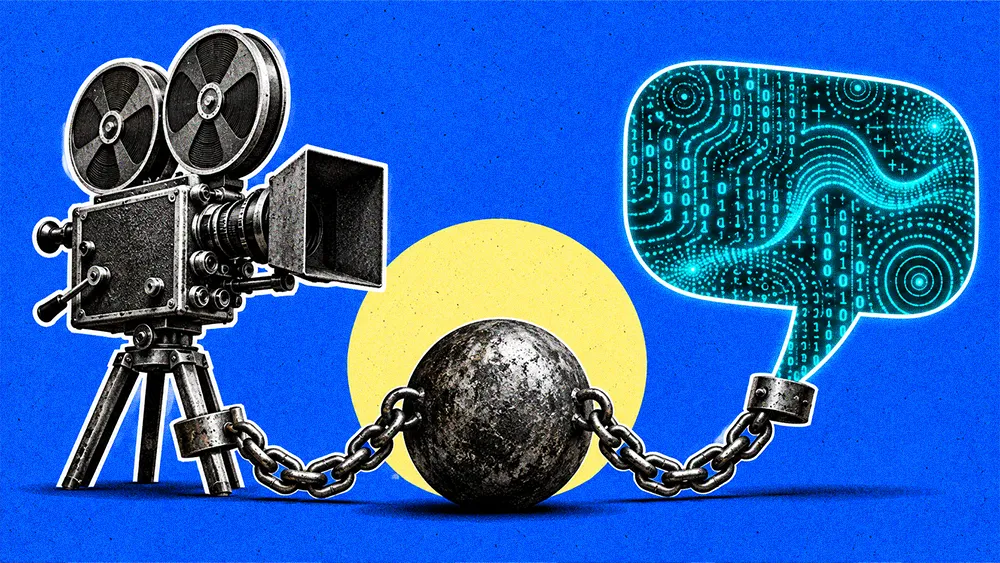
One is an incumbent squeezed by generative AI. The other was supposed to be generative AI's breakout consumer success. What they share says more about the coming wave of AI-era failures than what separates them: both are using the bankruptcy process to split the assets worth keeping from the liabilities nobody wants.
For Getty, AI weakened the floor and debt broke it
Under Getty's restructuring agreement, the Getty family and Koch Equity Development commit up to $533 million in new equity and will own the reorganized company outright. Bondholders agreed to retire $270 million in unsecured notes, and secured lenders agreed to lower interest and extend maturities. The company says the process will also address "non-operating legal liabilities" with no impact on contributors, customers, or employees.
AI did real damage. Getty's annual subscribers fell from 321,000 to 241,000 over the past year, and iStock, the low-cost arm most exposed to image generators, has cited declining agency demand and disruption. But the decisive blow came from the balance sheet. Getty's planned $3.7 billion merger with Shutterstock collapsed under UK regulatory pressure, costing more than $100 million in fees, while net interest expense climbed to $198 million over the past 12 months.
"AI is a headwind, and debt is what pushed Getty over the edge," wrote Andy Stout, media industry commentator and editor of RedShark News, regarding the filing.
Wael Sabra, Founder and CEO of staffing and AI delivery platform SiiRA, sees a familiar pattern. "Getty is an established brand carrying high leverage. Facing AI headwinds, it didn't cut costs early enough or fast enough," he said.
Character.AI is the disruptor that couldn't outrun its bills
Character.AI's story runs the other way. It drew tens of millions of users and, in 2024, a $2.7 billion licensing-and-hiring deal from Google that took its founders back to Mountain View. What remained was a company losing a reported $8 million to $9 million a month, settling lawsuits over alleged harms to minors, and facing an investigation by 46 states and territories.
"Character.AI looks like a high-growth company that ran out of funding options," Sabra said. "Once the litigation piled up, the next check was never coming."
Disney sits at the center of the exit. It hired a majority of Character.AI's staff before the filing and is now the stalking-horse bidder at $20 million for a nonexclusive, perpetual license to the company's code and technology. Character.AI's bankruptcy counsel has said Disney required the deal to run through Chapter 11. Through a court-approved asset sale, the technology can move to a buyer while the legal claims stay behind with the old entity.
Vuk Dukic, founder of AI agent developer Anablock, argues the outcome was predictable. Character.AI's safety changes arrived only after the lawsuits and a Senate probe, he noted, and "the AI race is not an excuse to skip safety, ethics, or legal compliance."
What gets left behind
That separation of assets from liabilities is the fight now underway. Disney's bid excludes user data, but the chats of roughly 12 million monthly users remain in the estate. Attorneys general from 39 states and Washington, D.C., have filed conditions for any buyer, including real age verification and the right for users to delete their data before a sale.
"Our most sensitive personal information is not an asset to be bought and sold," Mario Trujillo, senior staff attorney at the Electronic Frontier Foundation, told KQED.
More filings ahead
Sabra expects these two filings to be the first of many. "We're in the early innings, and more companies will file for Chapter 11 before the end of the year. The common thread will be high leverage in an inflationary, high-rate environment, combined with AI squeezing their products and no moat to fall back on," he predicted. His prescription doesn't beat around the bush: "Keep leverage low, and cut costs early and aggressively."
He also sees the pressure climbing the stack. "Even the biggest players, the overbuilders, are caught in an investment cycle," he said. "Disruption always starts at the bottom, and with AI it's reaching the top faster than ever. Could this be how the AI bubble bursts, from the bottom up? Maybe."
Getty and Character.AI ended up in the same place: deciding what was worth keeping and what had to be left behind. Every leadership team will ultimately face the same question. If AI squeezed your core product tomorrow, what would a buyer actually want, and what would you be left holding? If you'd rather settle it in a boardroom than in a courtroom, Sabra's taking calls.