Factory Fired Its Board Observer for "Unethical Conduct" Involving Its Biggest Competitor. 52 Minutes Later, Cognition Named Him CRO.
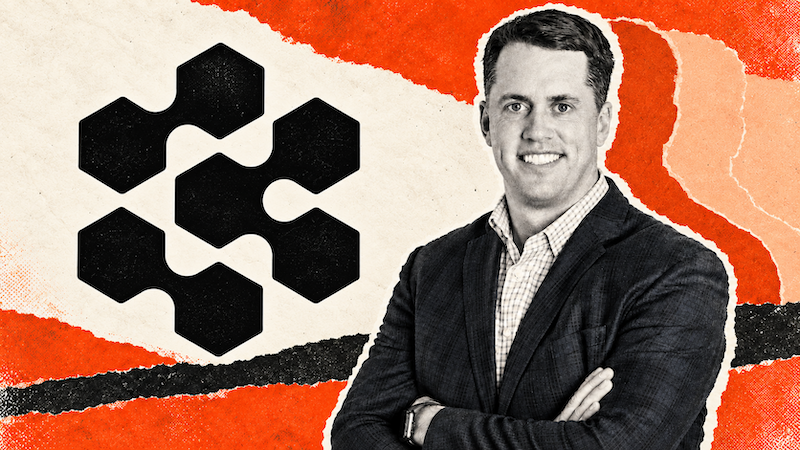
Factory's CEO says Chris Degnan sat in its board meetings while holding weeks of talks with Cognition. Cognition just made him its revenue chief.


If this caught your attention, that’s not accidental.

The best editorial systems don’t happen by accident. Outlever builds them.
At 9:33 a.m. Pacific on Wednesday, Factory CEO Matan Grinberg posted on X: "We are terminating Chris Degnan for unethical conduct involving Cognition."
At 10:25 a.m., Degnan posted that he was joining Cognition as chief revenue officer.
Cognition makes the Devin coding agent and is Factory's largest competitor. Degnan, the former Snowflake sales chief, had been a board observer and advisor at Factory. According to Grinberg, he spent weeks sitting in Factory's board meetings while in formal talks with the company he now works for.
What Grinberg Says Happened
At some point before this week, Grinberg writes in his post, Degnan mentioned a casual conversation with an executive at Cognition. Grinberg asked what he intended. Degnan answered that he had "made too much money" and was "too lazy to go work for Cognition," Grinberg says, and Grinberg took him at his word.
On Monday, Degnan advised the Factory team on a handful of confidential board-level matters. That evening he called Grinberg and said the Cognition talks had been formal and recurring, and had gone on for weeks. Grinberg says Degnan was bound by confidentiality obligations through his work with Factory, and that the company doesn't know how much information, if any, he passed along. Looking back, Grinberg writes, Degnan's recent questions about Factory's product roadmap and its "parity gap" with competitors look different.
Grinberg ended Degnan's roles as board observer and advisor on Tuesday.
He also accuses Cognition directly. According to the post, Cognition engineers sat for fake job interviews at Factory to pull information about its product. When that failed, he writes, Cognition went after people who knew Factory's confidential plans.
All of this is Grinberg's account. Neither Degnan nor Cognition has addressed it publicly, and Degnan's announcement doesn't mention Factory.
Who Degnan Is
Degnan joined Snowflake as an early sales hire in 2013 and stayed 11 years, eventually as chief revenue officer. Over that stretch the company went from zero customers to more than $4 billion in ARR and one of the largest software IPOs on record.
Factory announced him as an advisor in November 2025 to help it scale enterprise deployments. He backed the company in public too. In a LinkedIn post a few months ago, Degnan wrote that one conversation with Grinberg was enough to convince him, and called Factory the next great company.
His Cognition post is just as warm. Degnan wrote that meeting CEO Scott Wu, Russell Kaplan, and the team made him want to do it again, and that hearing customers talk about Devin made the job "a once-in-a-lifetime opportunity."
He also wrote that his business partner Chad Peets, who helped him build Snowflake's sales team, will work closely with him at Cognition, along with the rest of their firm, RPT Partners. RPT had been working with Factory. Degnan's earlier LinkedIn post said the firm was lucky to be partnering with the Factory team. The outside go-to-market firm Factory had been using appears to be moving to Cognition with him.
The Money on the Table
Grinberg calls Cognition a larger competitor that has fallen behind Factory on cost, quality, and security. He says Factory's headcount has grown tenfold and its revenue a hundredfold in a year. Factory hasn't published the numbers behind those multiples.
Cognition's numbers are public. The company raised more than $2 billion at a $48 billion valuation on September 8, up from $26 billion in May, and said its run-rate revenue rose from $492 million to almost $900 million over the same period. Media reports put its year-end revenue target at $4 billion to $5 billion.
Factory raised $200 million at a $5 billion valuation in mid-September, up from $1.5 billion in April.
Divide one by the other and Cognition is worth 9.6 times as much as Factory. For a sales executive, CRO equity at a $48 billion company chasing a multibillion-dollar revenue target is a far bigger prize than an advisory grant at a $5 billion one. Factory's own CRO job was already taken, too. It hired Marcello Gallo in June.
Executives leave for bigger jobs every week. This case became a public fight because of when the talks happened and what Degnan could see while they did.
What a Board Observer Sees
Board observers usually can't vote, but they attend board meetings. At a venture-backed startup, the board deck can cover revenue by segment, the enterprise pipeline, pricing, hiring plans, the product roadmap, and deals at risk. Grinberg says Degnan was in those meetings and advising leadership for the whole period of the Cognition talks.
Corporate law generally doesn't impose fiduciary duties on board observers, since they aren't directors. What they owe the company comes from contract, usually a confidentiality agreement and any conflict terms the company wrote in. Grinberg says Degnan had confidentiality obligations. California, where both companies are based, voids most noncompete agreements. That leaves a startup in Factory's position with an NDA, trade secret law, and the observer's own judgment.
Nobody expects a senior operator to turn down every recruiter. Plenty of executive hires start over coffee. The accepted practice, though, is to tell a company once talks with its direct competitor get serious, especially when you're reading its board materials. By Grinberg's account, Degnan told him on Monday night, after the talks had run for weeks and after that day's board-level work.
The timing of Wednesday's posts fits that picture. Degnan's announcement named Cognition's leadership, brought his partner firm along, and went up 52 minutes after Grinberg's. A deal like that is very likely agreed before anyone posts about it. Grinberg's post let Factory put its account on the record first.
Knowledge Trades Faster Than Trust
Grinberg argues that ethics are being abandoned in the AI era and that this is unique to our time. Talent raids and trade-secret fights go back to the founding of Silicon Valley, so the conduct he describes has plenty of precedent. The pace of the market it happened in is new.
Cognition's valuation went from $26 billion to $48 billion in four months. Factory's more than tripled in five. Each new model release can reorder who leads, and a feature that set a company apart in spring can be standard by fall. Cognition, Factory, Cursor, Anthropic, OpenAI, and GitHub all sell to the same engineering organizations. Factory's customers include Morgan Stanley, EY, and Palo Alto Networks. Cognition's include NVIDIA, Citi, and Mercedes-Benz.
In that environment the most sensitive thing a startup holds is its plan: what ships next quarter, which enterprise deals are close to signing, and where the product trails the competition. Grinberg's "parity gap" refers to exactly this. Information like that goes stale within weeks, so it has to be used quickly, and a direct competitor is the party best placed to use it.
Advisors to AI startups still bring what Degnan brought to Snowflake in 2013, which is judgment built over a career. A board observer seat now comes with something else as well: an up-to-date view of the company's plans, refreshed at every board meeting. Once a rival can offer CRO equity at a $48 billion company, that view has a market value, whether or not anyone acts on it.
The agreements meant to protect that information were written for a slower market. They assume a board deck stays sensitive for a year and a senior hire takes a quarter to negotiate. In AI coding, a board deck can be out of date within a month, and this hire went public less than an hour after the accusation. In practice, Factory's protection came down to one person's discretion.
This week Factory learned how much that discretion was worth. Plenty of AI startups giving observer seats to well-connected operators are counting on the same thing.
If this caught your attention, that’s not accidental.

The best editorial systems don’t happen by accident. Outlever builds them.
Get the latest AI insights first.
Sign up for updates, interviews, and fresh analysis on how AI is reshaping business, brands, and technology.