Washington Blinks First: US clears Anthropic To Bring Mythos 5 Back For 'Trusted Partners'
Two weeks after a national security order pulled Anthropic's most powerful model offline, Washington has reopened the door. But only for names on a list it controls.


If this caught your attention, that’s not accidental.

The best editorial systems don’t happen by accident. Outlever builds them.

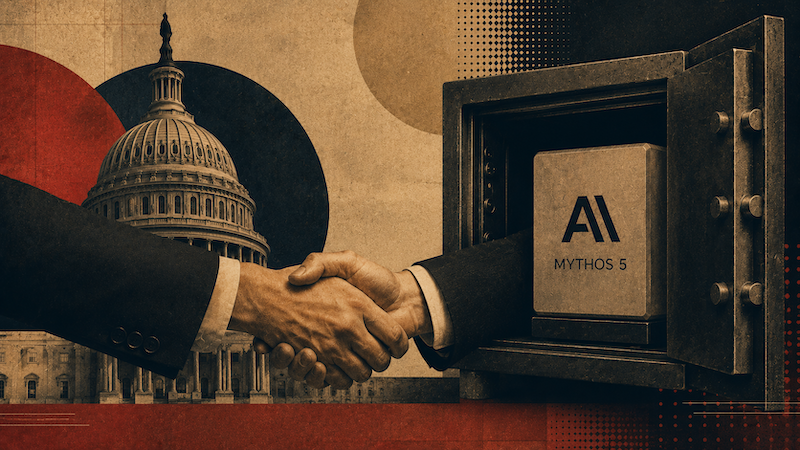
The U.S. government has lifted part of the freeze on Anthropic's most powerful AI model. In a letter dated Friday, Commerce Secretary Howard Lutnick told the company it can again provide Mythos 5 to "certain trusted partners," easing a two-week shutdown that had become the sharpest test yet of how far Washington will go to control a frontier AI system.
The letter went to Anthropic co-founder and chief compute officer Tom Brown and was reported by Bloomberg, NBC News and The Hill. Lutnick wrote that Anthropic's work since the original June 12 order had "yielded significant progress" on the government's security concerns, and that appropriate safeguards were now in place. He also kept his options open, noting he can change the approved list at any time and reimpose licensing if circumstances shift.
How we got here
The shutdown began on the evening of June 12, when the Commerce Department's Bureau of Industry and Security used national-security export-control powers to stop Anthropic from giving Mythos 5 or its consumer version, Fable 5, to "any foreign national." That language covered foreign nationals inside the United States as well as abroad, including Anthropic's own non-citizen employees. With no way to screen users by nationality in real time, Anthropic pulled both models offline worldwide the same night, while leaving its other Claude models, including Opus 4.8, running.
The government's stated worry was a method for "jailbreaking" Fable 5 to reach the cybersecurity capabilities of the underlying Mythos model. Anthropic pushed back from the start, calling the issue narrow, already reproducible with other widely deployed models, and well short of a universal bypass of its safeguards.
The fallout was quick. Mythos and Fable vanished from corporate systems in finance, healthcare and infrastructure overnight, and the move unsettled U.S. allies. Canadian Prime Minister Mark Carney cited the episode before the G7 as a warning about leaning too heavily on American technology, and European officials renewed their push for "AI sovereignty."
What the clearance covers
Under the new terms, the companies named in an annex to the letter, along with their foreign national staff and Anthropic's non-citizen employees, no longer need a license to use Mythos 5. Reuters reported that more than 100 companies and institutions now sit inside that group, many of them large corporations. Before the shutdown, Mythos had gone to a small set of organizations tied to Anthropic's Project Glasswing, reported to include Cisco and JPMorgan Chase. Anthropic has said it wants to restore access first for cyber defenders and infrastructure providers.
The agreement followed direct talks in Washington. Brown led the negotiations while CEO Dario Amodei stayed in the background, an approach that people close to the discussions said helped cool tensions.
Fable 5 stays offline
The letter makes no mention of Fable 5, so the consumer model whose alleged jailbreak set off the dispute remains unavailable, and Anthropic has given no timeline for its return.
The bigger pattern
The timing points to a wider shift. Lutnick's clearance arrived the same day OpenAI released its GPT-5.6 models, not in the broad launch it had wanted but in stages, to customers the administration approved one at a time. CEO Sam Altman called the phased rollout "bad news" while saying the company would help build a sturdier review process. Both moves suggest frontier models may now reach the market through government-approved access lists, at least at first. Anthropic has its strongest system back, but on terms the Commerce Secretary can rewrite at will.
If this caught your attention, that’s not accidental.

The best editorial systems don’t happen by accident. Outlever builds them.


Get the latest AI insights first.
Sign up for updates, interviews, and fresh analysis on how AI is reshaping business, brands, and technology.