PwC Tech Chief: AI Is Overwhelming Workers Faster Than Companies Can Lead Them
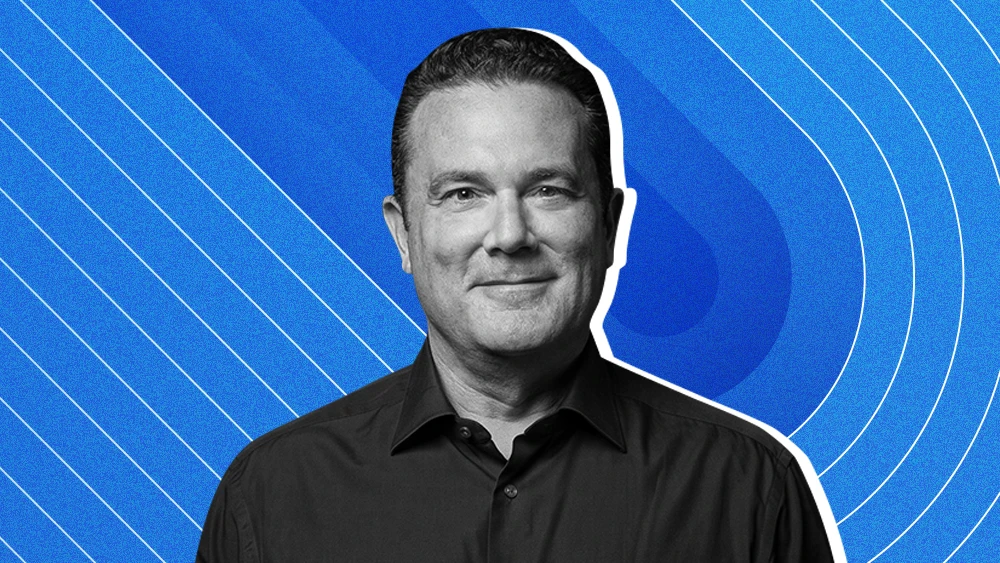
James Shira oversees technology and security for one of the world's largest professional-services firms. His argument to other leaders: the hardest part of the AI transformation is the weight it places on people.


If this caught your attention, that’s not accidental.

The best editorial systems don’t happen by accident. Outlever builds them.

Every big technology wave of the past thirty years came with a built-in speed limit. Client-server, the web, mobile, the cloud each took years to roll out, slowed by data-sovereignty rules, integration backlogs, procurement cycles, and the sheer difficulty of rewiring a large company. You could see roughly where you were headed when you started. Most days, you could also leave the work at the office.
AI comes with no such speed limit, and it does not stay at the office. That is where James Shira, PwC's Global and US Chief Information Officer and Global Chief Information Security Officer, begins in a recent essay, and it is the right place to start. The front office and the back office, every function and every region, are all changing at once. There is no obvious order to the work, no clear finish line, and, as Shira admits, no one who can say where it ends, himself included. What sets this wave apart is that the change follows people home.
The numbers show the stakes. Gartner expects worldwide AI spending to reach about $2.52 trillion in 2026, up roughly 44 percent on the year, a faster climb than any earlier enterprise-technology budget. Whether that money produces anything depends less on the model than on how the work is organized, who owns the outcome, and whether anyone bothered to redesign the workflow. The technology is not the thing falling short. As one Forbes contributor argued this year, AI does not fix leadership. It exposes it, and shows where the gaps already were.
That makes AI a leadership problem before it is a buying one. What follows are the parts of the job that matter most, and the points where Shira's account from inside PwC lines up with the broader research.
Humility has become a real skill
Executives spent decades being rewarded for sounding certain, and in a transformation with no map, that habit has become a liability. Shira tells his teams plainly that he does not have every answer on AI, and that no one does. About a year and a half into trying to track everything himself, he gave up the idea that he could, and accepted that he would keep getting surprised. He treats the admission as an asset, because it gives people permission to be honest about where they actually are.
Researchers who study leadership now treat that posture as a skill. Satya Nadella is often held up as the model, for the way he tends to state what his company knows, what it does not yet know, and where it is trying to go, which steadies people rather than dodging their questions. The leaders who handle this period well are not the ones with every answer but the ones who own what they do not know, act fast on what they do, and invite challenge. There is a flip side. As leaders lean on tools like ChatGPT and Claude, the bigger danger is leaning too hard, letting an answer that merely sounds right carry more authority than it earned. A model cannot hold judgment or accountability on a leader's behalf.
Humility here is not hand-wringing. It means building a team where the best idea can come from anyone, while keeping enough judgment to catch the machine when it is confidently wrong.
The shock-absorber problem
Shira's sharpest point is that a leader now has to act as a shock absorber. Earlier technology shifts had one feature this one lacks: you could leave them at the office. AI does not work that way. It is professional and personal at the same time, and it loads teams with a mental and emotional weight they have not carried before. Part of the job now is to take on some of that weight rather than pass it down with the volume turned up.
The load is real and growing. A 2025 report from the consultancy Emergn, drawn from more than 750 organizations worldwide, found close to half of respondents living with what it called transformation fatigue, and 52 percent blaming AI. Forty-four percent said the constant change was burning them out, and over a third were considering leaving because of it. The baseline was already weak. Gartner has reported that 73 percent of HR leaders see change fatigue in their staff, and nearly three-quarters say managers are not equipped to lead change well. By 2022 the average employee was absorbing about ten planned company changes a year, roughly double the 2016 figure, and that was before generative AI joined the agenda for good.
Shira draws a parallel from security. Cyber teams have studied alert fatigue for years, the point at which analysts watching thousands of signals a day stop telling the urgent from the noise. He sees AI producing a broader version of the same thing across whole organizations, with too many signals and a sense that every headline demands a response. The remedy is the same in both cases. Triage hard, and protect people's ability to focus on what matters.
He is equally firm that empathy means meeting people where they are. Some go all in, working the frontier on nights and weekends. Others put in real effort more slowly because of competing priorities or family. Leading a global team, he has watched cultures respond to change differently, and seen blanket mandates fail on contact with reality.
The payoff from handling fatigue well is measurable. Gartner has found that when managers create psychological safety around change, fatigue can fall by 46 percent. Microsoft's 2026 Work Trend Index points the same way: organizational factors such as culture, manager support, and talent practices account for 67 percent of how much value an employee gets from AI, against 32 percent that comes down to individual mindset. When managers used AI openly in front of their teams, employees reported getting more value from it, thinking about it more critically, and trusting it more. That puts empathy among the strongest tools a leader has for driving adoption, rather than a distraction from it.
Lead with principles
Adaptability with nothing to anchor it is dangerous, and Shira's two jobs as CIO and CISO sharpen the point. Security always has hard rules to fall back on. You do not let that many users hold admin rights. You do not leave a known vulnerability unpatched. Those absolutes make hard calls cleaner. Ordinary enterprise IT is far more subjective, he says, shaped by politics and a decade of legacy decisions: which finance system, which HR platform.
His argument is that AI done well looks more like security done well. It rewards a principled foundation over a sprawl in which every region built its own version. The more credible enterprise advice is heading the same direction. Deloitte's 2026 technology-leadership research makes a similar case: keep central standards, distribute the execution, and use governance to scale without losing trust rather than to slow things down. By that account, what separates the leaders from the laggards has less to do with which model they license than with how consistently they apply their principles to it.
There is a cost to running things this way, and Shira names it. Leaders who cannot say no for the right reasons will struggle in the AI era. Governing by principle is what builds the nerve for those conversations.
The real leadership sits closer to the ground
Senior executives set the vision and build the management system. Shira argues that the leadership which actually decides the outcome happens a couple of layers down, with the middle managers and frontline leaders who have to turn a high-level AI strategy into something a small team can run on Monday morning. Connecting the general to the specific, he says, is the real test, and it is where the next group of senior leaders is formed.
The research has backed this up through 2026. A Harvard Business Review study published in June found middle managers buckling under AI adoption, newly responsible for checking AI output, catching its errors, and coaching their teams, while their delivery targets held or rose and little support arrived. Salesforce surveyed US managers in March 2026 and found that 78 percent felt personally responsible for getting their team to adopt AI, while 51 percent were anxious about keeping up themselves. Forty-eight percent felt pressure from above to show adoption, and only 32 percent worked anywhere with a formal way to measure it. Companies have named their managers as adoption leaders without giving them the footing to deliver.
At the same time, companies are thinning that layer out. Gartner projects that by the end of 2026, roughly one in five organizations will use AI to cut more than half of their middle-management roles. The short-term math looks clean. The longer-term cost is a leadership pipeline that quietly disappears. Fortune has noted that the full effect may not show up until 2028, when firms find they cannot promote senior leaders from within. Deloitte research showing that only 6 percent of Gen Z want senior leadership at all makes the problem worse, as does World Economic Forum analysis pointing to a sharp decline in the junior roles where people used to learn judgment.
Shira's answer is specificity, and his own examples carry it. Rather than ordering everyone to adopt AI, his teams went function by function to find the two or three uses that mattered most for each group, then gave them engineering help to build them. One leader who runs third-party risk management did not wait for instructions. He sat with his team, picked the two most time-consuming manual jobs, set guardrails (stay within security and data-governance policy, document what you learn, share the misses as openly as the wins), and stepped back. Within three months the team had automated submission and risk-assessment work. Over a year, two automations saved more than 12,000 hours. The application-security team used the same approach on its Application Readiness Review service, building an AI assistant that has saved over 4,000 hours across more than 8,000 reviews. These managers did not need a map of the whole AI landscape. They needed to know where their team hurt, and have the room to fix it.
Money in, value out
Cost is becoming the reason some leaders wait on the sidelines. Shira says he has never seen a cost curve climb this fast year over year. Most companies still cannot prove the other side of the ledger. A slide showing that employees save four hours a week is no longer a business case. It is a description of activity. The question that keeps returning is how those saved hours became revenue, margin, or lower risk in terms a CFO recognizes.
Shira's framework is built for that question. He measures value through three lenses: direct cost avoidance, meaning AI killed a manual process; productivity lift, meaning the team did more at the same headcount; and capability optionality, meaning the spend unlocked something that was not possible before. His warning is that too many companies track only the first and miss the compounding value of the other two. The framework, he says, gives him and his CFO a shared language grounded in outcomes rather than hype. His view that any technology leader who cannot make the money-in, value-out case will end up on the defensive reads like a fair description of where 2026 is going.
The window
Shira ends on something personal that doubles as a forecast. He has friends near retirement who looked at the AI wave and walked away, bought the RV, and headed for the beach, and he does not begrudge them. For anyone still committed to a career, his advice is to pick a lane, go deep, and use the moment. Technology careers, he argues, are made in windows like this one. Security was his window early on. AI is the one open now. His prediction is that in two or three years, the leaders who built adaptable, AI-fluent teams during this stretch will be running business units and whole companies, not just technology functions, because the people skills AI demands today are the leadership skills the C-suite will want tomorrow.
His optimism is disciplined rather than giddy, and it rests on a single thread that runs through the evidence. The technology will keep accelerating with no governor in sight, and what will set leaders apart is human: whether they hold to clear principles, show real empathy for the people carrying the weight, and stay disciplined about proving the value. And whether, as he puts it, they lean in instead of opting out.
He leaves every leader with one question. Five years from now, when your team looks back on this moment, will they say you got them through it, or that you left them to work it out alone?
If this caught your attention, that’s not accidental.

The best editorial systems don’t happen by accident. Outlever builds them.


Get the latest AI insights first.
Sign up for updates, interviews, and fresh analysis on how AI is reshaping business, brands, and technology.