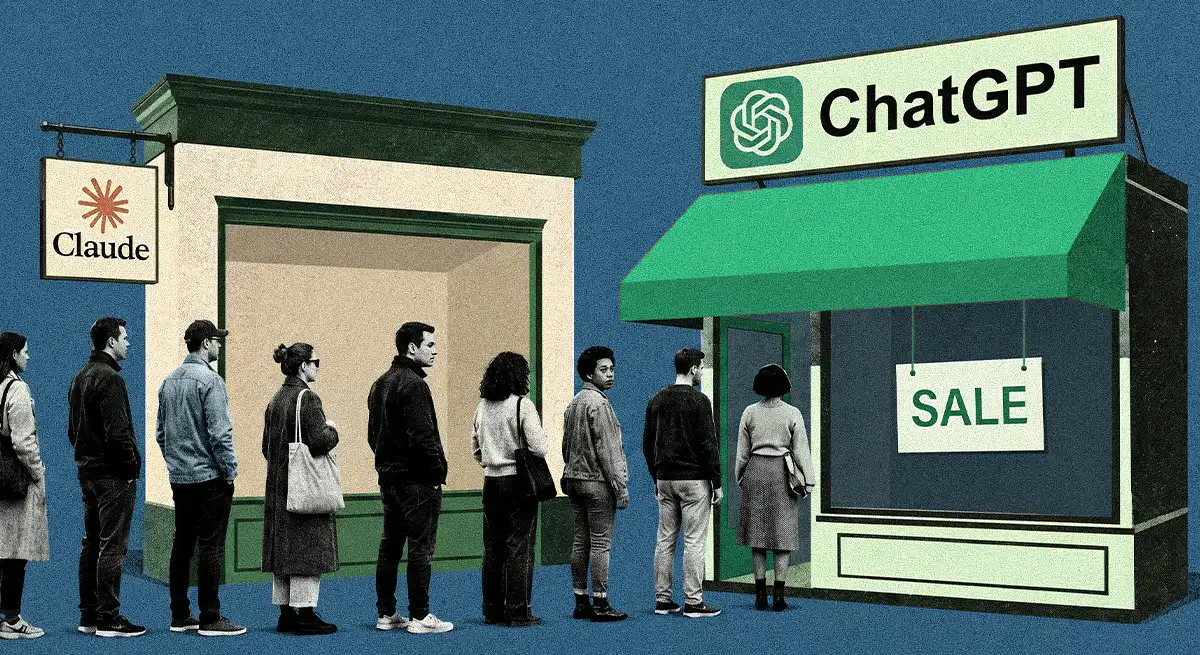
The Wall Street Journal reported Wednesday that OpenAI is considering deep cuts to what it charges for tokens, the unit AI companies use to bill for their products. According to the Journal's sources, the company is weighing the cuts in anticipation of similar reductions it expects from Anthropic, and the discussions are still in flux. Reuters could not independently verify the report.
What needs no anonymous source is the timing. OpenAI confidentially filed for its IPO with the SEC on Monday, close on the heels of Anthropic's own filing, a sequence we covered in Anthropic Just Filed to Go Public. Here's What It Actually Means for Your Business. Anthropic closed its Series H on May 28 at a $965 billion valuation, slightly ahead of the $852 billion OpenAI reached in March, and ChatGPT became the first app in history to pass one billion monthly users in May, according to Sensor Tower estimates cited by CNBC. So with both prospectuses sitting in a regulator's inbox, a story surfaces about price cuts designed to take the other side's customers.
The Earlier Scenes Already Aired
The reason this reads like a third act is that the first two have been running for weeks, and much of it played out in our own coverage.
In late May we published Every AI Subscription Is a Ticking Time Bomb for Enterprise, arguing that the labs were knowingly losing money on flat-fee seats to buy market share while the subsidy lasted. Six days later the fuse burned down in real time. As we reported in The Time Bomb Went Off, Anthropic split its Claude subscription into separate usage pools for humans and agents, developers revolted, and within hours Sam Altman offered enterprise users two free months of Codex along with a one-click migration tool that ports Claude Code prompts, skills, and MCP configurations. Anthropic answered the same day with a 50% usage boost that ran almost exactly the length of OpenAI's free trial window. We wrote then that this was a pricing war fought in the open, with each company trying to lock in developers before the IPO window opened in the second half of the year. Wednesday's report suggests the war is about to move from subscriptions down into the token layer itself, which is where enterprise API contracts live.
The pressure behind it has been building on the customer side too. Altman admitted earlier this month that AI budgets have become a "huge issue" for companies, comments we examined in Sam Altman Says AI Budgets Have Become a "Huge Issue" for Companies, where the more revealing detail was that firms are burning through annual AI budgets in a single quarter. The Journal's reporting names Uber among the businesses rethinking their AI spending. At the same moment, GitHub Copilot's move from $29 to as much as $750 a month showed buyers what unsubsidized usage-based pricing actually costs, and DeepSeek pushed the inference price floor down to $0.87 per million output tokens. Customers are loud about cost, a cheap challenger sits underneath the market, and neither giant can afford to look expensive during a roadshow. The price-cut leak is what that situation produces.
The Two Companies Are Not Even in the Same Genre
Part of why the rivalry has become such compelling viewing is that the leads have been playing entirely different characters, and both have stayed in character for months.
OpenAI's film is a blockbuster, built on scale. There is the billion-user milestone. There is the superapp rebuild of ChatGPT we covered last weekend, which we argued was a revenue story aimed at public-market investors, landing right after Anthropic beat OpenAI to the filing line. There is the $2 million in tokens Altman handed to every startup in the current YC batch, an investment we described at the time as a distribution play with a leash attached, and the push of Codex into every enterprise workflow. Our sister publication has been tracking the brand half of the same campaign, from the Colin Fleming CMO hire that signaled to CIOs that OpenAI now sees itself as an enterprise platform company, to the $4 billion Deployment Company that embeds forward-deployed engineers inside customer operations. A token price cut fits that movie perfectly, because blockbusters win on volume.
Anthropic's film is a prestige drama, built on restraint. It overtook OpenAI in U.S. enterprise AI spending, 37% to 33% as of Q1, a shift we examined through a 1957 Walt Disney napkin sketch in Why Anthropic's Depth-First Strategy Overtook OpenAI. It built a $30 billion run rate before running a single ad, then used its first ads to promise it would never put advertising inside the product. It hired Andrej Karpathy in a talent market with no handcuffs left. And this week it put Fable 5 on sale two months after declaring the underlying model too dangerous to release, turning caution itself into a product feature, a pattern we first flagged when Anthropic restricted Mythos while OpenAI shipped with confidence.
Read against that casting, the price-cut story is OpenAI choosing the one battlefield where Anthropic's character is weakest. A brand built on charging what responsible AI actually costs cannot win a discount fight without breaking character. Altman previewed the attack line back in February, when he responded to Anthropic's Super Bowl ads by saying the company serves "an expensive product to rich people." Even the framing of the leak does work for OpenAI, because by presenting its cuts as a response to reductions Anthropic has never announced, it forces Anthropic to either follow the script or appear to be sitting out the competition.
The Numbers Underneath the Story
The financial logic is visible once you set the cinema aside. Analysis of the Journal's reporting notes that Anthropic expects to reach breakeven around 2028, while OpenAI's timeline runs closer to 2030, with estimated cash burn along the way roughly 14 times larger, and the two companies projected to spend nearly $65 billion combined in 2026 on computing, training, and operations.
Cutting prices weeks before pricing an IPO, when margins are already the hardest page in the prospectus, only makes sense as a bet on which chart investors will pay for. OpenAI is wagering that public markets will reward the growth curve over the margin line, and that walking into the roadshow with momentum visibly taken from a rival is worth thinner unit economics. Anthropic is wagering the opposite, that when two direct competitors go public in the same window, investors end up choosing between philosophies rather than products, and that an earlier path to breakeven is the stronger closing argument. The market will decide which bet was right, and it will only hand the valuation premium to one of them.
What It Means for Your Business
In the short run, buyers benefit from all of this. An enterprise negotiating an AI contract this quarter has more leverage than at any point since 2023, because both vendors need signed logos and committed revenue in their S-1 updates more than they need margin on your account. That leverage is worth spending on rate-lock language above all else, since prices set during a land grab rarely survive the land grab, a dynamic we documented when the subscription repricing hit in May.
It also pays to treat any cut as a promotional rate rather than a market rate. A discount funded by pre-IPO positioning lasts about as long as a film's marketing campaign, and the structural story underneath has not changed since we started covering it. The all-you-can-eat era is ending, usage-based billing is becoming the default, and the true cost of frontier AI will land on somebody's invoice eventually. Whether that happens before the opening bell or after it is the only part of the script still unwritten.