Meta Now Opts Public Instagram Accounts Into AI Image Generation by Default
Meta's new image model launched this week with a consent policy buried in the fine print. If your profile is public, you were opted in before you finished reading this sentence.


If this caught your attention, that’s not accidental.

The best editorial systems don’t happen by accident. Outlever builds them.

Meta Superintelligence Labs launched Muse Image on July 7, with Muse Video following in preview. It's a big moment for the company. After years of leaning on outside models from partners like Midjourney and Black Forest Labs, Meta finally has a frontier image model it owns end to end, built under Alexandr Wang's Superintelligence Labs division, as Trending Topics notes in its breakdown of the rollout.
But the most important detail of the launch isn't in the model card. It's in Instagram's settings menu.
The feature nobody asked to be part of
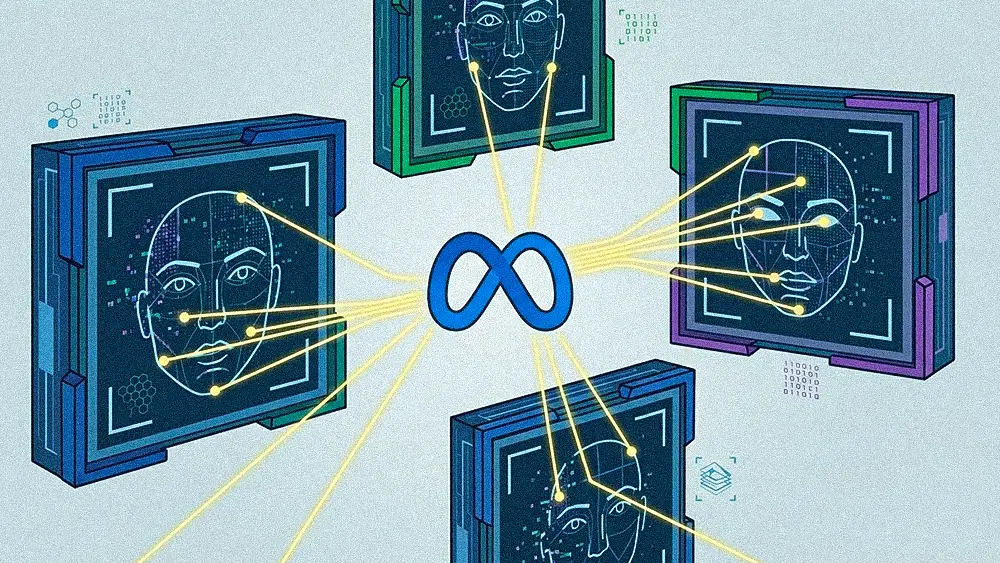
Muse Image ships with a capability no competing model has: deep integration with Instagram's social graph. Any user can @-mention a public Instagram account inside a Meta AI prompt, and the model will pull that account's public photos as visual references, then generate new images that incorporate that person's likeness, as Digital Trends reported in its coverage of the launch.
Meta frames this as creative personalization. Custom invitations, collaborative mockups, personalized graphics built from a friend's public posts. The pitch sounds harmless enough. The mechanics are the problem.
The feature is on by default for every public Instagram account, a detail WIRED flagged in its original reporting on the rollout. There was no announcement email, no in-app consent prompt, and no notification when it happens. Instagram's help documentation confirms users will not be alerted when someone generates content using their photos, an omission Android Authority called an odd limitation. Someone could be producing AI imagery of your face right now, and unless it surfaces somewhere you happen to see it, you would never know.
Opting out only gets you so far, too. Turning off the setting stops future generations, but Digital Trends and Android Authority both report that images already created from your content won't be deleted. Even flipping your account to private doesn't claw anything back. The protection only runs forward.
Why opt-out instead of opt-in? Follow the data
The design choice is not mysterious. Opt-in consent would gut the usable dataset. Instagram's public profiles represent one of the largest pools of tagged, contextualized, identity-linked imagery on the planet, and it's arguably more valuable than anything scraped from the open web precisely because it's attached to real, named people.
We've watched this playbook run again and again across the industry: ship quietly, make the permissive setting the default, and let opt-out friction do the rest. Meta isn't even the only offender this cycle. As Squared Tech points out, Google recently drew criticism for retaining uploaded images, including reverse-image-search uploads, for AI training.
There's also a plain commercial logic at work. Trending Topics reports that the same generation technology feeds Meta's Advantage+ advertising tools, which produce personalized ad creative for brands. More AI-remixable content means more raw material for the machine that actually pays Meta's bills.
The safeguards, such as they are
Meta points to an invisible watermarking system called Content Seal embedded in Muse Image outputs, per Digital Trends. That's useful for provenance, since it lets platforms and researchers verify that an image is AI-generated. But watermarking answers the question "is this synthetic?" It does nothing for the question the actual subject cares about: "why does this image of me exist, and can I make it stop?"
Also missing at launch: any dedicated pathway for people to flag misuse of their likeness. Other image platforms have shipped at least rudimentary versions of this. Meta, which runs the largest trust and safety operation in the industry, launched without one.
The regulatory collision course
This design won't survive contact with every jurisdiction. The EU's AI Act and the UK's Data (Use and Access) Bill both push toward stricter consent standards for processing personal data in AI systems, and generating synthetic imagery from someone's face is about as personal as data processing gets. As of publication, reporting hasn't clarified how (or whether) Meta will apply the same default in the EU and UK. That silence is worth watching.
What to do right now
If you keep a public Instagram account, and especially if you're a creator, founder, or public-facing professional who can't go private, the fix takes under a minute:
Open Instagram and go to your profile
Tap the menu (three lines, top right), then Settings and activity
Scroll to Sharing and reuse
Turn off the toggles allowing your Posts and Reels to be used with AI features at Meta
Two caveats. WIRED noted the updated settings language was still rolling out as of Tuesday afternoon, so if you don't see it yet, check back in a few days. And remember, this stops future generations only. Whatever's already been made stays made.
The bigger picture
Muse Image is, by most early accounts, a capable model with strong instruction-following, precise editing, and multi-reference composition. Meta's engineers earned the launch. But the consent architecture wrapped around it tells you where the industry's center of gravity still sits: your data is the product until you personally intervene, and the burden of protection falls on the person being used, not the company doing the using.
The most telling detail is the notification policy. Instagram tells you when someone screenshots your disappearing message. It will not tell you when someone generates a synthetic image of your face. That asymmetry isn't an oversight. It's the design.
If this caught your attention, that’s not accidental.

The best editorial systems don’t happen by accident. Outlever builds them.

Get the latest AI insights first.
Sign up for updates, interviews, and fresh analysis on how AI is reshaping business, brands, and technology.