Uber's "Agentic Pods" Show What Happens When AI Moves Beyond Engineering
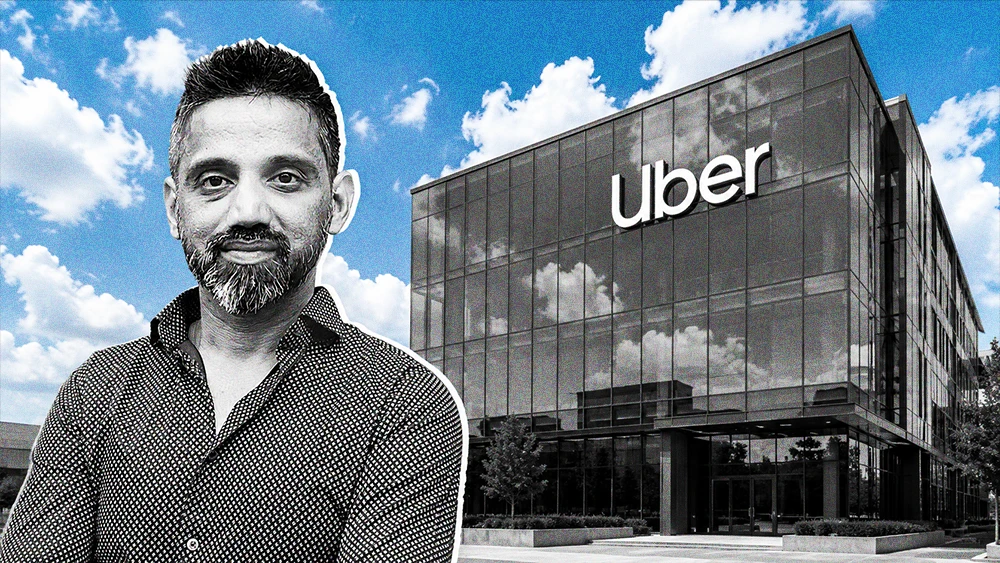
For most of the past two years, the story of AI adoption inside big tech companies has been an engineering story. Uber has now given one of the clearest public looks at the next chapter.


If this caught your attention, that’s not accidental.

The best editorial systems don’t happen by accident. Outlever builds them.

For most of the past two years, the story of AI adoption inside big tech companies has been an engineering story: coding assistants, code review agents, automated testing. Uber has now given one of the clearest public looks at the next chapter, and it has very little to do with writing code.
In a recent post on LinkedIn, Uber CTO Praveen Neppali Naga shared the company's internal numbers. Nearly every engineer at Uber (99%, by his count) now uses AI tools, and more than 70% of pull requests are attributed to local or cloud agents. Engineers across the company have built over 2,500 agent skills covering the software development lifecycle.
According to Naga, those figures raised a bigger question than they answered. If agentic AI has changed how Uber builds software, what would it take to do the same for finance, legal, operations, marketing, customer support, HR, and procurement?
Why business functions resist automation
The obstacle, as Uber sees it, is that business workflows don't respond to the standard automation playbook. These functions run on processes that are manual, full of judgment calls, and scattered across dozens of systems. Reading process documentation or studying workflow diagrams doesn't tell you how the work actually gets done, and automation built from the outside tends to miss the point.
Uber's answer was an experiment it calls Agentic Pods. The design is simple. The company picked roughly 30 of its most AI-proficient engineers, people with deep knowledge of Uber's internal systems, and paired each one with a domain expert from a business function. Each pod got exactly two weeks.
The first two days are spent shadowing. The engineer watches the expert work step by step, documents workflows, asks questions, and builds a feel for where the friction actually lives. Day three is for prioritizing opportunities, weighed by scale, repetition, business impact, and data availability. Days four and five are for building a working agent alongside the person who does the job. The next four days are for validation with others doing the same work, to test whether the agent generalizes and genuinely improves the job. On day ten, the pod ships.
The results
In two months, Uber ran 16 Agentic Pods across 16 business functions, and the reported time savings are hard to ignore. Capital allocation analysis across 150 cities dropped from 15 hours to 30 minutes. Financial pacing reports that took two days now take ten minutes. Marketing web quality assurance went from two weeks to under an hour. A customer support process that had accumulated 9,000 manually built workflows was replaced with self-service automation.
Numbers like these will get attention, but Naga says speed wasn't the most important finding. What surprised the team was how quickly engineers dropped into unfamiliar domains started spotting problems that insiders had stopped seeing, opportunities that were, in his words, <cite>"hiding in plain sight."</cite>
The workflow, not the task
The most useful lesson from Uber's experiment concerns the unit of automation. The biggest wins rarely came from automating a single task. They came from redesigning a whole workflow around AI, which in practice meant cutting handoffs, removing approval steps that no longer earned their keep, retiring legacy tools, reducing vendor spend, and speeding up decisions.
That distinction matters for anyone planning an enterprise AI strategy. Task-level automation produces incremental gains and leaves the surrounding process intact. Workflow-level redesign compounds. Once the process itself is rebuilt with agents in mind, the improvements spill across teams, tools, and org boundaries. Uber found its most impactful agent skills were exactly the ones that cut across functions and systems rather than living inside one team's toolchain.
There is an organizational point buried in here too. Uber didn't hand the problem to a central AI team working from requirements documents, and it didn't ask business teams to adopt off-the-shelf tools on their own. It put builders next to the people doing the work, building with them rather than for them. The two-week timebox forced pods to ship something real instead of something perfect, and the validation phase made sure the result worked for more than one person's habits.
What comes next
Uber is now forming a dedicated team to scale the approach: understand the work in depth, redesign it from the ground up, and use AI to change how the business operates at a structural level.
For everyone else, the experiment offers a template that doesn't require Uber's scale to copy. The ingredients are a small number of AI-fluent engineers, willing domain experts, a hard deadline, and a rule that you observe before you build. What's in short supply in enterprise AI right now isn't models or tooling. It's an accurate picture of how work actually happens, and Uber's bet is that the fastest way to get one is to sit down next to the person doing the job.
If this caught your attention, that’s not accidental.

The best editorial systems don’t happen by accident. Outlever builds them.


Get the latest AI insights first.
Sign up for updates, interviews, and fresh analysis on how AI is reshaping business, brands, and technology.