Figma Buys the Team Behind Vibe-Coding App Bud as Its Anthropic Feud Simmers
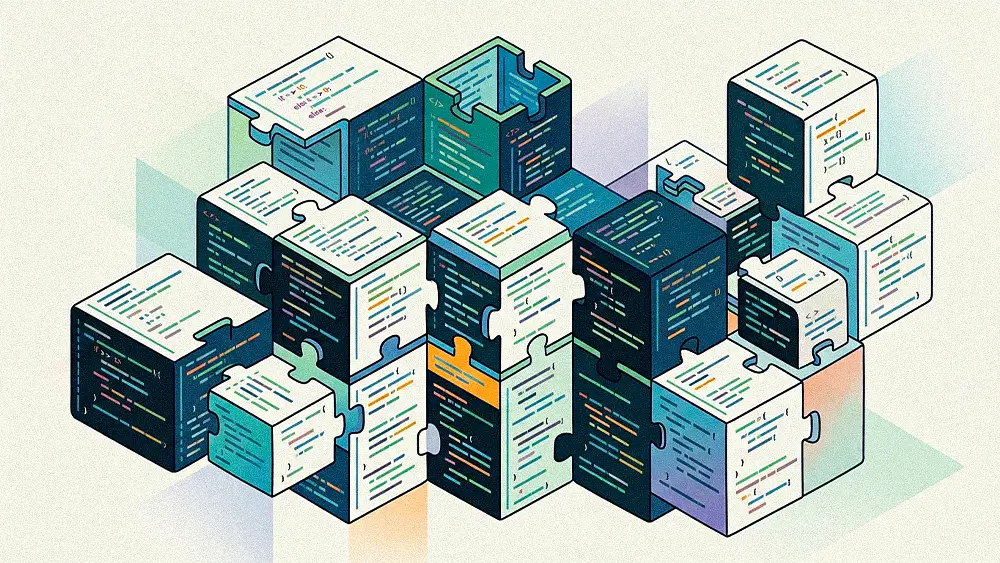
Figma has acquired the team behind Bud, the Y Combinator-backed vibe-coding and AI agent platform formerly known as Orchids.


If this caught your attention, that’s not accidental.

The best editorial systems don’t happen by accident. Outlever builds them.

Figma has acquired the team behind Bud, the Y Combinator-backed vibe-coding and AI agent platform formerly known as Orchids, as the design company keeps pushing its canvas beyond static mockups and into working software. The deal was first reported by TechCrunch.
The startup began as Orchids, a vibe-coding platform that let users spin up apps for web, mobile, Slack, and the browser. It later rebranded as Bud, an agent platform that could browse the web, tap into external services, and write code to automate tasks. Under the deal, per TechCrunch, both Bud and Orchids will shut down on July 18, giving users just under two weeks to migrate their projects off the platform.
Bud CEO Kevin Lu framed the exit as a natural fit, calling Figma one of the "defining product companies of our time" and the obvious home for this new era of building.
Figma hasn't said exactly where the team will land, but the direction is clear from its recent launches. Over the past year the company released Figma Make for generating web apps, added support for external coding agents like OpenAI's Codex and Anthropic's Claude Code, and rolled out its own AI assistant on the canvas. Figma wants to own where products get built, not just where they get designed, and the Bud team gives it more hands to do that.
There is one asterisk. Earlier this year, the BBC reported, citing a security researcher, that apps created on Orchids were susceptible to cyberattacks. To be fair, that problem is endemic to the category. Independent audits of AI-generated apps this year have repeatedly found that the vast majority ship with at least one security vulnerability. Vibe coding is fast, but it still isn't safe by default.
The vibe-coding land grab
The acquisition lands in a market that has gone from novelty to gold rush in about eighteen months. Lovable, the Stockholm-based prompt-to-app leader, hit $400 million in ARR early this year and was reported in June to be in talks to raise at a $12 billion valuation. Replit tripled its valuation to roughly $9 billion in March and is targeting $1 billion in annualized revenue by year-end, with tens of millions of users, most of whom never write a line of code. Bolt.new, Vercel's v0, and Wix-owned Base44, which crossed $100 million in ARR this spring, round out an increasingly crowded field.
Seen against that backdrop, picking up a YC vibe-coding team is almost a defensive move. Figma is fighting for the moment before code exists, and the startups it is fighting are being valued as if the future of software creation depends on winning that moment. It very well might.
Claude Code already owns the other half
The professional side of the market has a clearer frontrunner. Anthropic's Claude Code crossed a $2.5 billion revenue run-rate in early 2026, roughly nine months after its public launch, and a February survey of 15,000 developers found that 71% of those who regularly use AI agents rely on Claude Code as their primary tool. It dominates at small and mid-size companies, and it has become the default for the multi-file refactors and large-scale debugging that turn a vibe-coded prototype into a real product.
So Figma is squeezed from both directions: prompt-to-app startups from below, the model labs' agentic tools from above. And its relationship with the lab behind the biggest of those tools is currently in the freezer.
The Claude Design rug pull
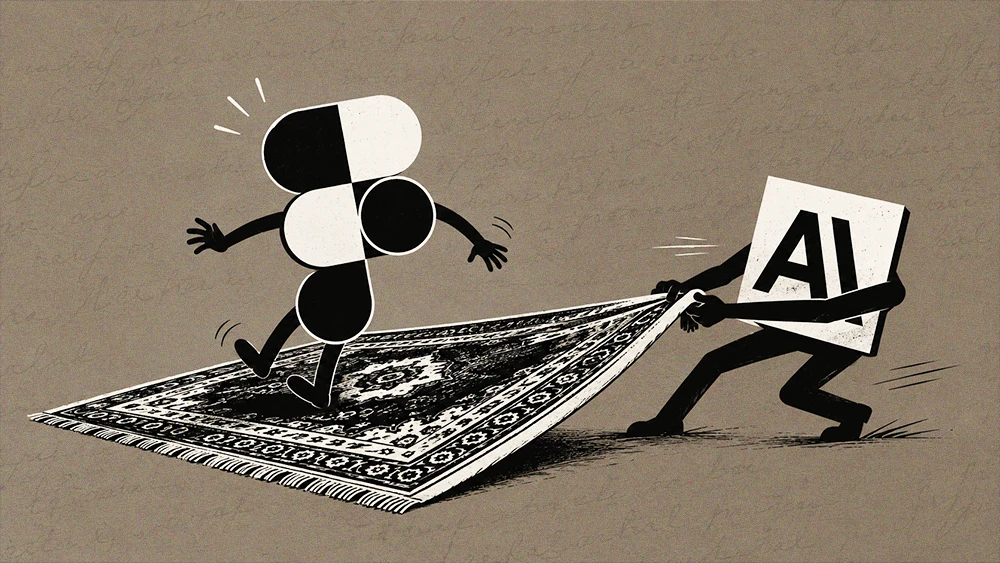
Figma and Anthropic were, until recently, close. Mike Krieger, the Instagram co-founder who until recently served as Anthropic's chief product officer, sat on Figma's board. Then in mid-April, three days after Krieger formally resigned from that board, Anthropic launched Claude Design, a standalone design tool positioned squarely against Figma, Adobe, and Canva.
Designers on social media called it a rug pull, and investors treated it like one. Figma stock dropped roughly 7% on announcement day and kept sliding, at one point trading down nearly 80% from its post-IPO peak. Activist fund Findell Capital has since pushed Figma to review its governance and its entire Anthropic relationship.
Dylan Field's response was about as pointed as a public-company CEO gets. Asked about Anthropic at an industry event days after the launch, Field said the company was "not consistently candid in their communications," a deliberate echo of the phrase OpenAI's board used when it fired Sam Altman. According to Fast Company's reporting, product teams at both Figma and Adobe had no idea a competing product was coming. Only Canva, whose design engine powers Claude Design, was in the loop.
Field has softened his tone since, telling Stratechery that Anthropic's build-everything phase echoes OpenAI's before it pulled back, and that Figma's job is to make itself the path to a great product no matter where creation starts. Still, it's hard to read the Bud acquisition as anything other than a hedge. If the AI labs are coming for design, Figma intends to own the coding layer they need to get there.
If this caught your attention, that’s not accidental.

The best editorial systems don’t happen by accident. Outlever builds them.


Get the latest AI insights first.
Sign up for updates, interviews, and fresh analysis on how AI is reshaping business, brands, and technology.