No, 80% of Anthropic's Engineers Haven't Moved to Agents
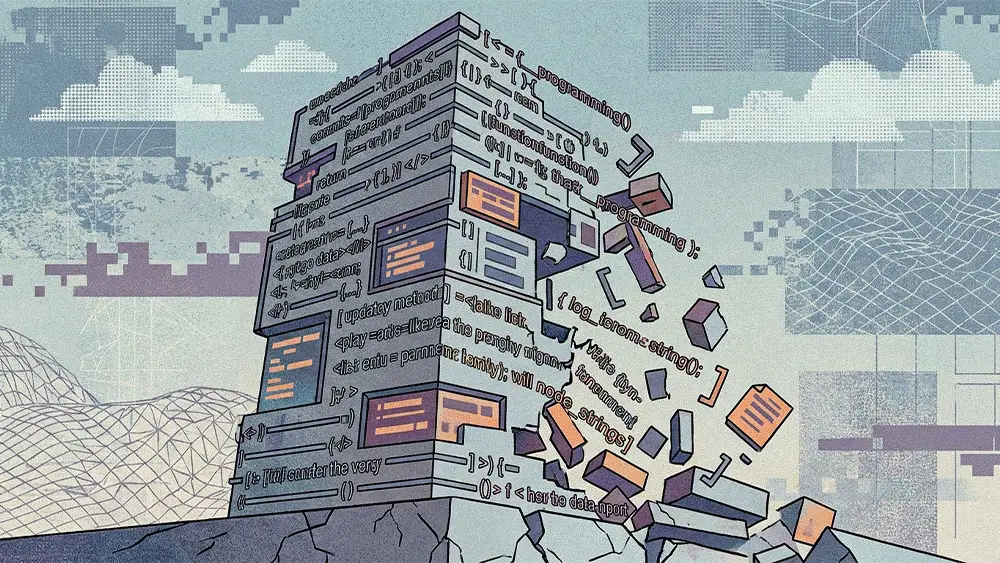
A report published in June found that Claude wrote more than 80% of the code Anthropic merged in May. That number is about code, not headcount, and the difference is the argument.


If this caught your attention, that’s not accidental.

The best editorial systems don’t happen by accident. Outlever builds them.

There's a post going around that opens with BREAKING and says Anthropic's president has revealed that 80% of the company's engineers have "moved to agents." Already done, it says. Not a pilot. It closes by asking whether your engineering org is three months behind Anthropic or three years.
The 80% is real. The rest of that sentence isn't.
On June 4, 2026, the Anthropic Institute published a report called "When AI builds itself," written by Marina Favaro and Jack Clark. The figure in it describes code, not people. More than 80% of the code merged into Anthropic's production codebase in May 2026 was authored by Claude. Before Claude Code reached research preview in February 2025, the share sat in the low single digits.
That's a different claim, and the gap between the two versions is worth sitting with.
Output is not headcount
"80% of our code is written by AI" describes what a team produced. "80% of our engineers have moved to agents" describes how a company is organized, who it hires, and what those people do all day. The first was measured. The second is an inference someone made on the way to a hook, and it carries a conclusion the source never supports.
Why the number mutated isn't hard to work out. Output statistics are dull to a general audience. Headcount statistics are threatening. "Claude wrote most of our code" is a fact about engineering. "Most of our engineers now do something else" is a warning aimed at whoever is reading it, and that version travels.
The attribution slipped too. The report belongs to Favaro and Clark. The 90% figure people often reach for traces back to Dario Amodei, Anthropic's CEO, speaking at a Council on Foreign Relations event on March 10, 2025, where he predicted AI would be writing 90% of code within three to six months and essentially all of it inside a year.
That prediction has a tangled history of its own, which is instructive here. When Amodei later told Salesforce's Marc Benioff that the 90% mark had been reached at Anthropic, he narrowed the claim moments afterward to a subset of teams, a qualification that largely vanished from the coverage that followed. Numbers about this company have a habit of losing their conditions in transit.
Daniela Amodei, the company's president, has spent 2026 giving interviews on enterprise trust and compute efficiency, organized around a phrase she keeps returning to: doing more with less. Pinning an unsourced quote about "agent architects" to her isn't a rounding error. It puts words in a named executive's mouth.
The numbers that deserved the attention
The odd part is that the viral version reached for invention when the source document was already unsettling.
Claude's success rate on Anthropic's hardest internal engineering tasks, the ones where no clear spec exists yet and most of the work is debugging, hit 76% in May 2026. Six months earlier it was around 26%. Fifty points in two quarters isn't a normal product curve.
In April 2026, an engineer pointed Claude at a stubborn class of API errors. Running on its own, it shipped more than 800 fixes and cut the error rate by a factor of a thousand. The engineer supervising it estimated that a human would have needed four years. The report explains why: this sort of work is slow and painstaking, and people struggle to hold that much unfamiliar context in their heads at once.
On a recurring internal test that asks each new model to make training code run faster, results climbed from roughly 3x with Claude Opus 4 in May 2025 to about 52x with the unreleased Mythos Preview in April 2026.
None of that required a fabricated quote.
Anthropic hedges the number harder than the internet does
The most useful line in the report is a caveat. On the finding that a typical engineer merged eight times as much code per day in the second quarter of 2026 as in 2024, Anthropic notes that lines of code measure quantity rather than quality, and calls 8x "almost certainly an overstatement of the true productivity gain."
The company with every reason to let that figure run is the one qualifying it. An internal poll of 130 research staff landed on a median estimate of roughly 4x output using Mythos Preview compared with working without AI, about half the headline number.
The report is also direct about where Claude still falls short, and the gap is a substantial one: choosing goals. Directing and reviewing is the human half of that 80%, and the report treats it as the current shape of the work rather than a temporary inconvenience on the way to something else.
The part that got dropped
The viral post treats the report as a story about adoption speed. It's mostly a governance argument that uses adoption speed as evidence. It ends by arguing that the world should preserve a workable option to pause frontier development, conditional on several leading labs across multiple countries stopping together under terms that can be verified. Anthropic declined to commit to stopping on its own, reasoning that one company halting would change who leads and achieve little else.
You can read that position as self-serving, and plenty of people do. Cutting it in order to repurpose the report as a prod at the reader is a meaningful edit, and it says something about what the genre is for.
A better question
"Is your org three months behind Anthropic or three years?" is built to produce anxiety rather than a decision. It measures an arbitrary company against one that builds the model, runs it on its own infrastructure, employs the people who trained it, and works in a codebase shaped by all three.
The question the report actually supports is narrower. How much of your engineering work is specified clearly enough to hand off, and do you have the review capacity to handle what comes back? Anthropic's 80% sits on top of an enormous amount of reviewing, testing, and incident ownership. The bottleneck moved. It didn't go away.
The claims circulating about a statement from Daniela Amodei on engineer reassignment, "agent architect" roles, or a named enterprise differentiator involving specific client firms could not be matched to any primary source at the time of writing. If a recording or transcript surfaces, this piece will be updated.
If this caught your attention, that’s not accidental.

The best editorial systems don’t happen by accident. Outlever builds them.


Get the latest AI insights first.
Sign up for updates, interviews, and fresh analysis on how AI is reshaping business, brands, and technology.