Bending Spoons Acquires Airtable for Less Than It Raised, at $1.285 Billion
Airtable raised $1.4 billion and sold for $1.285 billion. The price Bending Spoons paid is the comparable every 2021-vintage software company now has to negotiate against.


If this caught your attention, that’s not accidental.

The best editorial systems don’t happen by accident. Outlever builds them.

Bending Spoons agreed on Tuesday to buy Airtable in an all-cash transaction valuing the company at an enterprise value of $1.285 billion, according to the companies' joint announcement. In December 2021, CNBC reported that a $735 million round had valued Airtable at $11 billion, with the company having raised close to $1.4 billion to that point.
Nothing catastrophic happened in between. Airtable didn't run out of money; it still holds close to a billion dollars in cash. Growth didn't stop; the announcement puts annual recurring revenue at roughly $480 million as of June 2026, up more than 20% year over year. The company didn't sleep through the AI shift either. It rebuilt around agents starting in mid-2025 and shipped continuously afterward. More than 500,000 organizations use it, including 80% of the Fortune 100.
It sold at less than three times revenue anyway. That number, and not the nostalgia about the peak valuation, is the news.
The deal
Bending Spoons is acquiring 100% of Airtable's outstanding shares in cash, with both boards approving unanimously and closing expected before year end pending regulatory review. Enterprise value is $1.285 billion. Because Airtable carries a large net cash balance, the implied equity value comes to about $2.25 billion, meaning roughly $965 million of what shareholders receive is Airtable's own unspent capital going back out the door.
TechCrunch reported that Airtable shares had been trading on secondary markets earlier this year around a $4 billion valuation, so even the private-market clearing price was roughly triple where the company just landed. Bloomberg framed it as a steep fall from the pandemic peak and noted that Airtable, like a lot of software companies, struggled to hold its growth rate once generative AI tools arrived.
Set the cash aside and the operating business (product, brand, half a million customers, $480 million of ARR) was priced at $1.285 billion. That is 2.7 times revenue for a growing, profitable enterprise platform in 2026.
The money that went in
Airtable raised more than $1.4 billion across seven rounds beginning in 2015, from a cap table that reads as a roster of the era's most respected investors: Benchmark, CRV, Caffeinated Capital, Thrive, Coatue, Salesforce Ventures, Franklin Templeton, and Michael Dell's MSD Capital.
The pricing history is a clean record of what late-2021 capital markets did to good companies. Airtable was valued at $5.77 billion in March 2021. Nine months later the Series F led by hedge fund XN nearly doubled that, at a time when software traded at 20 to 40 times ARR and nobody underwrote the downside. CNBC's coverage of that round quotes Howie Liu on plans to reach public markets within a couple of years.
The filing never came. Multiples compressed, the window stayed shut, and the last primary valuation Airtable ever set turned out to be the one printed at the top of the cycle.
Over thirteen years the arithmetic looks like this: about $1.4 billion of capital in, about $2.25 billion of equity value out, of which roughly $965 million is money the company never deployed. Net of that cash, investors are collectively receiving slightly less for the business itself than they put into it.
Distribution matters more than the total here. Liquidation preferences pay the last money in first, so a $735 million Series F against a $2.25 billion pool most likely comes out whole or close to it. Benchmark and CRV, who bought when Airtable was worth almost nothing, still return real money. The losses land on common stock and RSUs, which is to say on employees who joined in 2021 and 2022 and took equity priced off an $11 billion mark. Most of the anger circulating on X since Tuesday morning is about exactly that, and it is aimed correctly.
The buyer's record
Bending Spoons listed on Nasdaq on July 1. Forbes reported that the IPO raised roughly $1.7 billion at an $18.4 billion valuation, the largest European tech listing since 2023, and that the company has acquired more than 50 businesses since 2013 on its way to $1.3 billion of 2025 revenue.
The method is documented and the company does not dilute it in interviews. Buy a recognizable product with slowing growth, centralize engineering in Milan, cut headcount hard, raise prices. Forbes found that Evernote's personal plan went from about $100 a year to $249 after the 2023 acquisition, and that SEC filings show more than $78.6 million of reorganization expense in 2025 tied to the 1,830 staff inherited from the AOL, Eventbrite, and Vimeo deals, with only a few hundred of those people expected to remain by the end of 2026. A separate Forbes analysis by Shivaram Rajgopal notes that Evernote's headcount fell 82%, from 341 at acquisition to 60 by the end of 2024, and that the prospectus disclosed material weaknesses in internal control specifically tied to integrating acquired businesses.
Airtable is a departure from what Bending Spoons has bought so far. TechCrunch's explainer describes a portfolio built on consumer and prosumer brands, Meetup and Eventbrite and WeTransfer among them, run for subscription cash flow. Airtable is enterprise software sold to procurement departments, with renewal cycles, security reviews, and customers who will notice within one quarter if support quality drops. TipRanks noted that BSP shares slipped on the announcement, which reads as a sensible response to a company taking on its hardest integration five weeks after listing, with five earlier ones still unfinished and close to $6 billion of liabilities on the balance sheet.
Liu's public position is that the deal gives Airtable resources and a long-term owner for the AI work. He may believe it. It is also what every acquired chief executive says on announcement day, and Vimeo's layoffs arrived roughly four months after that deal closed. Airtable customers with mission-critical workflows should be exporting their data this quarter, not next year.
Where this market goes
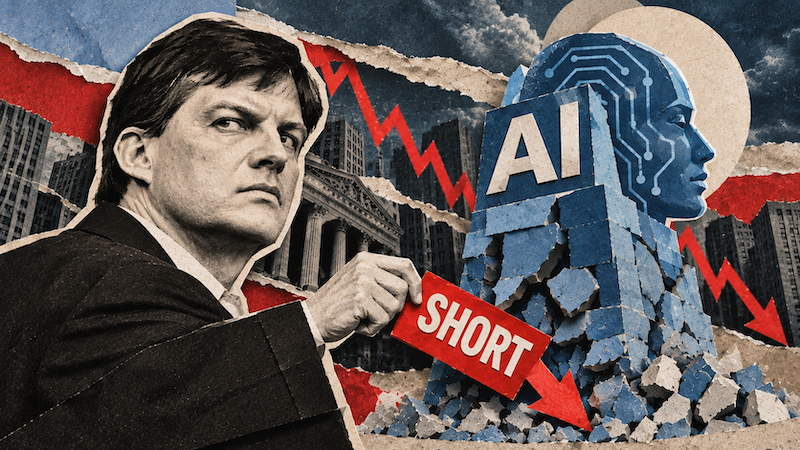
My view is that the 2021 software cohort is entering a liquidation phase that will run for the rest of the decade, and Bending Spoons has just published the price sheet.
Four years of stalemate produced this moment. Boards refused to accept marks below their last round, buyers refused to pay 2021 prices, and hundreds of companies sat in between, cutting costs to reach breakeven and waiting for a listing window that never opened on acceptable terms. Airtable was among the healthiest of that group by any operating measure. When the healthiest one takes 2.7 times ARR, every board in the cohort now has a comparable it cannot argue with, and the negotiating leverage moves permanently to buyers. Expect the pace of take-privates and roll-up acquisitions to accelerate sharply over the next eighteen months, and expect most of them to price between two and four times revenue regardless of growth rate.
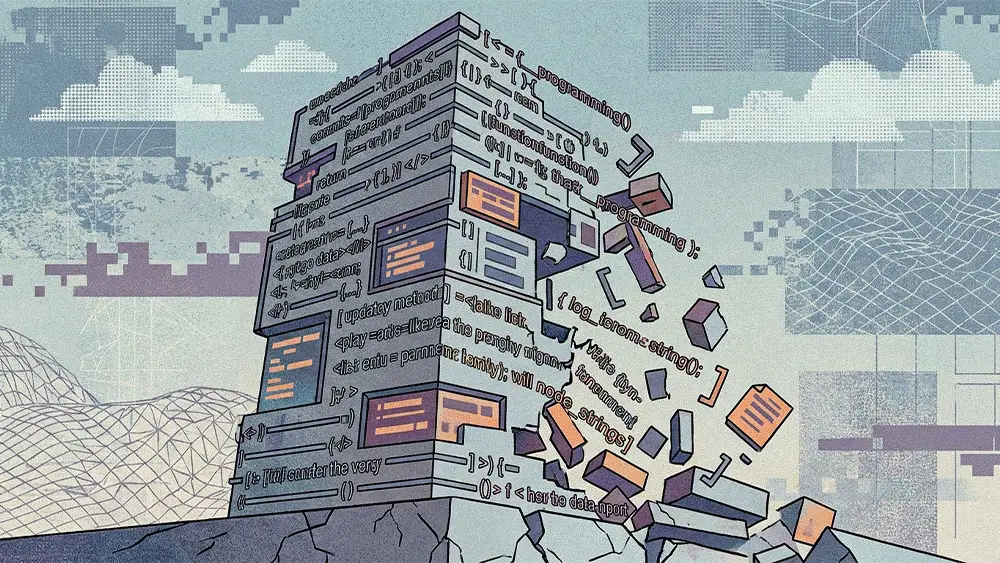
The deeper problem is structural, and it is specific to where Airtable sat in the stack. Its promise was that people who cannot write code could build working internal tools. That is now approximately what a general-purpose model does for free. Liu saw this coming earlier than most and moved hard, with the refounding announcement in June 2025, the Omni builder, field agents, a chief technology officer hired out of OpenAI, and standalone agent products in early 2026. By any reasonable standard that was a fast and competent response. The market paid 2.7 times revenue for it. Executing the AI transition well has become the cost of continuing to exist rather than a reason for anyone to re-rate you, and the entire middle layer of workflow software is about to learn this in public: project trackers, form builders, internal tooling platforms, lightweight database products. Squeezed from above by models that generate the tool on demand and from below by systems of record that already hold the data, that layer does not have a defensible position to retreat to.
Meanwhile the same investors marking Airtable down are funding AI-native companies at fifty times forward revenue on a fraction of the customer base. Capital has not left software. It has left this software, and it has concentrated into a narrower set of names at prices that require an even better outcome than 2021 required. The Series F at $11 billion is the villain of the Airtable story in a precise way: that money never made the product better, it mostly sat on the balance sheet, and it is being handed back today as the bulk of the equity value. What it did accomplish was setting a price the company then spent five years unable to grow into, and building a preference stack that determined who got paid when reality arrived. Someone is running that exact play right now at a higher multiple, and around 2029 there will be a version of this article with different names in it.
The practical consequence lands on employees, and it will change hiring before it changes anything else. A generation of operators just watched a well-run company with real revenue and real customers deliver nothing to common shareholders. Equity compensation at late-stage private companies is going to be discounted heavily by candidates who have now seen how the waterfall works, and the companies raising at today's marks should assume they will need to pay more cash to compensate for it.
Airtable was not badly run. It built something people used, responded to a hard technological shift faster than most of its peers, and still could not escape the price it accepted at the top of a bubble. The market will spend the next several years demonstrating that almost nobody learned from it.
If this caught your attention, that’s not accidental.

The best editorial systems don’t happen by accident. Outlever builds them.


Get the latest AI insights first.
Sign up for updates, interviews, and fresh analysis on how AI is reshaping business, brands, and technology.