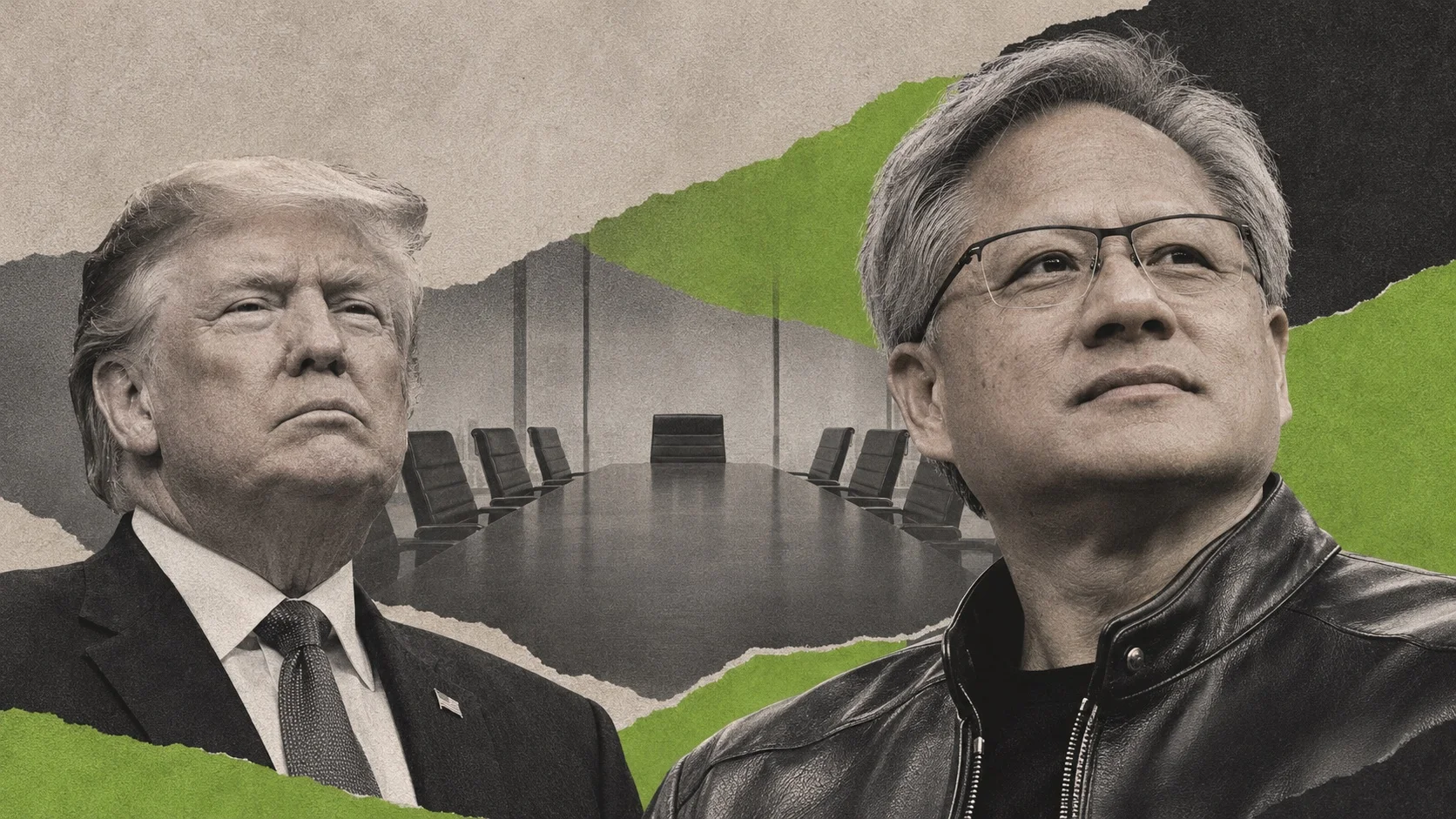
President Donald Trump and Vice President JD Vance personally intervened to get Jensen Huang back into Nvidia’s top job over the weekend. Reuters reports, citing people familiar with the matter, that both men saw Huang as the one person protecting American-made open-weight AI models.
Nvidia’s board voted unanimously to bring Huang back after 11 days without him, and Trump took credit for persuading directors on CNBC. The Associated Press reports that the attorney general briefed Trump and Vance, and that a person familiar with the matter said both came away satisfied they had seen no evidence of unlawful conduct by Huang related to U.S. national security. Nvidia says its independent board inquiry will continue.
Why Nvidia wants more companies running their own models
An open-weight release lets developers download the trained model and, under its license, run it on infrastructure they choose. Companies can adapt those models for their own work and compare the cost of running them with what they pay for API access. To use Anthropic’s Claude models, customers go through Anthropic or one of its cloud partners. OpenAI sells access to its flagship models and has also released downloadable models of its own.
A company that runs its own models can buy Nvidia chips. So can a cloud provider that runs those models for customers. The more companies that have access to models they can run themselves, the less Nvidia has to rely on a handful of large labs to drive demand. Nvidia has also backed model developers directly. Nvidia-backed Reflection AI released its first open-weight model in October to compete with Chinese offerings such as DeepSeek and Kimi on coding tasks.
The push for a U.S. alternative to Chinese models
On Friday, two Republican House committee chairs called for a national open-weight AI initiative and urged the administration to give American developers access to federal computing resources. Their report cited Airbnb’s use of Alibaba models in customer support. It also found that Anysphere built its flagship model for Cursor on a model from China’s Moonshot AI. U.S. developers are competing for customers that have already built these models into their products and operations.
Backing Huang took a weekend. Giving U.S. developers access to federal computing capacity would put government resources behind the industry Trump and Vance wanted him to protect. The models those companies build would still have to win customers on price and performance.