Nvidia to Take a Cut of Some Customers' Sales
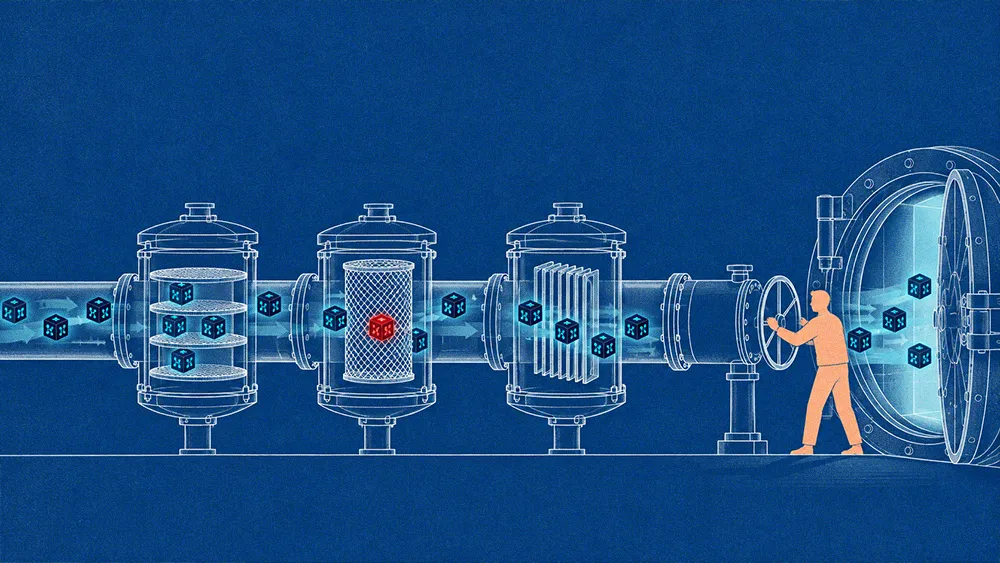
Nvidia is offering to guarantee revenue for smaller GPU cloud providers by promising to rent back any capacity they can't sell, and in exchange it will take a percentage of those customers' cloud revenues.



If this caught your attention, that’s not accidental.

The best editorial systems don’t happen by accident. Outlever builds them.

Nvidia is offering to guarantee revenue for smaller GPU cloud providers by promising to rent back any capacity they can't sell, and in exchange it will take a percentage of those customers' cloud revenues, according to reporting by Phoebe Liu at The Information.
Some people at Nvidia reportedly call the effort the "AI Compute Partnership." The mechanics are what matter, though. Nvidia commits to paying a guaranteed rate for a neocloud's unsold GPU capacity, and the neocloud shares a slice of its top line with Nvidia. That cut tapers over the life of the contract, per The Information. GPU cloud providers Firmus and Sharon AI are among the early participants, and an Nvidia spokesperson confirmed the program to the outlet.
Why a chipmaker is writing put options
To understand why Nvidia would do this, follow the financing. GPUs are the single most expensive line item in an AI data center, and the young cloud companies buying them by the tens of thousands often carry weak or nonexistent credit ratings. Lenders balk, projects stall, and chips don't get ordered.
A revenue backstop changes that math. If Nvidia guarantees that unsold capacity will still generate income, a neocloud's future cash flows suddenly look bankable, and so does the debt used to buy the chips in the first place. One data center executive told The Information that the structure lets Nvidia solve the facility financing and the GPU financing in a single move.
This isn't Nvidia's first experiment in customer finance. It has put billions into equity stakes in neoclouds and rented chips back from CoreWeave and Lambda. Last September it agreed to absorb all of CoreWeave's unsold capacity through 2032, a commitment valued at $6.3 billion at signing, and that deal calmed markets visibly, lifting CoreWeave's stock nearly 30% in a week. A May regulatory filing cited in The Information's story revealed another $3.5 billion in lease guarantees, made in exchange for rights to purchase customers' stock. The company has also reportedly been in talks to guarantee OpenAI's lease on a proposed Ohio data center that could cost half a trillion dollars at full buildout.
The revenue-sharing wrinkle is the new part. Nvidia isn't just de-risking its customers anymore. It's building itself an ongoing claim on their upside.
The strategic logic: getting out from under the hyperscalers
There's a defensive story here too. A handful of giants, including Amazon, Microsoft, Google, Meta, Oracle and SpaceX, buy the majority of Nvidia's chips today, and nearly all of them are designing in-house AI silicon meant to displace those purchases. Every dollar of demand Nvidia can shift toward independent neoclouds is a dollar less exposed to customers who double as future competitors.
Seen that way, the AI Compute Partnership is a customer diversification program dressed up as a financing product. Nvidia is manufacturing its own customer base.
The risks: circularity, all the way down
Skeptics will have plenty to work with. Nvidia sells chips to a neocloud, guarantees the revenue those chips will produce, sometimes takes equity or warrants in the buyer, and now collects a share of the buyer's sales. If AI compute demand cools, Nvidia isn't just facing slower orders. It's on the hook for capacity nobody wants, across a growing web of guarantees.
There are at least three questions worth watching.
Balance-sheet exposure. Each backstop is manageable in isolation. In aggregate, Nvidia is accumulating something that looks like the loss reserves of a lender, without a lender's regulatory framework or capital requirements.
Revenue quality. When a chipmaker guarantees the revenue of companies whose primary expense is buying its chips, auditors and regulators may reasonably ask how much of the sector's reported growth is organic and how much is Nvidia's balance sheet reflected back at itself.
Competitive dynamics. Hyperscalers now compete with neoclouds that enjoy financial backing from their shared supplier. Arrangements like that tend to attract antitrust attention, particularly for a company that already dominates its market as thoroughly as Nvidia does.
The bottom line
Central banks earn the name by being the backstop of last resort, the entity whose balance sheet makes everyone else's risk-taking possible. That's the role Nvidia is now playing for the AI infrastructure boom. It works as long as demand keeps compounding. The harder question is what happens to a central bank of compute in a downturn, when all those guarantees come due at once.
If this caught your attention, that’s not accidental.

The best editorial systems don’t happen by accident. Outlever builds them.


Get the latest AI insights first.
Sign up for updates, interviews, and fresh analysis on how AI is reshaping business, brands, and technology.