There's a big gap between demos and production. You see these AI agents in demos that are incredibly impressive. But when you put them into production, things get much harder.
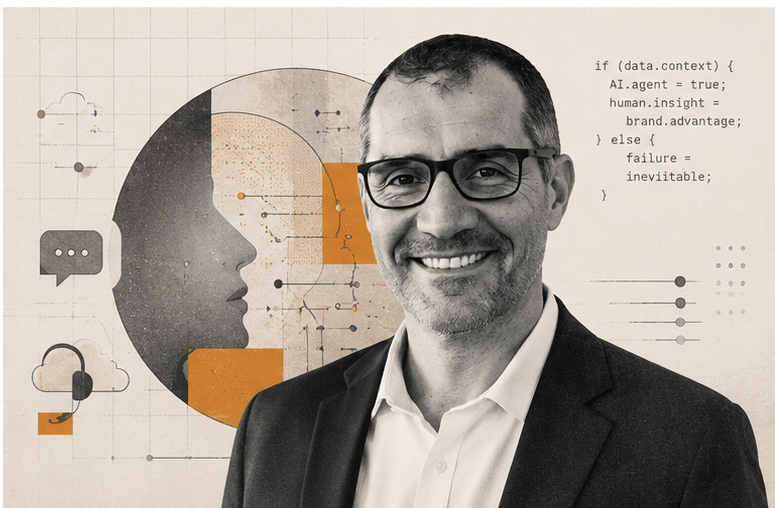
 Antony PassemardVP of Customer Strategy @ Cresta
The senior leaders who spent the last decade building AI for the world's largest platforms are leaving. Not to retire, and not to a rival giant. They are going to startups, and the pattern says a lot about where they think the industry is headed.
Antony Passemard is one of them. A veteran of Google Cloud's contact center AI business, he spent years building CCAI from its earliest Dialogflow days into an enterprise platform, after earlier stints shaping Service Cloud at Salesforce and launching IoT businesses at AWS and Google. Today he is VP of Customer Strategy at Cresta, a venture-backed customer experience AI company a fraction of Google's size. In a recent interview on Cresta's blog, he explained why, and in the process gave an unusually candid assessment of where enterprise AI actually stands.
"There's a big gap between demos and production," Passemard said. "You see these AI agents in demos that are incredibly impressive. But when you put them into production, things get much harder."
That gap is the reason executives like him are moving.
The exodus is bigger than one executive
Passemard's move fits a broader shift. CNBC reported in April that top researchers and executives are leaving Meta, Google, and OpenAI for startups at a record pace, with venture firms pouring $18.8 billion into AI startups founded since the start of 2025, according to Dealroom data cited in the report, a figure on track to exceed last year's total. Elise Stern of the venture firm Eurazeo explained the logic to CNBC: founders coming out of the big labs know what works at scale, and they know exactly what their former employers are leaving on the table.
The customer experience corner of the market has its own marquee example. Bret Taylor gave up the co-CEO seat at Salesforce, arguably the most powerful perch in enterprise CX software, to co-found Sierra, an AI agent startup valued at $4.5 billion after a $175 million raise, as Upstarts Media has chronicled. Its rival Decagon reached the same $4.5 billion valuation in January after a $250 million Series D led by Coatue and Index Ventures, per Sacra's company research, and now counts airlines, banks, and telecoms among its customers. Cresta, co-founded by Sebastian Thrun, has raised more than $270 million from investors including Sequoia, Andreessen Horowitz, and Greylock.
The talent and the money are converging on the same conclusion. The next phase of customer experience AI will be won by whoever solves the production problem, and the people best positioned to solve it are the ones who watched the first generation of deployments up close.
What the insiders know
Executives rarely leave businesses they helped build unless they have seen something. What Passemard saw, from inside the company that pioneered contact center AI, is that the industry's bottleneck has shifted.
Enterprises have moved past the question of whether to adopt AI in customer service. The harder question is how to do it without losing control of compliance, policy, and brand. Contact centers operate under strict regulatory requirements and expect predictable behavior. Generative AI is, by design, flexible and probabilistic. The two collide in production. An AI agent hallucinates, or offers a discount that policy forbids, and suddenly a flashy pilot is a liability.
Market watchers have started calling this the "last mile" problem. One analysis of the AI agent landscape found that getting an agent from an impressive demo to production-grade reliability is far harder than building the demo itself, and that this last stretch is where winners are being separated from losers across the category.
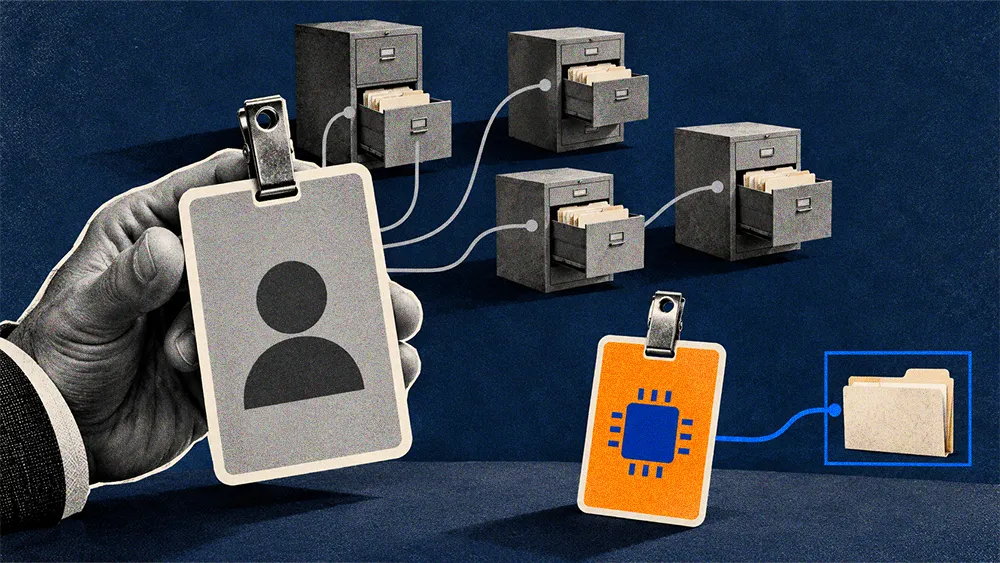
Passemard's diagnosis is blunt. The failures he sees have less to do with model quality than with control. Companies need to see what the AI is doing, understand why it made a given decision, and have the means to correct it. That requires a data and analytics layer running underneath the automation, one capable of analyzing every conversation rather than a sampled few.
"Building AI agents without data and understanding first is a recipe for failure," he said.
That, in his telling, is why he chose Cresta specifically. The company pairs AI agents with detailed insight into what human agents are doing and how they can improve, built on a data layer that runs through the whole platform. He believes this is the piece most deployments are missing, and it happens to be the hardest piece to bolt on after the fact.
The contrarian bet: humans as the brand advantage
If the data thesis explains why deployments break, Passemard's second thesis explains what companies are misreading about the endgame. Against much of the current hype cycle, he does not expect AI to replace human agents, at least not in the next two to three years.
Instead, he expects contact centers to shrink into smaller, more capable teams that use AI to handle complex issues efficiently. Agents will be more effective and, he argues, will enjoy the work more. His most striking claim is that human service will become "a brand choice for companies who value their customers," a differentiator rather than a cost to be eliminated.
This runs against a market where vendors routinely pitch headcount reduction as the headline metric. Decagon's CEO told Reuters that one client cut contact center costs by 60 percent, and cost savings of that kind remain the industry's favorite proof point.
The consumer data suggests Passemard is onto something the cost-cutters are missing. In Metrigy's Customer Experience Optimization 2025-26 consumer study, 84.7 percent of participants said they would prefer interacting with a human over an AI agent, and 80.1 percent would still choose a human even if assured the AI would resolve their issue. A 2025 SurveyMonkey study found similar numbers, with 79 percent of Americans preferring human service, and added a telling detail: 81 percent of consumers believe companies deploy AI primarily to save money, not to improve service. If customers overwhelmingly want humans and assume AI means the company stopped caring, then a brand that keeps skilled people on the line is not carrying a cost. It is buying loyalty its competitors are automating away.
Whether the rest of the migrating executive class shares that view is an open question, but Passemard is betting his second act on it. His framing reorders the buying decision. If everyone has access to the same underlying models, and they do, then automation alone cannot be a moat. The companies pulling ahead, in his view, are the ones willing to experiment, accept imperfection on day one, and iterate in production, treating AI agents the way they treat new human hires: launch them, monitor them, improve them continuously. The ones that stall are waiting for a flawless launch that never arrives.
The next collision: AI calling AI
Passemard's biggest prediction concerns the other side of the phone line. He expects customers to start sending their own AI assistants to deal with companies, so that a consumer's agent negotiates directly with a brand's AI or human staff.
"That's going to fundamentally change how interactions work and what capabilities are needed," he said. "It's a big shift that organizations should start preparing for now."
For CX leaders, his near-term guidance is organizational rather than technical. Mistakes from AI systems are inevitable, so the priority is being prepared instead of surprised. That means strong monitoring, real-time analytics, and clear processes for catching problems quickly, fixing them, and keeping leadership informed. The questions that matter are how fast a company can respond when something goes wrong, what that response looks like, and how well it stays in control throughout.
The signal in the departures
Taken together, the moves of people like Passemard and Taylor amount to a market forecast written in career decisions. The platform era of CX AI built the technology. The startup era is being built by the people who watched that technology meet reality, and who believe the winners will be defined not by the smartest model but by data, control, and a deliberate role for humans.
The executives are not fleeing the giants. They are following the problem.