Bain surveyed 951 companies above $100 million in revenue in April, across nine sectors including retail, financial services, healthcare, and advanced manufacturing. Among those measuring AI cost savings, 40% reported reductions of 10% or less. Another 37% landed between 10% and 20%. Only 4% globally cleared 30%. Bloomberg, which got the report first, led with the disappointment. That framing is correct but incomplete.
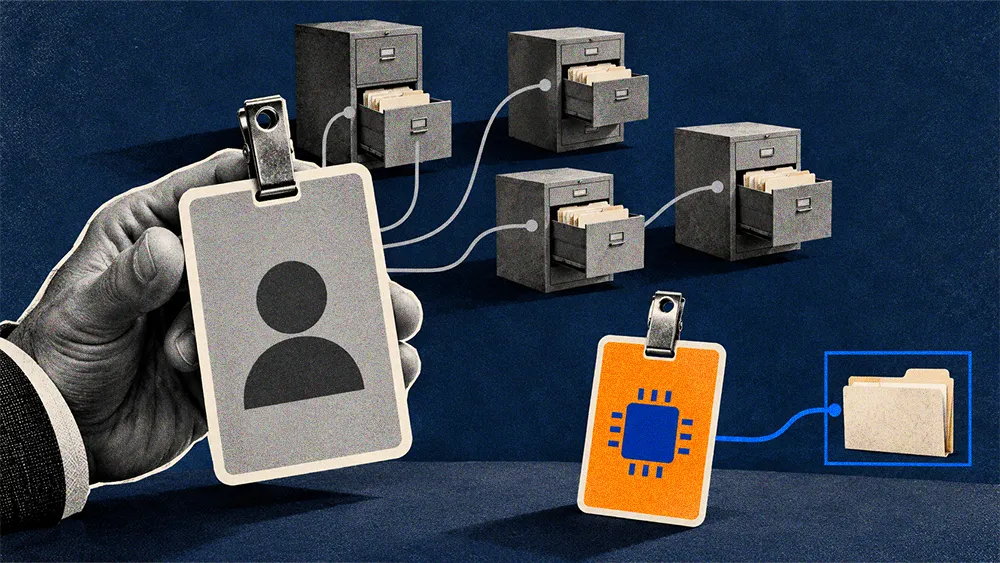
The number that should change behavior this quarter is the 44% of large companies funding their next wave of AI spending on the basis of the savings from the last wave. For most of them, those savings came in at 10% or less. They are capitalizing round two against returns that, by their own measurement, barely showed up. Bain's line is that the misses "should be making executives uncomfortable." The sharper read: a large share of enterprise AI budgets are now a self-referential loop, each round justified by a prior round that underdelivered.
That is the thesis. The 2027 planning cycle is where it breaks. Finance teams that approved 2026 AI budgets against projected savings will, for the first time, have a full year of realized numbers to set beside them. When the gap between projected and realized lands in the same spreadsheet, the reflexive 20%-plus AI budget increases stop being automatic. Expect at least one quarter of visible enterprise AI budget tightening before the end of 2027, concentrated in the 40% cohort that saw the smallest returns. I would be comfortable being wrong about that, which is the point of saying it out loud.
The shortfall is not a model problem
Here is what the savings gap is not about: model capability. Bain identified the top reason AI programs underperform, and it is not that the models are weak. It is that companies cannot reliably get to their own data, after a decade and hundreds of billions of dollars spent on data modernization. That finding should reroute the next marginal dollar.
If your AI savings are stuck under 10%, swapping one frontier model for a slightly better one will not move the number. The bottleneck sits upstream, in data access, integration, and workflow fit. This is the same wall MIT's research group hit last year when it found 95% of corporate GenAI pilots stalled, and pinned it on tools that fail to learn, integrate badly, and miss how people actually work. Two separate research efforts, the same diagnosis from different angles: the constraint is the plumbing, not the engine.
For build-vs-buy, that inverts the default. The instinct over the past two years has been to buy capability, meaning a better model or a more capable assistant, and assume savings follow. The data says capability is not the binding constraint for the majority. The purchase that actually moves savings is data infrastructure, retrieval that works against messy internal systems, and integration into the workflow people already use. The model is increasingly the cheap part.
Which platform bets this validates
This confirms one set of bets and undercuts another. It undercuts the pure-model pitch, the idea that a frontier model on its own is the unlock. It validates the stacks that solve data access inside the same purchase: the hyperscalers bundling models with the warehouse where enterprise data already lives, and the enterprise deployments from the model labs that work only where a serious integration layer sits underneath. The vendors who win the next 18 months are not the ones with the top benchmark score. They are the ones who can show a CFO realized savings above 20%, with the data pipeline as part of the deliverable.
The strongest counter, and why it does not hold here
The best argument against this read is the J-curve. AI investment leads savings by design, so a soft first year is what adoption looks like before the curve bends, and the 37% already at 10% to 20% are evidence the bend has started. That is fair, and the 10% to 20% cohort is real money, not noise.
But the J-curve defense does not touch the accounting problem. A company can believe in the long-run curve and still be wrong to self-fund round two from round one's returns when round one came in under 10%. The J-curve justifies patience with the technology. It does not justify capitalizing future spend against savings you have not booked. Those are two different claims, and the survey shows companies treating them as one.
What to do Monday
Three moves for an enterprise leader this week.
First, split the AI line item into realized savings and projected savings, and report them separately. If your 2026 budget was approved against a blended number, you do not actually know which half you are funding from.
Second, stop self-funding the next round from the last round until the last round's savings are booked rather than modeled. The discipline that sounds responsible is the exact mechanism Bain flagged as the leak in the system.
Third, before approving another model upgrade, audit whether your AI tools can reach the data they need. If the answer is no, the model is not your problem, and a model purchase will not fix it.
What to watch: the 2027 budget guidance from the largest AI spenders, and whether vendors start leading enterprise pitches with realized customer savings instead of benchmarks. The first vendor to make verified 20%-plus savings its headline number, with the data layer included, resets what enterprise buyers expect everyone else to prove.