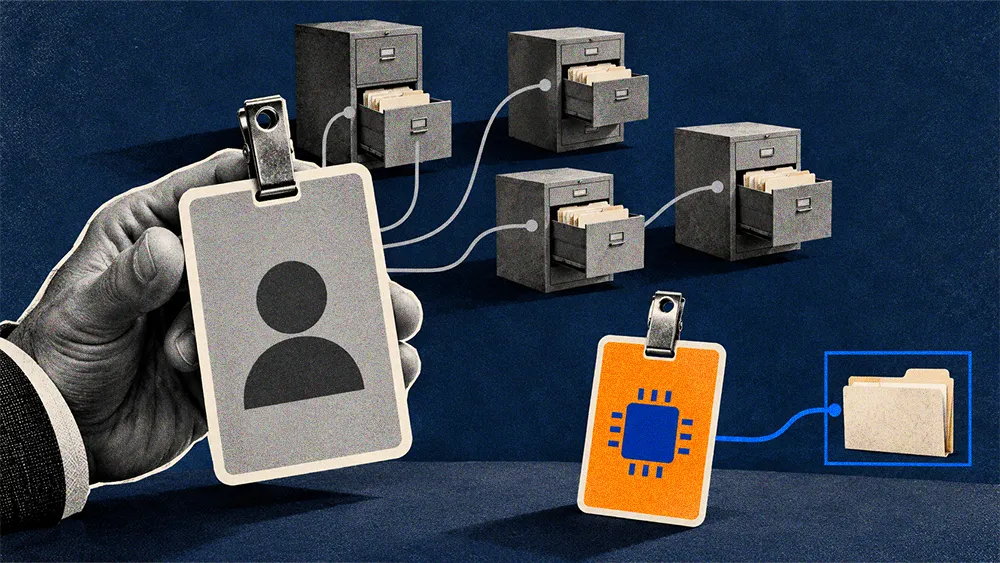
The forward-deployed engineer has become tech's fashionable hire, complete with six-figure salary bands and career advice aimed at new graduates, but treating it as a labor-market story is a mistake. When OpenAI, Anthropic, Google, and Meta all adopt the same playbook within a single quarter, their hiring points to where they believe the value sits, and it is not in the model.
The argument worth making is simple enough to be tested. Over the next 18 months, the AI vendor that wins the enterprise will be the one with the largest and most deeply embedded deployment force, not the one that tops the benchmarks. If model capability were the real constraint, the labs would be putting their marginal dollars into research. They are putting them into field engineering instead, and that choice reveals what they have concluded about where deals are won and lost.
The data the labs are reading
MIT's NANDA initiative reported in its 2025 "GenAI Divide" study that 95 percent of enterprise generative AI pilots produced no measurable impact on the P&L, with only about 5 percent reaching rapid revenue acceleration. The report traced the failures to a learning gap rather than to model quality, meaning the distance between a capable model and a workflow it can run inside. It also found that tools built with an outside partner succeeded roughly twice as often as internal builds, and that companies were concentrating their budgets in sales and marketing, where returns were lowest, instead of back-office automation, where returns were highest.
Gartner reaches a similar conclusion by a different route. The firm predicted that at least 30 percent of generative AI projects would be abandoned after proof of concept by the end of 2025, blaming poor data quality, weak risk controls, rising costs, and unclear business value, and its later figures came in higher still. Gartner has also reported that fewer than half of AI projects ever reach production, and that getting from prototype to production takes about eight months on average. None of those failure modes is a model that wasn't smart enough. All of them are deployment problems.
The two analyses use different methods and arrive at the same place. The bottleneck in enterprise AI is the last mile.
Where the headcount is going
Watching what the labs did with that conclusion is more instructive than any survey. Google Cloud CEO Thomas Kurian used LinkedIn to recruit FDEs himself, and the company opened dozens of listings and signaled plans to hire hundreds into a new AI unit inside its go-to-market organization. It also reportedly cut its interview process from four to six rounds spread over weeks down to as few as two interviews across two days. OpenAI created a roughly $4 billion "Deployment Company" designed to embed FDEs inside enterprises, and Anthropic placed engineers inside FIS to build an anti-money-laundering agent now headed for banks including Bank of Montreal. Meta set up an organization to move advertisers onto its AI tools using the same embedded approach.
The role traces back to Palantir, which spent more than a decade sending engineers into government agencies, banks, and hospitals to build custom workflows on Foundry. What has changed is that the frontier labs, whose whole identity rested on the model being the product, are now copying a services-heavy motion they once had no use for. An FDE is not a sales engineer. They scope the use case, write the production code, fix what breaks in the middle of the night, and stay on the account until a business metric moves. They are paid on outcomes and renewals rather than hours.
What the shift confirms, and what it threatens
The pattern confirms one strategic bet and weakens another. It confirms the value of the services-led go-to-market that Palantir spent years being mocked for, since that motion turns out to be how a vendor gets a customer across the 95 percent gap. It also creates a second advantage that pure benchmark leaders lack. Embedded engineers see firsthand which product gaps block real deployments, and they feed that knowledge back to the model and platform teams, so deployment capacity steadily compounds into better product.
The same shift weakens the belief that a benchmark lead is a durable enterprise moat. Winning an evaluation and then losing the deal is exactly the failure a deployment force is built to prevent. A vendor sitting a few points behind on an eval, with several hundred engineers embedded in large accounts shipping working systems, will take the business away from a rival whose only advantage is a higher score.
For the buyer, the decision has moved from which model to who owns the integration. Purchasing an enterprise AI platform in 2026 means purchasing a deployment motion, and the questions that matter are how much embedded engineering the vendor can supply and whether its commercial terms are tied to your results. Building in-house means facing Gartner's other warning, that most companies attempting custom, domain-specific systems give up under the weight of cost, complexity, and technical debt. The 5 percent that succeeded did not build sprawling horizontal platforms. They chose one problem, executed against it, and brought in expert partners.
The objection worth taking seriously
The strongest pushback is that the 95 percent figure is soft. Skeptics point out that NANDA's methodology, a few hundred interviews and public deployments, cannot really support so exact a headline, and that the number has been turned into ammunition for the AI-bubble argument. That criticism has merit. The case here does not depend on the precise figure, though. It depends on the convergence of the evidence. Gartner reaches the same directional conclusion on its own, and the labs are backing that conclusion with capital, which carries more weight than any survey. A company does not spend billions to stand up a deployment business for a problem that does not exist. When the organizations with the clearest view of how enterprises use AI in practice all move toward field engineering at the same time, the survey becomes the least important piece of evidence in the room.
A second objection, that services do not scale and erode gross margins, is true but largely irrelevant to the buyer. Margin pressure is the vendor's problem to manage. For the enterprise, embedded deployment is the approach the data shows working.
What to do now, and what to watch
If you run platform or engineering, start by moving your AI budget line from "tools" to "deployment" and resourcing it accordingly. When you buy, judge vendors on embedded engineering capacity and outcome-based terms rather than token price or benchmark position. When you build, set up a small internal FDE team focused on one workflow with a named P&L target before approving another broad pilot, and shift money out of sales and marketing demos toward the back-office automation where returns concentrate.
Over the next two quarters, watch whether the labs keep expanding deployment headcount or let it level off, whether traditional SaaS vendors begin hiring FDEs to win larger deals, which would show the model is spreading beyond AI, and whether the FIS anti-money-laundering project delivers a verified business result. The first vendor to publish a hard ROI number from an embedded deployment will change how enterprise AI gets sold. That number, not the next benchmark, is the one to wait for.