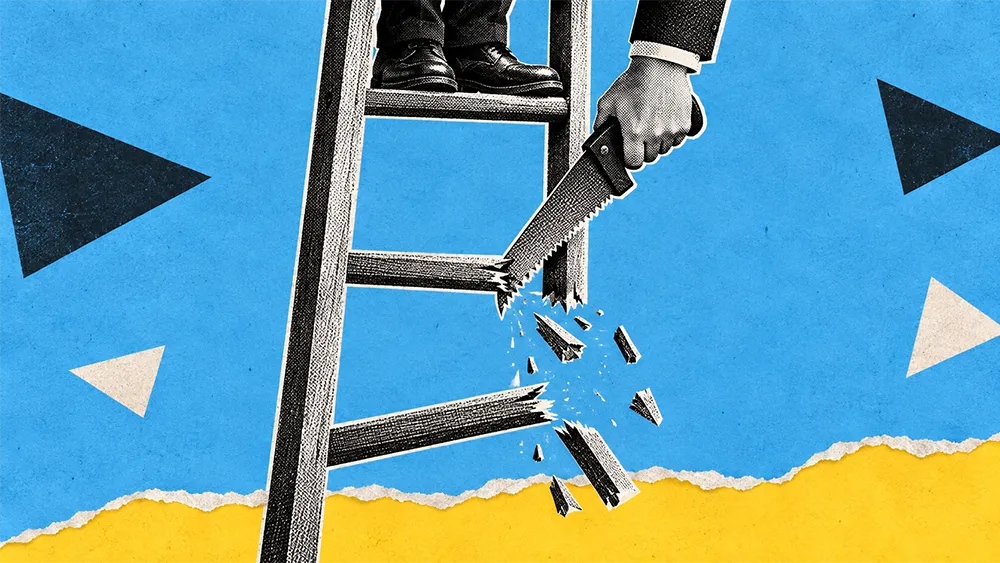
OpenAI took ChatGPT onto the trading floor this week, and it went straight for the bottom of the org chart.
The company unveiled ChatGPT for Financial Services on Thursday, a version of its enterprise product ChatGPT Work built with Morgan Stanley and Evercore as design partners. It runs on GPT-6 Astra and plugs directly into financial data from LSEG News, Daloopa and PitchBook. As CNBC's Ashley Capoot reported from the launch, it can research companies, pull comps, build models, and turn the output into research notes and pitchbooks formatted to a bank's own templates.
What the demo actually showed
The demo was the part that should give Wall Street pause. OpenAI showed the system sizing up a potential acquisition target, choosing a set of relevant peers, dropping stock prices into a spreadsheet, checking the resulting chart against the underlying numbers, explaining a selloff and the recovery that followed, then packaging all of it into a finished deck. The OpenAI employee running the demo said the plainest thing anyone said all day. This was the kind of task he would normally "kick out to my analysts," with a turnaround of three to six hours.
Nick Turley, OpenAI's head of product, put the ambition on the record. He described the goal as teaching the system to "research like an analyst and back up its conclusions" the way a person would.
Then came the question that counts, and the answer showed how the industry plans to talk about it. Asked whether banks would end up needing fewer junior bankers, Turley reached for Excel. The technology raises the return a bank gets from every employee, he said, the way the spreadsheet did.
The grind was the tuition
Hold onto that comparison. It is doing a lot of work.
Investment banking has run on the same bargain for four decades. A bank hires clever graduates, works them to exhaustion building models and pulling comps and assembling pitchbooks, and in exchange those graduates absorb, slowly and at great expense, how deals actually come together. The grind was never really about the decks. The decks were the tuition. Five or seven years of it produced someone who could look at a page of numbers and feel, before they could explain, that something was off.
That is the machine OpenAI just aimed its product at. Not the managing directors. The people who are supposed to become them.
Everyone trims the bottom rung
The productivity framing falls apart at the next step. Every bank now has a clean, rational reason to shrink the analyst class, because the work those analysts did to justify their pay can be bought as a seat license. No single firm gains anything by keeping a slow, costly apprenticeship alive out of loyalty to a labor market it does not own. So the smart move, firm by firm, is to trim the bottom rung. The sum of all those smart moves is an industry that has stopped manufacturing its own future partners. No one at any bank is deciding to end the apprenticeship. They are deciding, one quarter at a time, to automate the tasks it was built from, which amounts to the same thing without anyone having to say so.
This is not a banking problem in isolation. The same squeeze is turning up across white-collar work, where companies keep insisting they want experienced people while almost nobody is willing to train anyone. Openings that ask for no experience have been vanishing for years. Banking is just the most legible place to watch it, because the ladder there is so explicit and the money at the top so large.
The test vanishes with the work
The analyst program was also how banks found out who was any good. Two years of pressure sorted the people who could be trusted with a live deal from the people who could not, and it did the sorting before anyone handed them real responsibility. Take away the production work and the training ground goes with it. So does the test. Firms will need some other way to learn who deserves to move up, and so far nobody has said what it is.
Some are already improvising. UBS has started demanding proof of AI fluency before it will hire into its 2027 junior class, which tells you what the entry-level job is quietly becoming. EY is dangling $100 million in bonuses for the judgment and adaptability that AI cannot yet copy, which is close to an admission that the firm automated away the work that used to build those traits in the first place. Both are reasonable responses. Neither answers where the judgment is supposed to come from once the years of manual repetition are gone.
Which returns us to the risk buried in Turley's Excel line. Excel made a banker faster at arithmetic. It did not make the call. This product is being sold on its ability to make the call, to reach a conclusion and defend it the way an analyst would. The whole value of a good senior banker has always been knowing when the analyst's conclusion is subtly wrong. That instinct gets compiled over thousands of hours of having built the thing by hand and been burned when it broke. Remove the hours and you can end up with a generation fluent in directing the machine and unable to check it. Fewer juniors is the visible cost. Hollow seniors is the one that shows up a decade late.
The banks helped build it
There is a further wrinkle in who built this. Morgan Stanley and Evercore did not buy the product. They helped design it. They handed OpenAI their workflows, their templates and a fair amount of the institutional know-how that justified their fees, all to get a tool that erodes both their labor model and, in time, the premium they charge. Satya Nadella warned enterprise buyers about precisely this trade, that every prompt and correction teaches your provider how your business runs. The banks made the trade anyway, because the alternative, letting a rival get there first, looked worse.
Jamie Dimon has spent the past year describing two futures at once, a trillion dollars pouring into AI and a suggestion that young people go learn a trade. Set against a product designed to do the entry-level work of his own industry, the two halves stop looking like a contradiction and start to look like a single forecast.
None of this means the analyst vanishes next year. Turley said there was "a ton of demand," and banks will adopt this the way they adopt everything, unevenly and then all at once. Thursday will get filed as a productivity story. It should be filed as the day Wall Street helped build the thing its own succession depends on. The bill comes later, when a firm goes looking for the next generation of people who understand how the whole machine fits together, and finds that the seat that used to train them was cut years earlier, for a perfectly good quarterly reason.