First Goldman, Now JPMorgan Blocks Claude for Its Hong Kong Staff
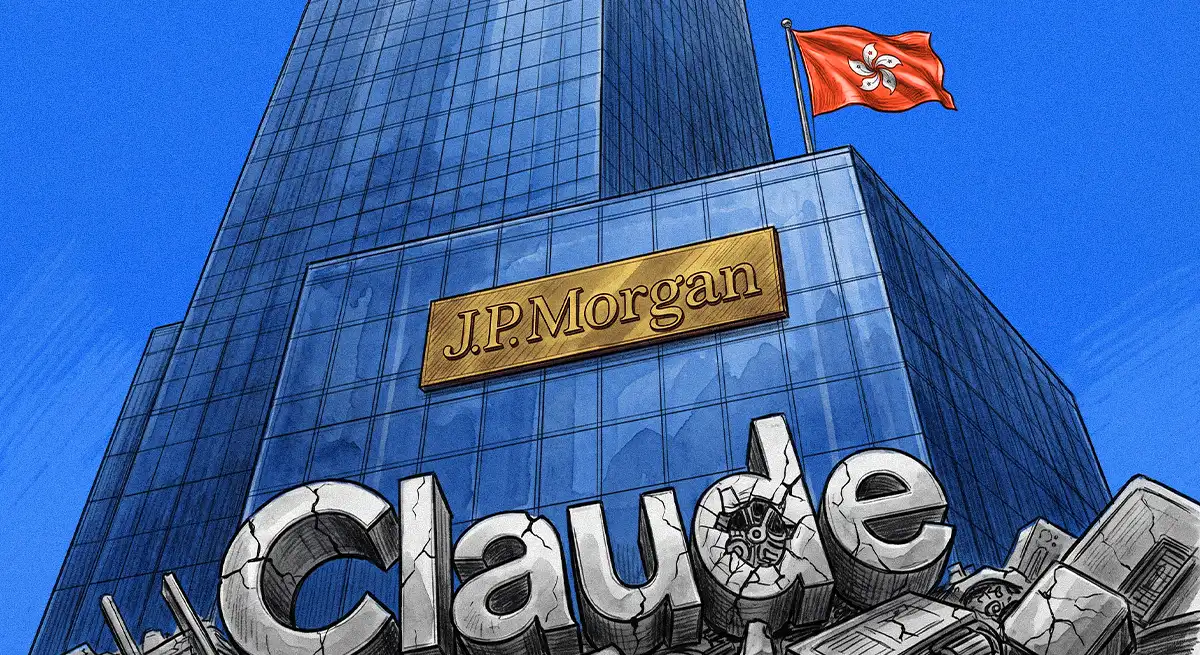
JPMorgan Chase has stopped its staff in Hong Kong from using Anthropic's Claude models,


If this caught your attention, that’s not accidental.

The best editorial systems don’t happen by accident. Outlever builds them.

JPMorgan Chase has stopped its staff in Hong Kong from using Anthropic's Claude models, the Financial Times reported on June 18, citing three people familiar with the matter. The bank took Claude off the internal drop-down list of approved large language models available to employees in the territory, so Hong Kong staff have lost access to a tool their colleagues elsewhere still use. Reuters carried the FT report but could not independently verify it, and neither JPMorgan nor Anthropic responded to requests for comment.
The trigger had nothing to do with how well Claude performs.
What actually caused the block
The FT's sources trace the decision to the wording of Anthropic's usage terms in its licensing agreement with JPMorgan, which does not support use of its models in that region. The bank reviewed the latest terms, found the restriction, and pulled Claude from the approved list for Hong Kong.
That keeps the impact narrow. Staff in New York, London, and Singapore can carry on using Claude as before. The restriction applies to a single jurisdiction, which happens to be one of the most geopolitically sensitive financial hubs in the world. As TheNextWeb noted, this came down to contract language rather than any complaint about the product.
JPMorgan is the second Wall Street bank to do this
Goldman Sachs removed Claude from the approved tools for its Hong Kong-based bankers in April, which makes JPMorgan the second major US bank to reach the same conclusion about the same vendor in the same city within a matter of weeks.
When two of the largest banks in the world land on identical restrictions in identical circumstances, that usually signals the start of an industry norm rather than a one-off.
The backdrop: a hardening US line on advanced AI and China
The bank-level decisions sit inside a much larger story. Washington has grown steadily more anxious about where the most capable American models end up and who can use them, and that anxiety is turning into policy.
Earlier this week, US Commerce Secretary Howard Lutnick sent a letter to Anthropic CEO Dario Amodei ordering the company to suspend exports of its Mythos and Fable models worldwide and to all foreign nationals, citing the risk that they could reach military or intelligence users in China, Russia, and other countries of concern. US-built models are already unavailable in mainland China, while Hong Kong has stayed a market where some models operate under usage limits set by the American companies that make them. That middle-ground status is now under pressure. President Trump said on Wednesday that talks with Anthropic are "going fine", even as the room for advanced US models to run in Hong Kong keeps shrinking.
Why this matters beyond one drop-down menu
On the surface this looks like routine IT housekeeping. It carries more weight than that.
For Anthropic, the episode shows how export policy and a few lines of licensing language can shut off entire markets regardless of demand or model quality. A clause in a usage term just did what no competitor could, removing Claude from the desks of one of Anthropic's most prestigious enterprise customers in a major financial center.
For the banks, the move reflects a judgment that the regulatory and data-security exposure of running a US frontier model in Hong Kong now outweighs the productivity it buys. When the institutions with the most to lose from a compliance misstep start fencing off specific geographies, that caution tends to spread.
For everyone else tracking the AI market, the lesson is that these models no longer move on capability alone. The map of where they can legally and contractually operate is being redrawn in real time, and Hong Kong has just become the clearest test case for how far the lines will shift.
If this caught your attention, that’s not accidental.

The best editorial systems don’t happen by accident. Outlever builds them.


Get the latest AI insights first.
Sign up for updates, interviews, and fresh analysis on how AI is reshaping business, brands, and technology.